Sometimes a student doesn’t need another reminder to “try harder.”
Sometimes they need a way to say, “I need a break.”
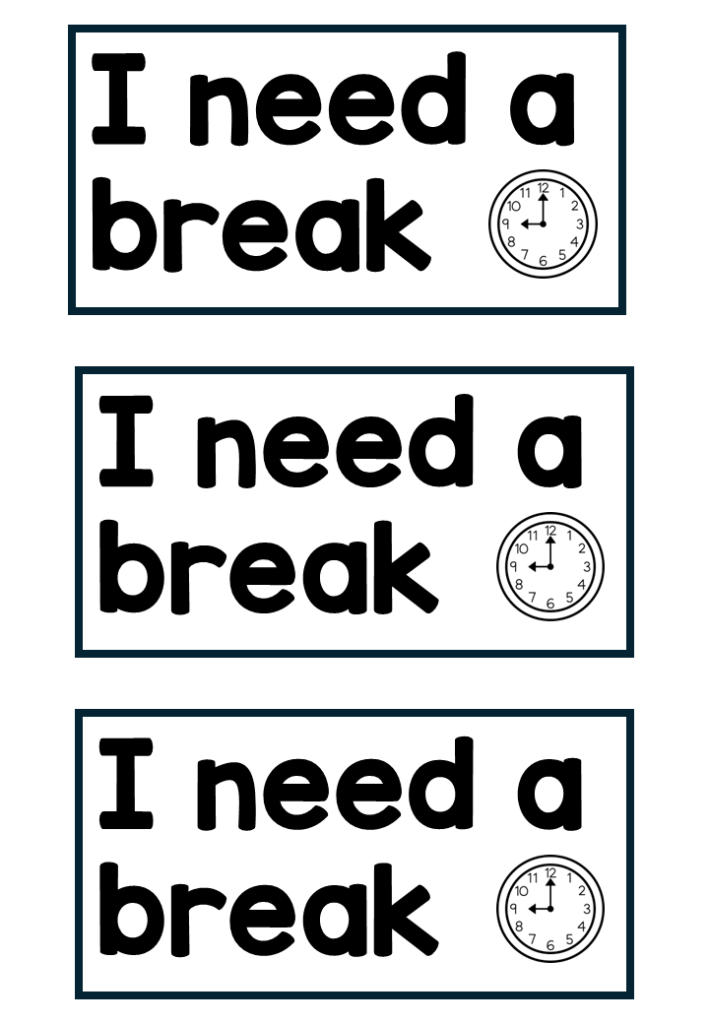
For students in special education, having a simple and consistent way to communicate this need can make a big difference. Visual break cards can give students a concrete way to request a break before frustration becomes overwhelming.
Why Use a Visual Break Card?
Students may struggle to communicate when they are frustrated, overwhelmed, tired, or having difficulty with a task. In those moments, finding the right words can be especially challenging.
A visual card provides another communication option.
Instead of expecting a student to explain what they need, they can simply point to or hand over an “I Need a Break” card.
This can support:
- Self-advocacy
- Functional communication
- Self-regulation
- Coping skills
- Positive behavior support
- Classroom independence
- Make Breaks Predictable
- Self-regulation
- Coping skills
- Positive behavior support
- Classroom independence
Make Breaks Predictable
One of the most helpful things about using a visual break system is that it creates a predictable routine.
Students can learn:
I am feeling overwhelmed → I communicate that I need a break → I take my break → I return to the activity.
The goal isn’t simply to give students a way to escape a difficult activity. Instead, you’re teaching them an appropriate replacement skill: communicating their needs.
Over time, this can become an important part of a student’s classroom routine.
Add Choices to the Break Routine
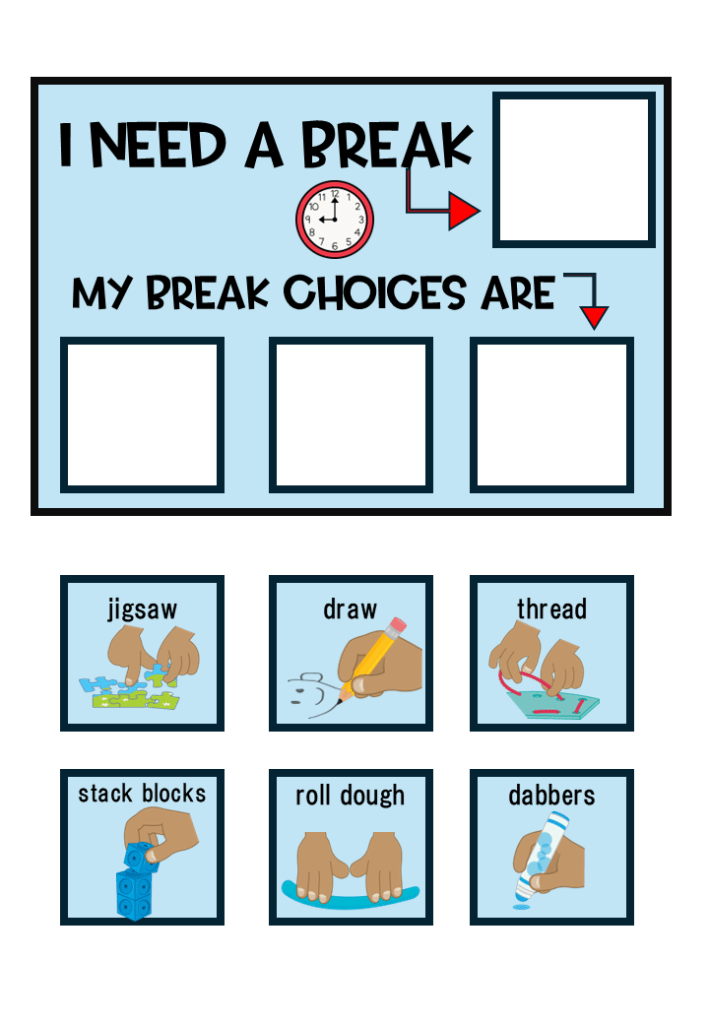
Some students may benefit from having visual choices for what they can do during their break.
For example:
🧘 Quiet time
🎧 Listen to music
📚 Look at a book
🖍️ Color or draw
🧸 Use a calming activity
🚶 Take a short movement break
Providing choices can help students become more independent and gives teachers an opportunity to teach appropriate coping strategies.
Don’t Forget the Data!
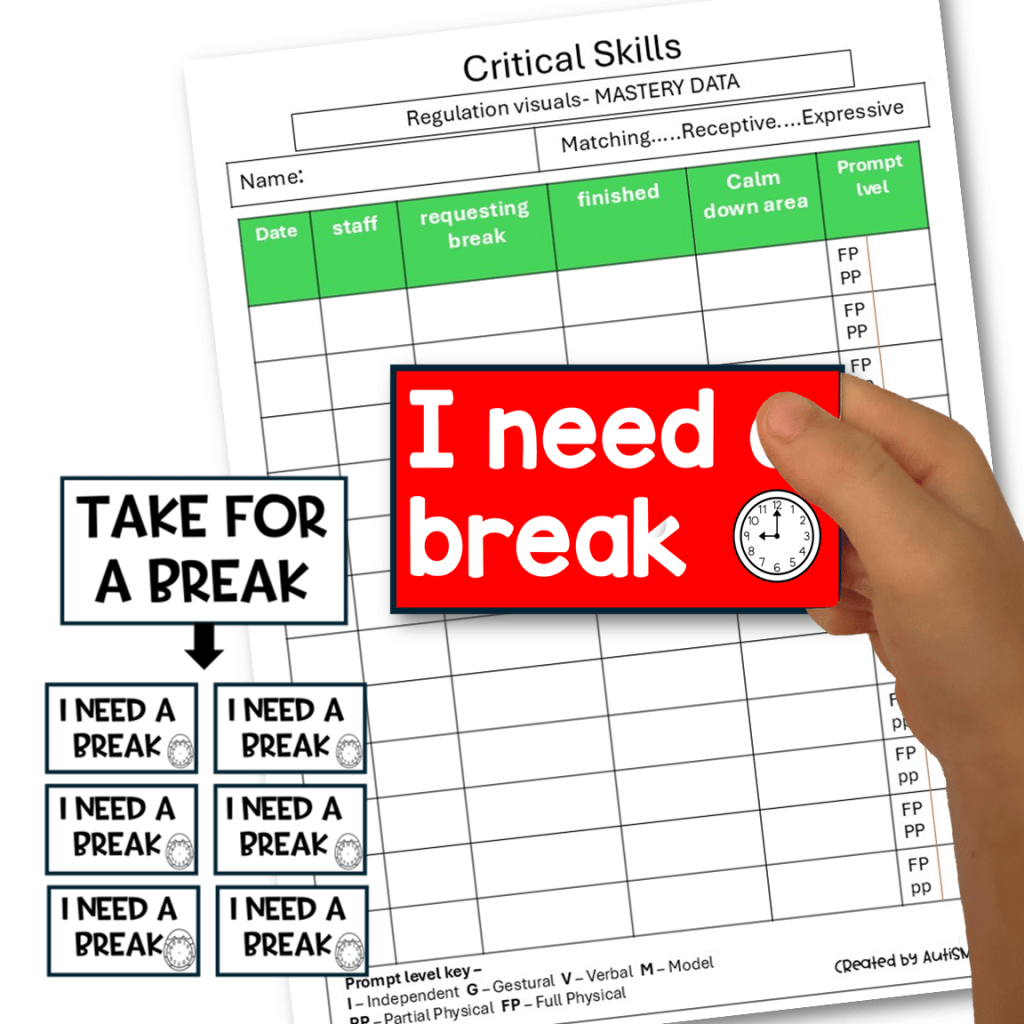
Visual supports can be wonderful for students, but teachers also need information
about what is happening in the classroom.
A simple break data sheet can help you track things such as:
- When breaks are requested
- How often breaks are requested
- What activities happen before a break request
- How long breaks last
- Whether the student successfully returns to the activity
This information can help you look for patterns rather than simply guessing why a student is requesting frequent breaks.
A Simple Support That Can Make a Big Difference
You don’t need a complicated system to begin.
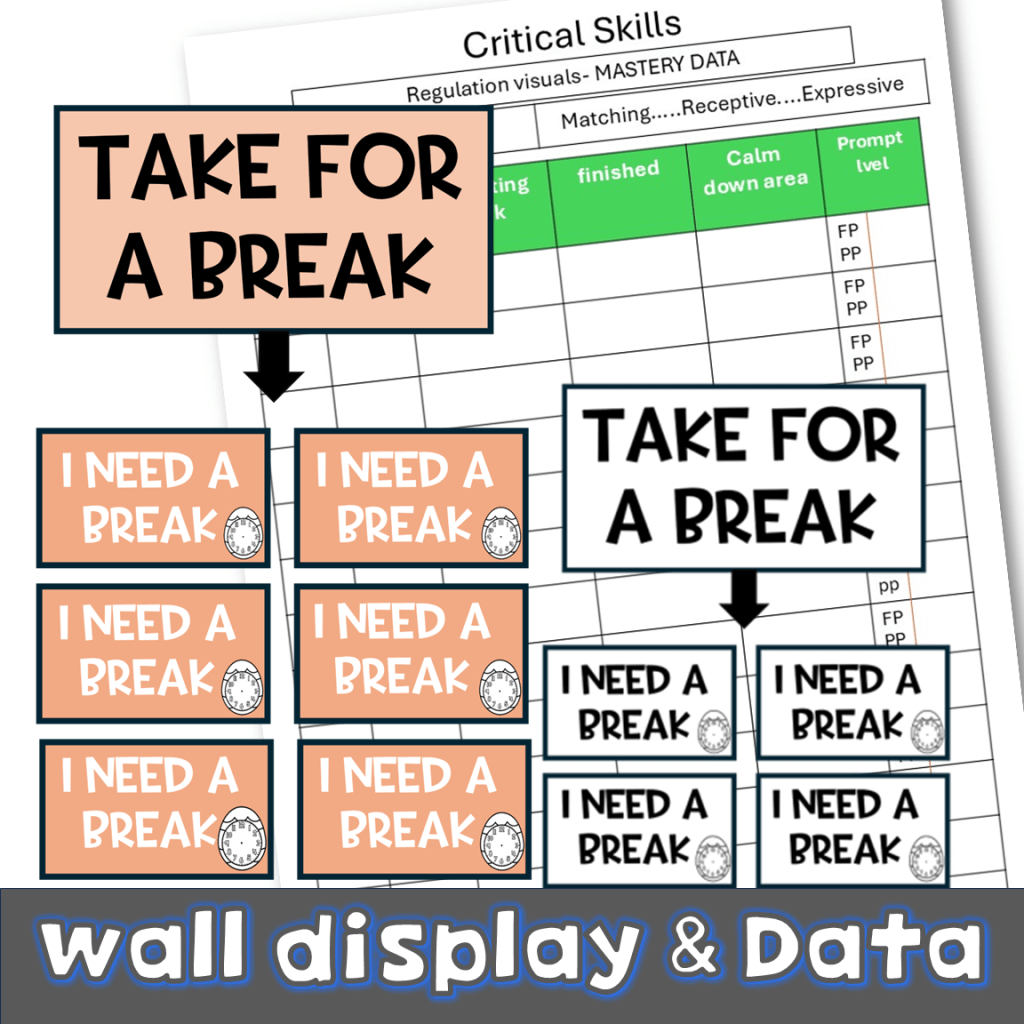
A clearly displayed “I Need a Break” visual, a few break choices, and a simple data sheet can create a consistent routine that students and staff can understand.
The most important part is teaching the routine when the student is calm, rather than waiting until they are already overwhelmed.
Practice it. Model it. Prompt it when appropriate. Celebrate successful communication.
And remember, requesting a break is not automatically a behavior that needs to be stopped. It can be a valuable communication skill that we can teach students to use appropriately.
Ready to Add Break Visuals to Your Classroom?
I created these Break Card Visuals for Special Education to make it easier for teachers to introduce an “I Need a Break” system in their classrooms.
The resource includes break card visuals, break choices, and a data sheet to help you teach communication and keep track of break requests.

Discover more from Autismade
Subscribe to get the latest posts sent to your email.

