How to Teach Students to Ask for a Break: Simple Break Card Strategies for Special Education

โ€œCan I have a break?โ€

For some students, asking for a break comes naturally. For others, it is a skill that needs to be taught, practiced, and supported.

In special education classrooms, a break can be an important tool for helping students communicate their needs before they become overwhelmed. But simply telling a student, โ€œYou can ask for a break,โ€ doesn’t always mean they know how to do it.

They may not know what words to use. They may not recognize when they need one. They may know they need a break but struggle to communicate it when they’re already frustrated.

This is where visual supports can make such a difference.

Break cards give students a clear, consistent way to communicate, while also giving adults a simple routine to teach and reinforce.

Why Teach Students to Ask for a Break?

Asking for a break is more than just a classroom routine. It can be an important communication and self-advocacy skill.

A student might need a break because they are feeling overwhelmed, tired, frustrated, overstimulated, or simply need a short pause before returning to an activity.

When we teach students an appropriate way to communicate that need, we give them another option besides shutting down, refusing, becoming upset, or leaving the area.

The goal isn’t to avoid every difficult activity.

Instead, we’re teaching students:

โ€œWhen I need a break, I have a way to let someone know.โ€

And just like any other skill, that takes practice.

The important thing is that the student knows what happens after they request a break.

Start by Teaching What โ€œBreakโ€ Means

Before expecting a student to independently request a break, make sure the idea of a break is clear.

A break might mean:

  • Going to a calm-down corner
  • Sitting quietly
  • Doing a preferred activity
  • Taking a movement break
  • Using a sensory item
  • Looking at a book
  • Having some quiet time

A predictable routine can make the process much easier:

I need a break โ†’ I ask for a break โ†’ I choose my break โ†’ I take my break โ†’ I return to my activity.

You can teach each part of the routine separately and gradually work toward the student completing it more independently.

Use Visuals to Make the Routine Easier

Some students communicate much more successfully when they have something concrete to point to, hand over, or look at.

A break card can provide that visual reminder.

Instead of having to find the words in a stressful moment, a student can use a card to communicate:

โ€œI need a break.โ€

For students who are still developing communication skills, this can remove one more barrier between needing a break and being able to ask for one.

And there isn’t just one right way to use break cards.

Here are three options that can work well in different classroom situations.

3 Ways to Use Break Cards in Special Education

For some students, asking for a break is only the first step.

They may also need help understanding what to do during the break.

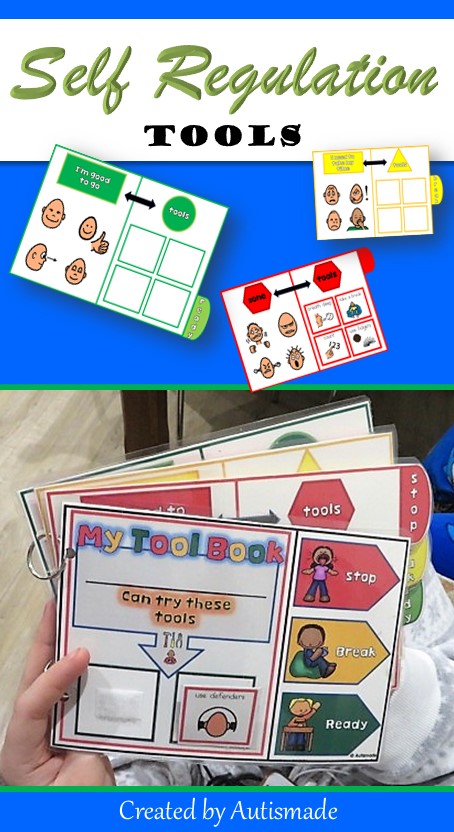
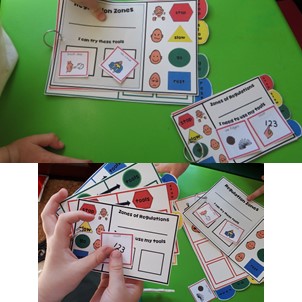
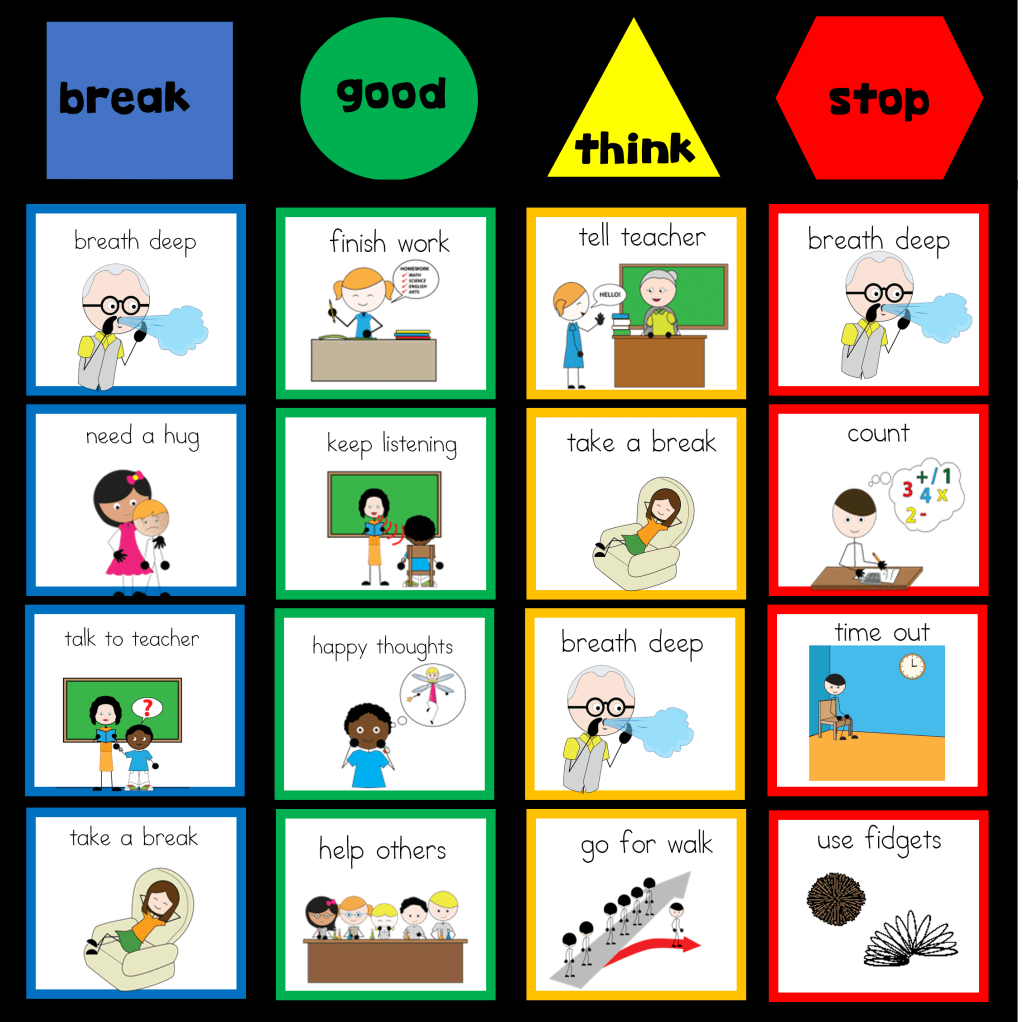
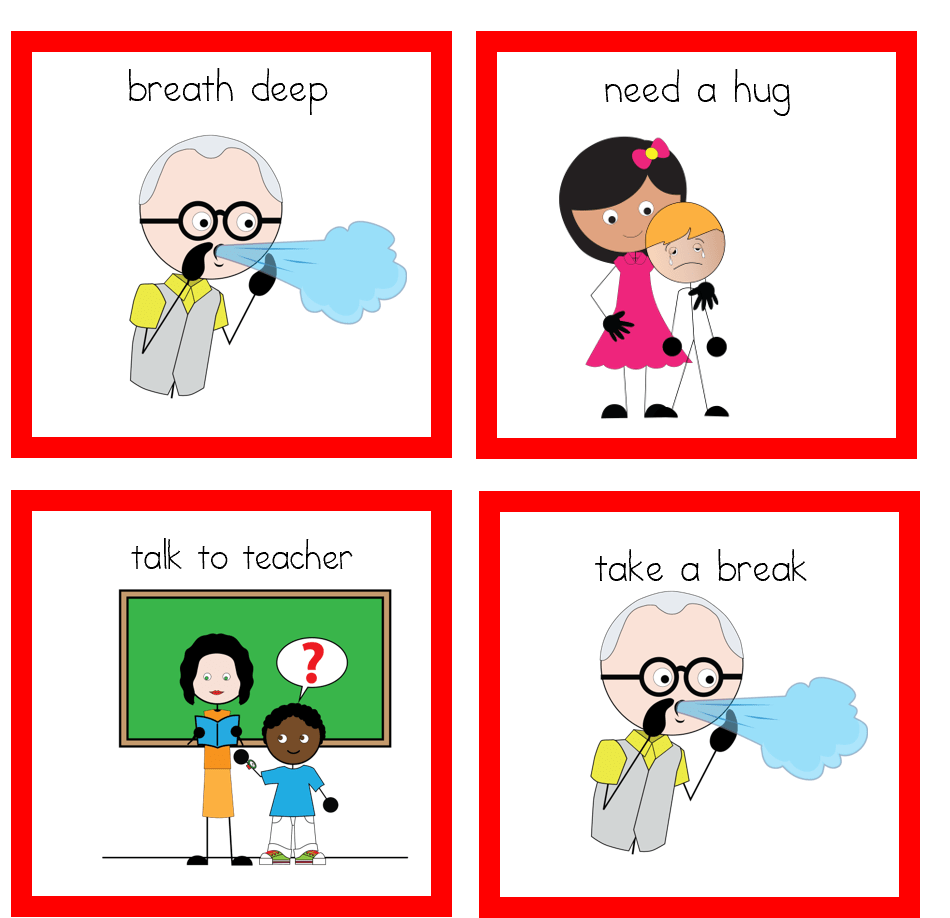
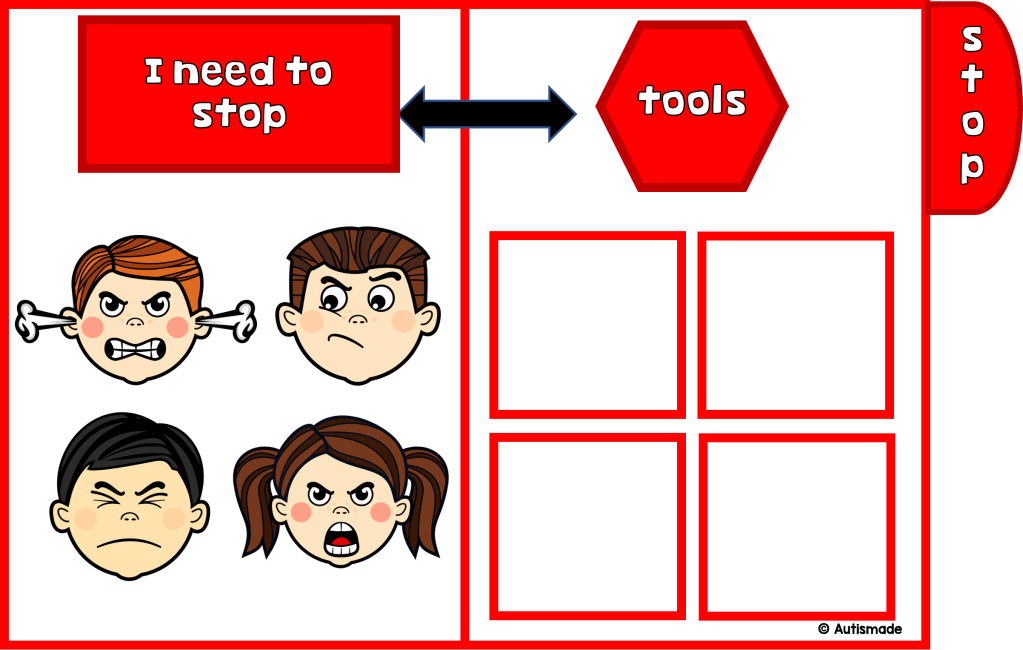
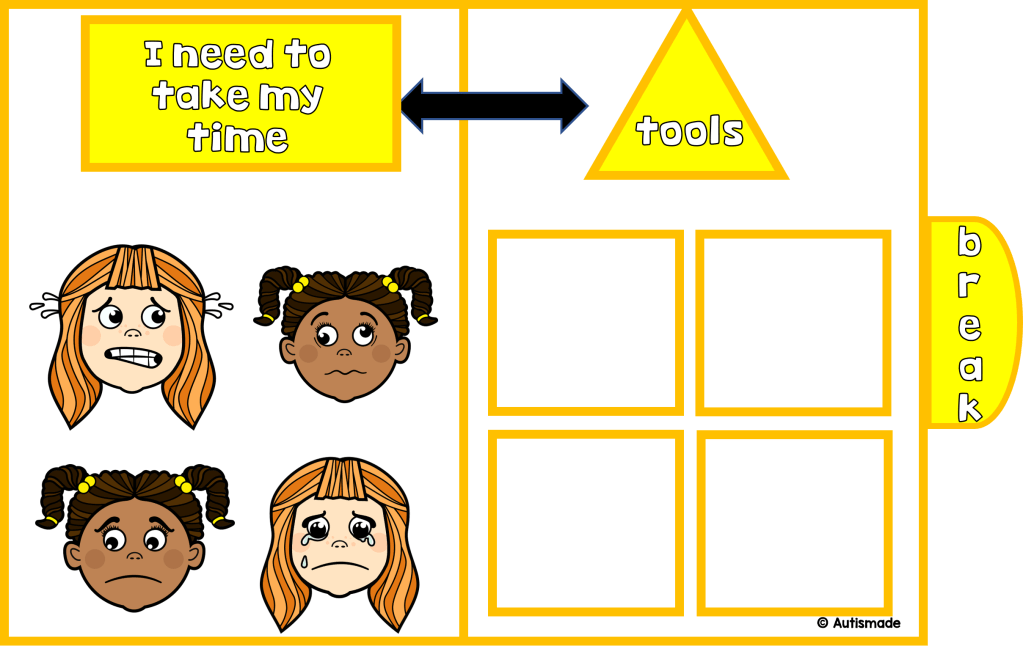
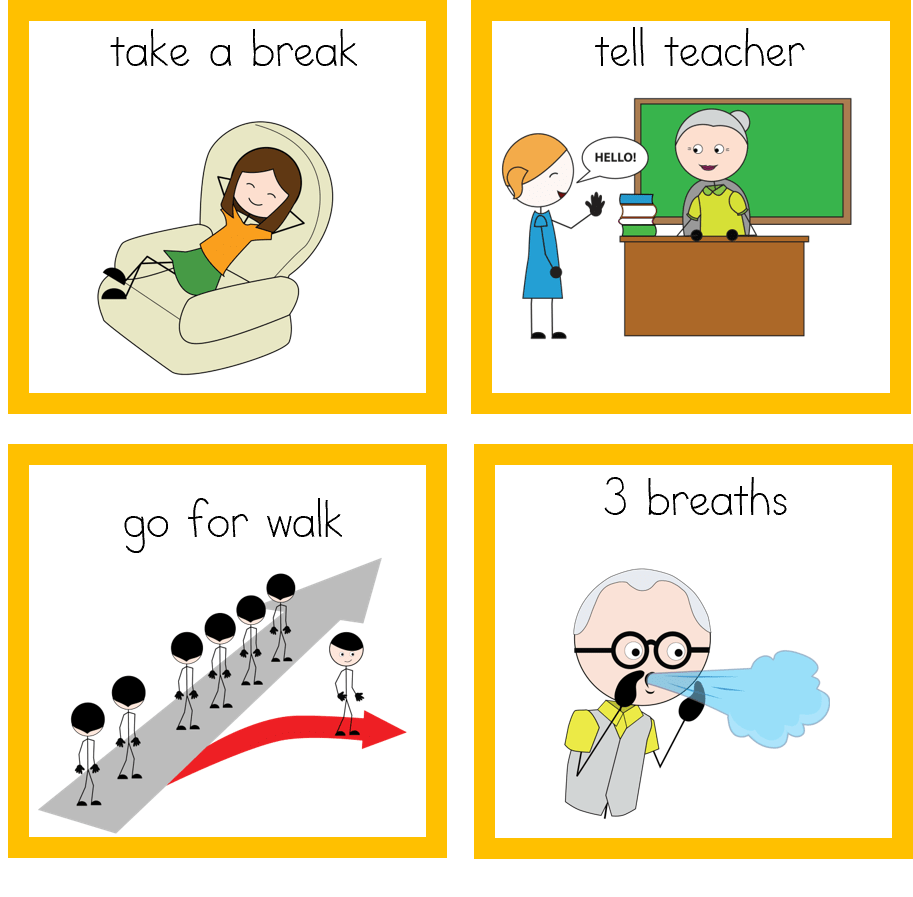
A break card with visual choices can give students a few clear options.

For example, after requesting a break, a student might choose from the available activities or supports.

This can make the break more meaningful and predictable while giving the student some control over what they need.

It also gives you an opportunity to teach appropriate choices rather than simply saying, โ€œGo take a break.โ€

A larger break card can work especially well in a calm-down corner or designated break area.

Having the visual sitting on the table or displayed in the space means the student can see it when they need it.

This can be particularly helpful for students who benefit from consistent environmental supports.

You don’t necessarily need to make the process complicated.

The visual can simply remind the student:

This is where I can go when I need a break.

Over time, that familiar visual can become part of the student’s routine.

Another option is to give a student a set number of individual break cards to use during a lesson, session, or part of the school day.

This can make the idea of taking a break much more concrete.

The student can see how many break opportunities are available and practice using them appropriately. For some students, this can also be helpful when you’re working on increasing independence and reducing adult prompting.

As with any support, the number of cards and how they are used should be individualized to the student and their needs.

Don’t Forget the Data

One of the most helpful things we can do when teaching a new skill is pay attention to how much support the student needs.

It’s easy to look at a student using a break card and think, โ€œGreat! They’re doing it!โ€

But there is an important question underneath that:

How independently are they doing it?

Are they requesting a break independently?

Do they need a partial prompt?

Do they need a full prompt?

Tracking prompt levels can help you see progress that might otherwise be easy to miss.

For example, a student might begin by needing a full prompt to use their break card. With consistent practice, they may begin responding to a partial prompt and eventually request a break independently.

That progression is worth noticing.

The goal isn’t simply for a student to use a break card. The goal is to help them become increasingly independent in communicating their needs.

Keep the Routine Consistent

Students are more likely to understand a new skill when the adults around them use the same language and expectations.

Try to keep the routine simple and consistent.

For example:

Request โ†’ Choose โ†’ Break โ†’ Return

Use the same language when possible. Keep the visuals available. Practice when the student is calm rather than waiting until they are already overwhelmed.

You can even practice the routine during a neutral part of the day.

โ€œShow me how you ask for a break.โ€

Then let the student practice.

That way, they’re not trying to learn a brand-new skill in the middle of a difficult moment.

Remember That Progress May Be Small

Some students may pick up the routine quickly.

Others may need lots of repetition and prompting.

That’s okay.

A student pointing to a break card instead of engaging in a difficult behavior may be a huge step forward.

A student who begins to recognize, โ€œI need a break,โ€ is developing an important piece of self-awareness.

A student who moves from a full prompt to a partial prompt is making progress toward independence.

Those small steps matter.

Looking for Ready-to-Use Break Card Visuals?

If you’re looking for an easy way to introduce break requests in your classroom, I’ve created a Break Card Visuals resource with several different options.

The resource includes:

  • Break cards with visual choices for what to do during a break
  • Large tabletop break cards for use in calm-down corners or designated break spaces
  • Individual break cards that can be provided as a set for a session or part of the school day
  • A data sheet for tracking prompt levels and student progress

Having different formats means you can choose the option that makes the most sense for the student you’re supporting.

Sometimes a student needs a large visual in their calm-down space. Sometimes individual cards work better. And sometimes having choices for what to do during the break is exactly the extra support they need.

[See the Break Card Visuals resource in my TPT shop โ†’]

One Last Thought

Teaching students to ask for a break doesn’t have to be complicated.

Start small.

Teach the routine. Use visuals. Practice when the student is calm. Provide the level of prompting they need, and gradually look for opportunities to encourage more independence.

Most importantly, remember that asking for a break is a skill.

And skills take time to learn.

The goal isn’t perfection. It’s helping each student find a clear, appropriate way to communicate:

โ€œI need a break.โ€

Calming Strategies for Preschoolers: Managing Big Feelings

Help preschoolers learn about Managing feelings and emotions with this simple, Social Skills Story, anย engaging Adapted Book and cards!ย This Interactive “Calming Strategies for Big Feelings” Narrativeย has been designed especially for young learners, uses clear language and supportive visuals toย teach the layout of what to be expectedย in a positive and age-appropriate way.

* Easy-to-read story card reminders (Portable calming steps)

* Adapted Version of the story with detachable supports on every page

* Printable Low Prep pages

* Great for whole-group lessons, small groups, or one-on-one use

Preschool and Pre-K
Early Childhood Special Education (ECSE)
Social-emotional learningย (SEL)
Behavior support and classroom Expectations

  • Clear visuals support comprehension
    Repetitive and predictable text builds confidence
  • Easy to print, laminate,ย or use digitally
  • Portable visuals
  • Differentiated (with words or pictures)

This resource helpsย teachers, therapists, and parentsย gently guide children through real-life situations what to expect when feeling angry. Great forย Supporting Calming skillsย or helping individual students who need extra practice.

How Break Cards Support Students’ Self-Regulation

Sometimes a student doesnโ€™t need another reminder to โ€œtry harder.โ€

Sometimes they need a way to say, โ€œI need a break.โ€

For students in special education, having a simple and consistent way to communicate this need can make a big difference. Visual break cards can give students a concrete way to request a break before frustration becomes overwhelming.

Students may struggle to communicate when they are frustrated, overwhelmed, tired, or having difficulty with a task. In those moments, finding the right words can be especially challenging.

A visual card provides another communication option.

Instead of expecting a student to explain what they need, they can simply point to or hand over an โ€œI Need a Breakโ€ card.

This can support:

  • Self-advocacy
  • Functional communication
  • Self-regulation
  • Coping skills
  • Positive behavior support
  • Classroom independence
  • Make Breaks Predictable
  • Self-regulation
  • Coping skills
  • Positive behavior support
  • Classroom independence

One of the most helpful things about using a visual break system is that it creates a predictable routine.

Students can learn:

I am feeling overwhelmed โ†’ I communicate that I need a break โ†’ I take my break โ†’ I return to the activity.

The goal isn’t simply to give students a way to escape a difficult activity. Instead, you’re teaching them an appropriate replacement skill: communicating their needs.

Over time, this can become an important part of a student’s classroom routine.

Some students may benefit from having visual choices for what they can do during their break.

For example:

๐Ÿง˜ Quiet time
๐ŸŽง Listen to music
๐Ÿ“š Look at a book
๐Ÿ–๏ธ Color or draw
๐Ÿงธ Use a calming activity
๐Ÿšถ Take a short movement break

Providing choices can help students become more independent and gives teachers an opportunity to teach appropriate coping strategies.

Visual supports can be wonderful for students, but teachers also need information

about what is happening in the classroom.

A simple break data sheet can help you track things such as:

  • When breaks are requested
  • How often breaks are requested
  • What activities happen before a break request
  • How long breaks last
  • Whether the student successfully returns to the activity

This information can help you look for patterns rather than simply guessing why a student is requesting frequent breaks.

You don’t need a complicated system to begin.

A clearly displayed โ€œI Need a Breakโ€ visual, a few break choices, and a simple data sheet can create a consistent routine that students and staff can understand.

The most important part is teaching the routine when the student is calm, rather than waiting until they are already overwhelmed.

Practice it. Model it. Prompt it when appropriate. Celebrate successful communication.

And remember, requesting a break is not automatically a behavior that needs to be stopped. It can be a valuable communication skill that we can teach students to use appropriately.

I created these Break Card Visuals for Special Education to make it easier for teachers to introduce an โ€œI Need a Breakโ€ system in their classrooms.

The resource includes break card visuals, break choices, and a data sheet to help you teach communication and keep track of break requests.

๐Ÿ‘‰ [Break Card Visuals]

Visual Choice Boards for Learning about Numbers, Colors and Shapes

Learning with Visual Choice Boards

Math can look very different from one learner to another. For some students, especially children in special education, autism, or students who are non-speaking or use AAC, a traditional worksheet may not always be the best way to show what they know.

Thatโ€™s where math visual choice boards can make a big difference.

Visual choice boards give students clear, simple choices while helping make math activities more predictable and accessible. They can be especially helpful for students who benefit from visual supports, AAC, structured activities, and reduced language demands.

If youโ€™re looking for an easy way to bring more visual support into your math routine, these Math Visual Choice Boards from ClassroomTab Books are designed with accessibility in mind.

A visual choice board uses pictures, symbols, words, or a combination of these to help students understand their options.

Instead of asking a student a broad question like, โ€œWhat math activity would you like to do?โ€, a choice board can provide a few clear options.

For example, a student might choose between:

  • Counting
  • Matching numbers
  • Number identification
  • Shapes

The visual format can help students understand what is expected and communicate their choice more independently.

For children who are non-speaking or use AAC, visual choices can also provide another meaningful way to participate and communicate during math.

Math instruction can sometimes involve a lot of verbal directions, abstract concepts, and multiple steps. For students with autism and other learning needs, visual supports can help make those expectations easier to understand.

Math visual choice boards can help students:

Practice functional communication

Make a choice independently

Understand the activity before beginning

  • Reduce the amount of verbal prompting needed
  • Participate in math activities in a more accessible way
  • Build confidence with independent work
  • Connect communication and academic learning

The goal isn’t to make math easier just for the sake of making it easier. The goal is to give students a way into the activity.

One of the helpful features of these printable math visual choice boards is that they are available for two ability levels.

This makes it easier to provide the same type of visual structure while adjusting the activity to meet individual student needs.

That can be especially useful in special education classrooms where students may be working on very different skills during the same math block. You can use the choice boards for:

One-to-one instruction

Special education math instruction

Autism classrooms

Self-contained classrooms

Resource rooms

  • One-to-one instruction
  • Small-group math
  • Independent work
  • Visual schedules and structured work systems
  • AAC-supported learning

The printable choice boards come in two sizes, giving you flexibility depending on how you plan to use them.

A larger format can work well when the board needs to be displayed or easily seen during a lesson. A smaller format can be useful for individual student work, desks, binders, folders, or portable communication supports.

Having different sizes means you can choose what works best for your classroom setup and your students.

For students who use AAC, academic activities can be an important opportunity for communication.

A math activity doesn’t have to be separate from communication practice.

A student can use a visual choice board to communicate:

โ€œI want this.โ€

โ€œI choose counting.โ€

โ€œIโ€™m finished.โ€

โ€œI need help.โ€

Or simply make a choice between two activities/answers.

These small moments can create meaningful opportunities for students to practice functional communication while participating in academic learning.

Visual supports can also help reduce the pressure of having to understand a long

verbal question before responding.

Teachers and support staff often need resources that are simple to prepare and easy to use.

Thatโ€™s one reason printable resources can be so helpful.

You can print the Math Visual Choice Boards, prepare them for your classroom, and add them to the routines you already have in place.

For many students, knowing what is going to happen next can make classroom routines feel more manageable.

A visual choice board gives students information before they begin. Instead of math feeling like an unexpected demand, students can see their options and have a role in deciding what comes next.

That little bit of control can be powerful.

And sometimes the simplest classroom supports are the ones we reach for again and again.

If you’re looking for printable math activities for special education, visual supports for students with autism, or resources that can be paired with AAC, take a look at the Math Visual Choice Boards – ClassroomTab Books AAC resource on Teachers Pay Teachers.

With two ability levels and two printable sizes, the resource is designed to give you flexibility while supporting students with different learning and communication needs.

Simplify Routines with First Next Then Visual Schedules

If you’ve ever found yourself repeating, “First put your shoes on, then we can play,” you’re not alone. I have! My children need clear, visual reminders of what comes nextโ€”especially those who thrive on routine and predictability.

First Next Then visual schedule chart is one of the most effective tools I’ve used for helping young students understand expectations, transition between activities, and build independence in the classroom, at home or during therapy sessions.

Whether you’re a teacher, parent, homeschooler, or therapist, try these simple visual support to make your daily routines smoother and reduce frustration for everyone.

A First Next Then chart is a visual schedule that breaks tasks into manageable steps.

Instead of giving multiple verbal directions, children see exactly what happens:

First: Complete the current task.

Next: See what comes after.

Then: Enjoy a preferred activity or continue with the daily routine.

Simple sequences helps children understand that every activity has a beginning, middle, and end.

Visual schedules are helpful for many children, including:

  • Special Education
  • Children with autism
  • Students with ADHD
  • Preschool and kindergarten learners
  • Children with speech or language delays
  • Early learners building independence
  • Any child who benefits from predictable routines

Because visuals stay consistent, I often find my students refering back to them without relying on repeated verbal reminders.

Reduces Anxiety –

Knowing what comes next helps children feel more secure during transitions.

Encourages Independence

Children begin checking the chart instead of asking what they should do next.

Supports Positive Behavior

Clear expectations often reduce power struggles and improve cooperation.

Builds Executive Function Skills

Children practice planning, sequencing, and completing tasks independently.

Makes Transitions Easier

Moving from preferred to non-preferred activities becomes more predictable.


Your visual schedule can be used throughout the day in class or at home.

Examples include:

Morning Routine

  • First: Get dressed
  • Next: Brush teeth
  • Then: Eat breakfast

Classroom

  • First: Morning work
  • Next: Reading
  • Then: Centers

Homework Time

  • First: Math
  • Next: Reading
  • Then: Screen time

Therapy Sessions

  • First: Complete activity
  • Next: Sensory break
  • Then: Choice reward

Teachers often use visual supports because they:

  • Reduce repetitive instructions
  • Improve classroom routines
  • Help students transition calmly
  • Encourage independent work
  • Support inclusive classrooms

I always keep multiple First Next Then charts ready for individualized supports.

This resource is printable and designed to be practical, durable, and easy to customise.

Included:

  • Printable First Next Then chart
  • Simple visual layout
  • Easy-to-read design
  • Black-and-white friendly option
  • Classroom and home use
  • Laminating-friendly pages for repeated use

Perfect for:

  • Special education classrooms
  • Preschool
  • Kindergarten
  • HomeschoolOccupational therapySpeech therapyABA sessionsHome routines

To get the best results with this support:

  • Introduce one routine at a time.
  • Keep language simple.
  • Pair visuals with consistent verbal prompts.
  • Celebrate completed tasks.
  • Let children move or check off completed activities whenever possible.

Consistency is the key to making visual schedules successful.


What age is a First Next Then chart for?

Most children ages 2โ€“8 benefit, but visual schedules can support older students with additional learning needs as well.

Can I laminate it?

Yes! Laminating the chart allows you to use dry-erase markers or attach reusable picture cards with hook-and-loop dots.

Can it be used at home?

Absolutely. Parents often use First Next Then charts for bedtime, morning routines, chores, homework, and transitions.


If you’re looking for an easy way to reduce daily stress, encourage independence, and create smoother routines, this printable visual schedule is a great place to start.

It is designed for busy teachers, parents, therapists, and homeschool families who want an effective visual support that’s simple to print and use immediately.

Ready to simplify routines? Download your First Next Then Visual Schedule Chart today from my Teachers Pay Teachers store and start building more confident, independent learners.

Pick up A FREEBIE – First next then visual schedules on TPT