Supporting young learners with autism often means creating structure, predictability, and positive reinforcement throughout the day. One of the most effective ways to do this is through visual strategies. These tools help children understand expectations, make choices, and feel successful — especially when words alone aren’t enough.

Take a look at some of the strategies I use in my classroom.
1. Visual Behavior Support Folder
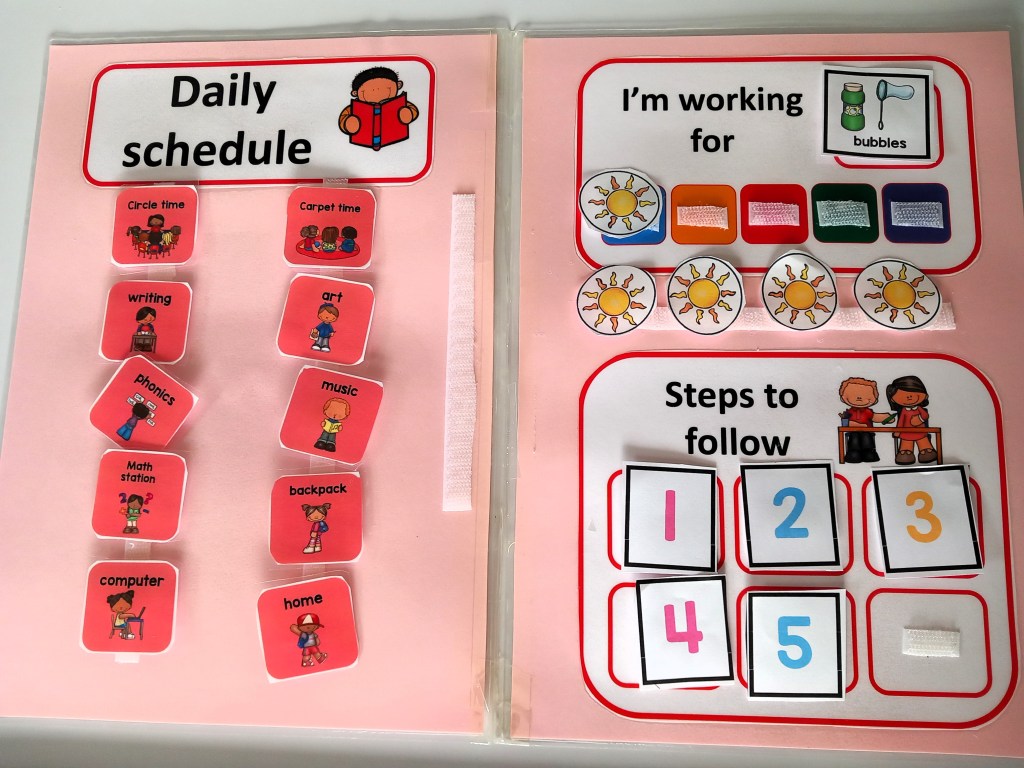
A Visual Behavior Support Folder is a personalized toolkit that can travel with the child. It includes key visual supports in one place, making it easy for adults to provide guidance on the go.
What to include:
- Emotion cards (happy, sad, angry, etc.)
- Coping strategy visuals (deep breaths, sensory break, ask for help)
- First-Then board
- Mini schedule or task strip
- Token board
This folder becomes the child’s go-to support system, helping them navigate routines and handle challenges with confidence.
2. Token Reward Systems
Token systems are a great way to encourage positive behavior and build motivation. Children earn tokens for meeting expectations, which they can exchange for a reward (like a favorite toy, snack, or activity).
How it works:
- Choose a goal behavior (e.g., “Quiet hands” or “Follow directions”).
- Let the child earn tokens (stickers, stars, smiley faces).
- When the token board is full, they get their reward!
It’s simple, visual, and celebrates success — which builds self-esteem and keeps motivation high.

3. Visual Schedules
Visual schedules help children know what to expect. They reduce anxiety, increase independence, and improve transitions.
Types of visual schedules:
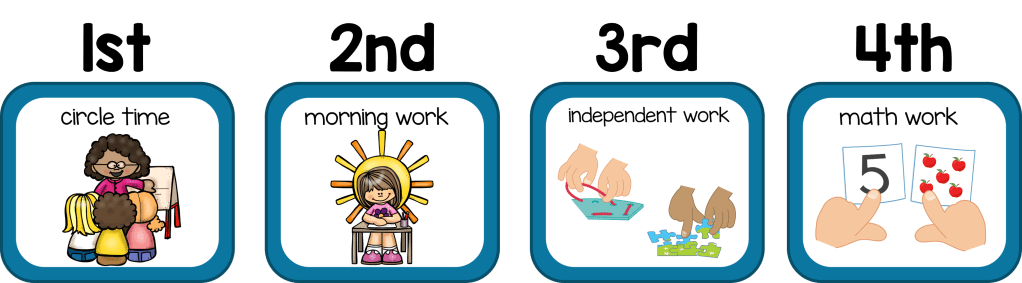
- Daily Schedule: Shows the whole day’s routine with pictures (e.g., snack, play, circle time, home).
- Mini Schedules: Break down specific routines like handwashing, getting ready, or center time.
- Left-to-Right or Top-to-Bottom Layouts: Choose the format that works best for the child.
You can use Velcro or dry-erase systems to allow flexibility and changes.
4. First-Then Boards
First-Then boards help clarify what needs to happen now and what comes next — especially helpful for non-preferred tasks.
For example:
- First: Finish puzzle
- Then: iPad time
This simple format helps reduce resistance and supports smooth transitions. Pairing something less preferred with something motivating is a powerful strategy for cooperation.

Visual strategies aren’t just helpful — they’re essential tools for many young learners with autism. By creating structure and reinforcing positive behavior, tools like token boards, visual schedules, and behavior support in a folder can make everyday life more manageable and enjoyable for everyone involved.
Quick Tip: Start small. Pick one tool and give it a try. Over time, you’ll see how much visual support can help your learner thrive.
Discover more from Autismade
Subscribe to get the latest posts sent to your email.

