I’m always looking for new, fresh and fun ideas for my classroom, but this week I’ve been focusing on Communication and Behavior Management. These two major areas can sometimes become a problem and force some of my kids to struggle. I wanted to establish clear and consistent rules and knew I needed to be creative in finding ways to enable them to acquire functional Communication skills as well as strategies to regulate behavior. My kids are visual learners, some non verbal, so having clear visual supports readily adapted for each of them would be a great big advantage and a place to start achieving the well organised and fully functional Special Educational classroom I wanted!
The Categories I needed to start tackling were:-
Supports for Behavior– where my students could learn how to self regulate and take control of their own behavior.
Supports for Communication– For my non-verbal’s to have a voice and understand the world around them.
With that in mind I created 5 SUPPORTS for communication
I use adapted Fairy Tale books in my classroom so my visual learners can access and understand the story in a simplified way. Each page of the story Ive added detachable visuals so young learners interact with their Fairy-tale favourites. The main objective of this lesson is to identify what’s on the page and to comment on what they see.
Sequencing Story Board
This board will help kids learn the sequence of the story with the detachable visuals
Story Words for Vocabulary practice
Vocabulary Keyrings are a handy way of teaching story words!
I have bundled 5 of my Fairy-tale Interactive Books, each one designed to involve students in learning about popular story characters and story sequences. For my Visual Students I’ve added a comprehensive interactive book, a ring of pictures for vocabulary and 2 sequencing boards.
The Standards targeted in these activities are:-
CCSSSL.K.5 Add drawings or other visual displays to descriptions as desired to provide additional detail.
CCSSSL.K.4 Describe familiar people, places, things, and events and, with prompting and support, provide additional detail.
CCSSSL.K.2 Confirm understanding of a text read aloud or information presented orally or through other media by asking and answering questions about key details and requesting clarification if something is not understood.
CCSSRL.1.9 Compare and contrast the adventures and experiences of characters in stories.
CCSSRL.1.5 Explain major differences between books that tell stories and books that give information, drawing on a wide reading of a range of text types.
CCSSRL.1.3 Describe characters, settings, and major events in a story, using key details.
CCSSRL.1.2 Retell stories, including key details, and demonstrate understanding of their central message or lesson.
CCSSRL.1.1 Ask and answer questions about key details in a text.
I use Visual Communication for my non verbal and students with minimal verbal skills in my classroom, and am always looking for ways to incorporate as much of these skills as I can in my daily activities.
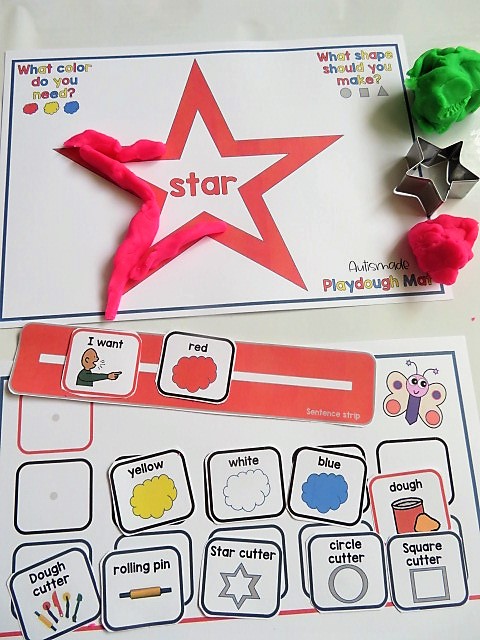
I designed this functional activity to practice Picture Communication in my playdough activities to make it more meaningful. My Kiddos can use visuals to request colors and tools they will need to complete these simple dough activity mats.
My Young learners can practice their colour and shape skills as well as initiate communication with these handy activity mats and visuals!
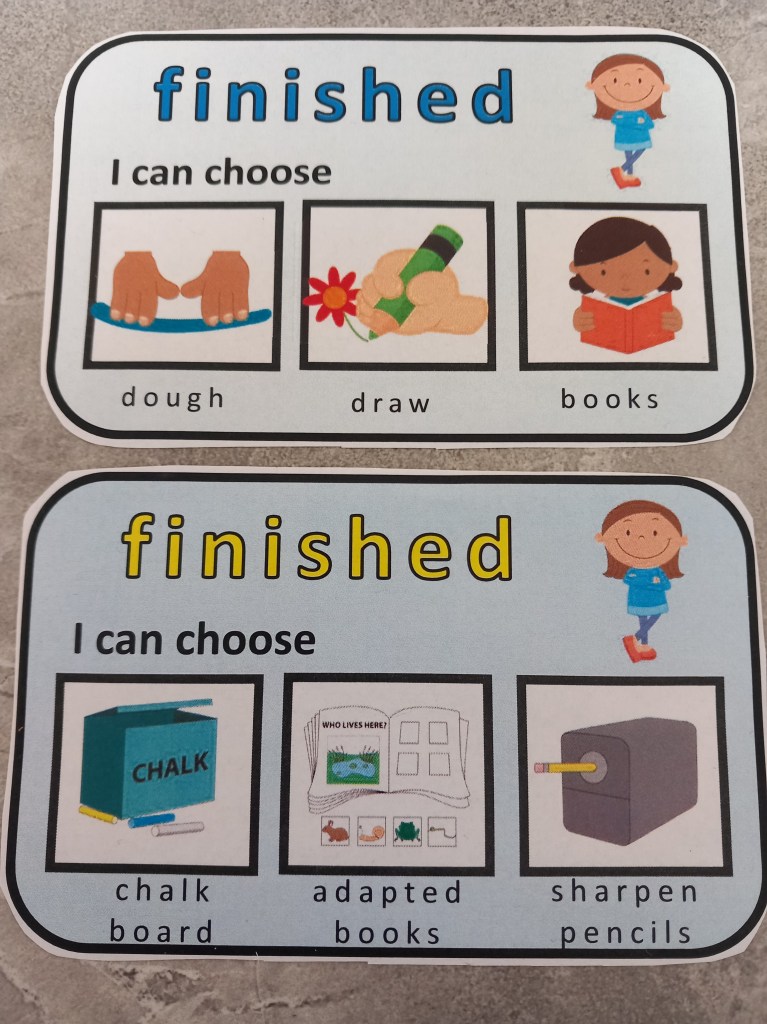
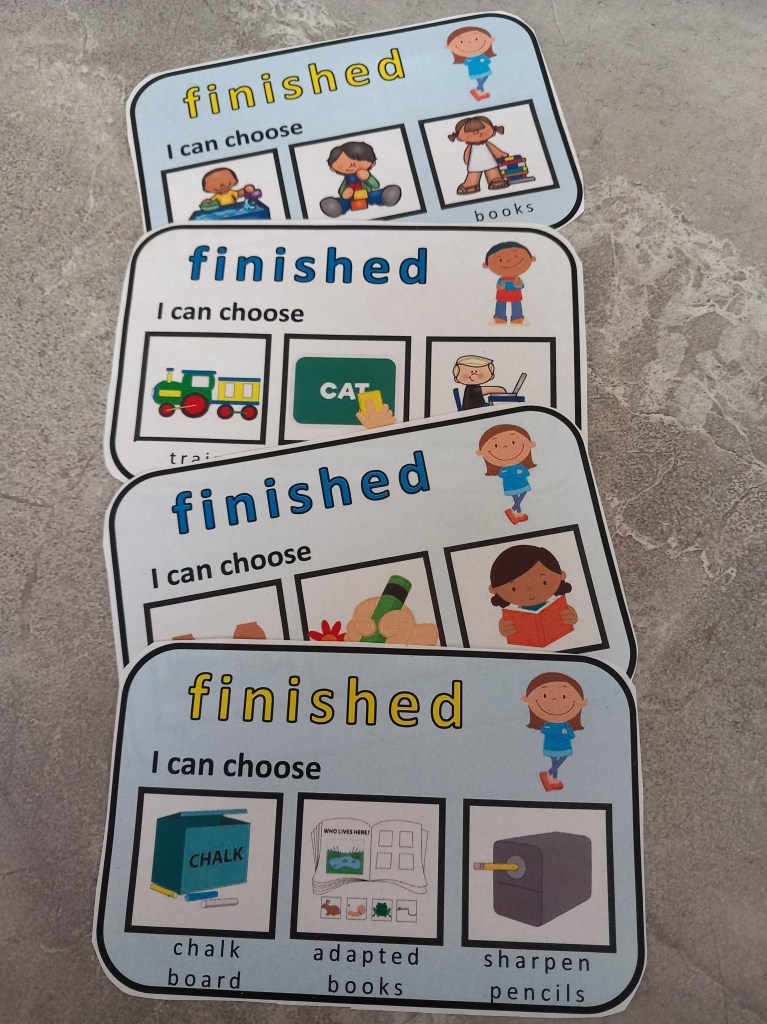
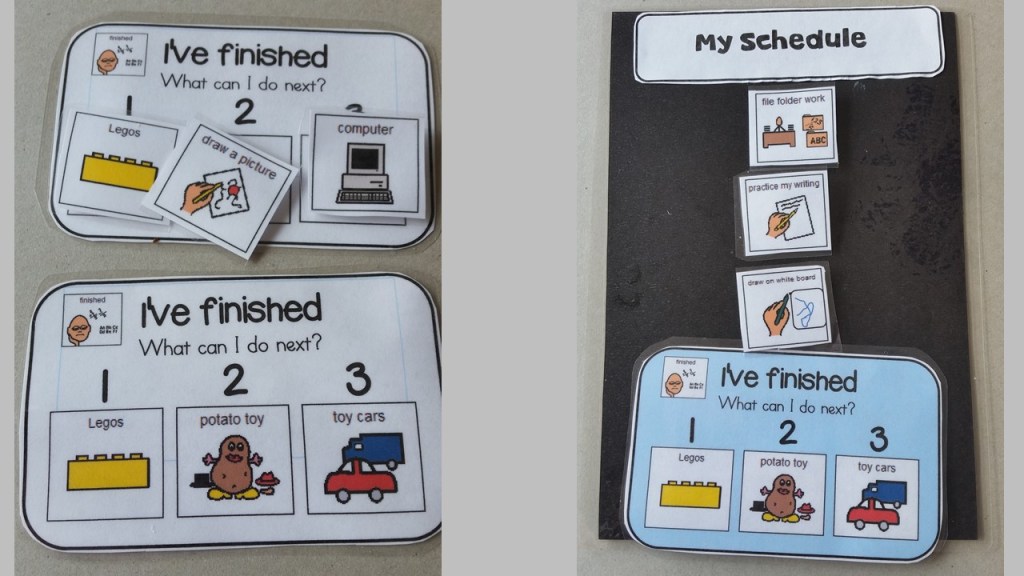
My young learners love to see the little finished cards placed at the end of their table. I thought it might become a distraction, but they turned out to be a great motivator to finish work well! Finished cards are a visual instruction that gives a variety of choices for my students to choose from when they have finished their curriculum task. I’ve adapted some of my cards with detachable pictures, designed for individual preferences. I love how my classroom transfers effortlessly between tasks and still looks busy with no fuss!
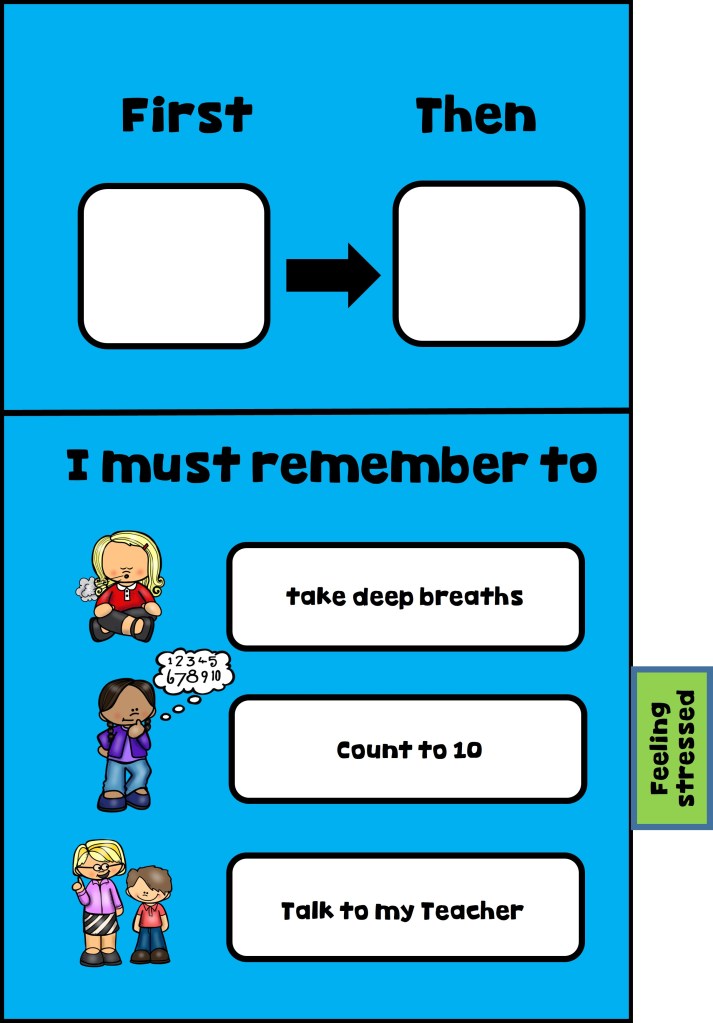
On the first day back to school I always introduce my Interactive Planner Binder to keep my young learners focused and motivated! Its full of visual strategies to help them plan their day, choose they’re reinforcer and stay in the area where they need to work.
I laminated the ones i made but you could easily place them in a pocket folder and use a dry wipe marker.
I’ve incorporated pages for my new students to jot down their name, grade and class, followed by their teachers name, their friends name, things they like and things they don’t.
There are pages with the days of the week for them to practice and tick off what day it is and same for seasons.
Having a schedule is so important so I’ve added spaces where i can write the order of the day and they can tick off as they go though it, handy to keep them on track!
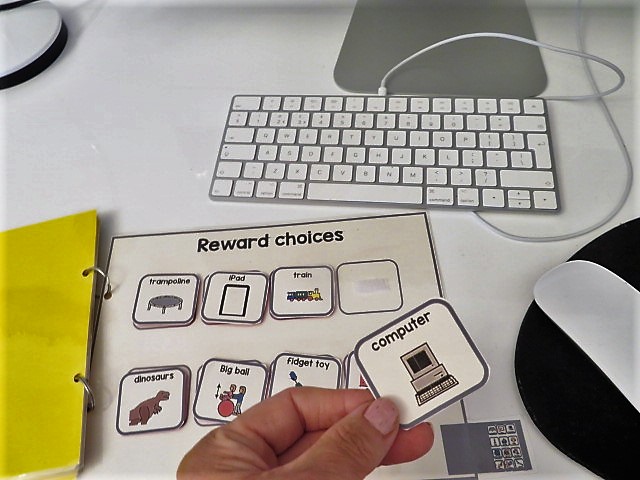
Working for cards and reward choice keep them motivated!
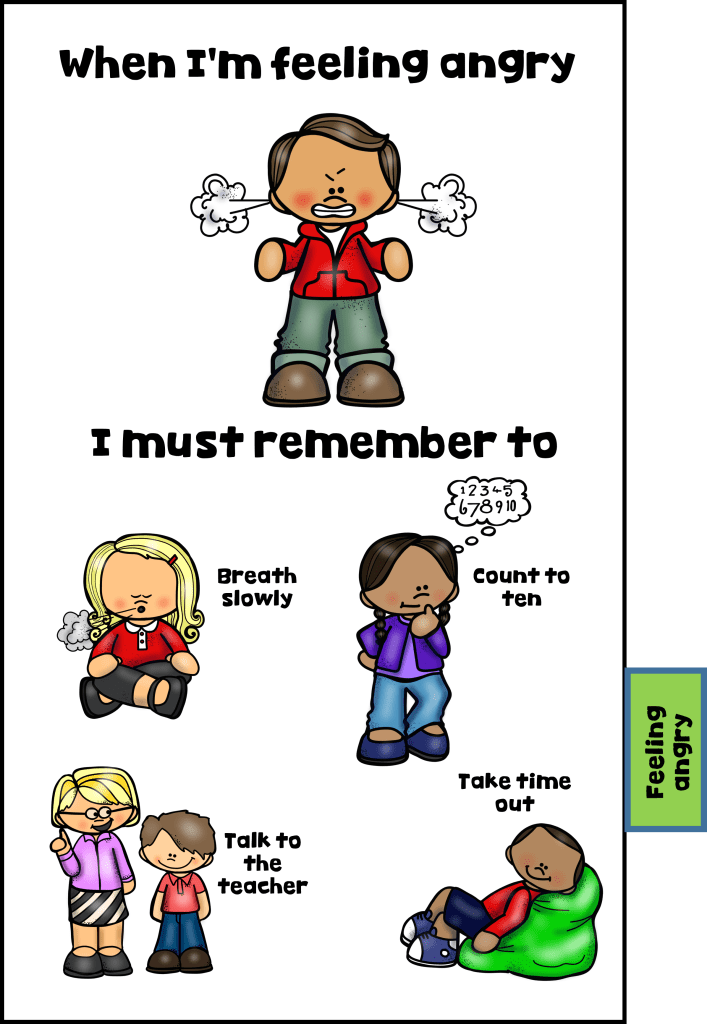
Reminders of what to do when they feel angry, “first and then” when they get frustrated and what “I need” visuals for them to choose from.