Spring Math Ideas for Pre-K

Spring Math ideas for my Pre-K Classroom

I’m bring Bugs to my independent Math centre! I’ve added creepy crawlers to an interactive selection of pages that cover some basic math skills that my young learners can practice and enjoy!

I’ve laminated these boards and popped them in a binder for my Kido’s to practice over and over again. For other students I print them out so they can use them as a cut and paste activities while my high level can write the answers using dry wipe markers.

These games are quick and easy to make up, simply laminate and Velcro and pop in a binder or printout for worksheets.

Matching numbers to 5 with the ladybugs

Match numbers to 5 with the caterpillar

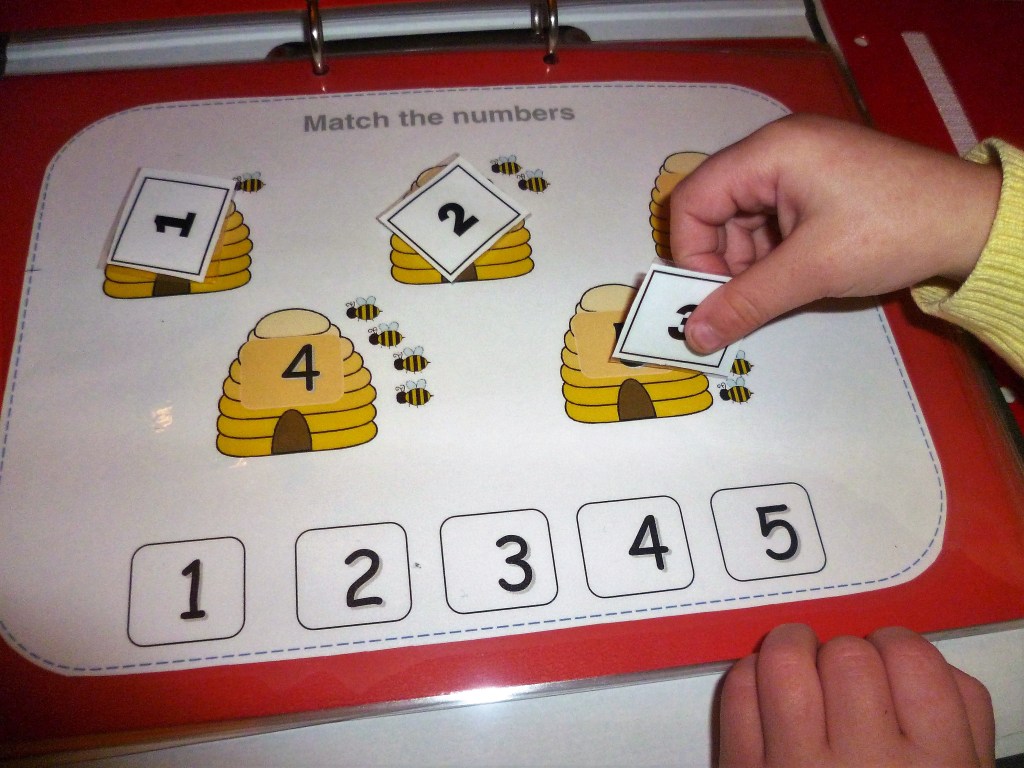
Count and Match numbers to 5 with the bees

Ordering numbers to 5

Order numbers to 5

Find the missing number to 5

Counting to 5

Sequencing bugs

plus more games and matching pieces

How to Use Social Narratives for Behavior Management

Social narratives are always available in my calm down area! I keep them on the book shelf ready to remind my young learners how to respond in difficult social situations. This type of visual guide describes social interactions helps with understanding social skills and cues that they might of missed. 

Social supports help my young learners understand how to behave or respond in particular situations by using visuals to describe various social interactions, situations, behaviours, and skills.

The main goal of a Social narrative is to share social information that describes how to behave in them instances.

Reading these stories, one to one and as a whole class lesson has enabled me to reinforce these important social skills. I’ve displayed a poster on classroom rules as a quick reminder and added supporting activities to generalise learning.

“Class Rules and “Inside voice,” are the ones I often read within a class lesson, usually when a reminder is needed on how behavior affects the class and disrupts others.

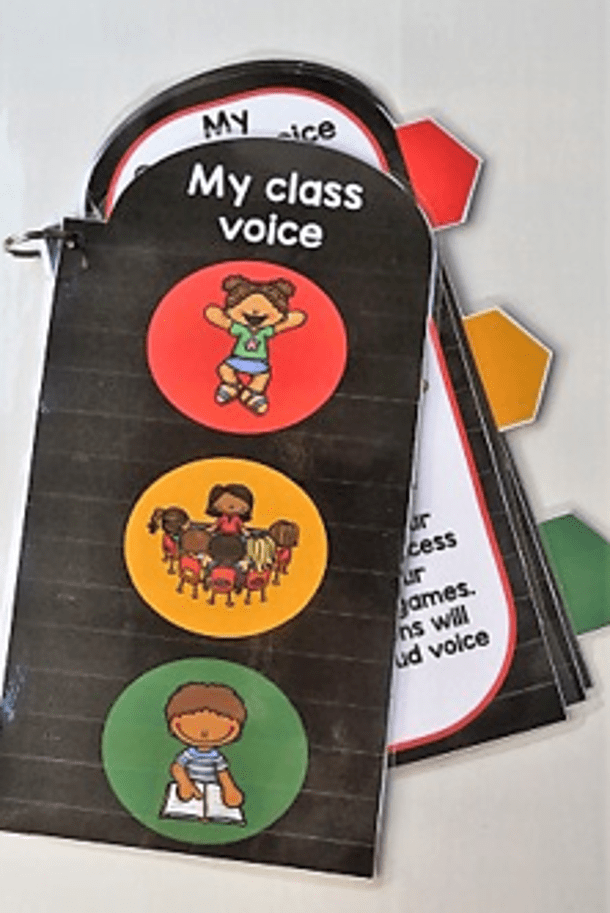
I use a quick reminder booklet to reinforce outside, inside and class voices!

“Be Kind” or “Listen to your Teacher” Might be needed for individuals or to target a more tricky behavior that is reoccurring.

I use Social Strips to support the skills outlined in the stories

Using adapted Books in SPED

Its not as hard as it sound to adapt any favourite book and make it interactive! You can target so many skills, like sentence starters, colour, shape, sentence structure, and sequencing, for Special Ed students.

I decided not to adapt a shop book but create and direct a version towards communication and understanding in more depth that would be more meaningful for young SPED students.

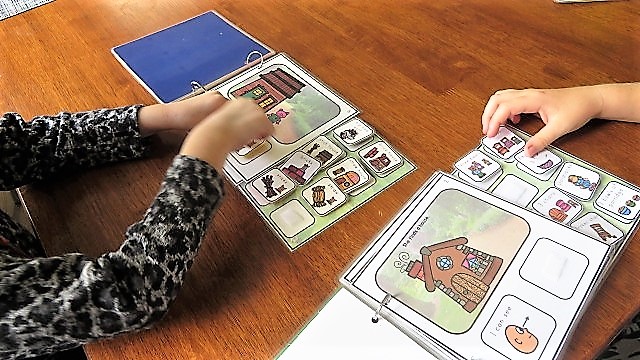
I loved simplifying these popular stories so my young learners could access them, especially Fairy-tale favourites. It was fantastic to seeing them learning to comment on what they were seeing in the book, remembering the story sequence, identifying the visuals to answer the “I can see questions, learning Story vocabulary and answer “who “questions about these characters.

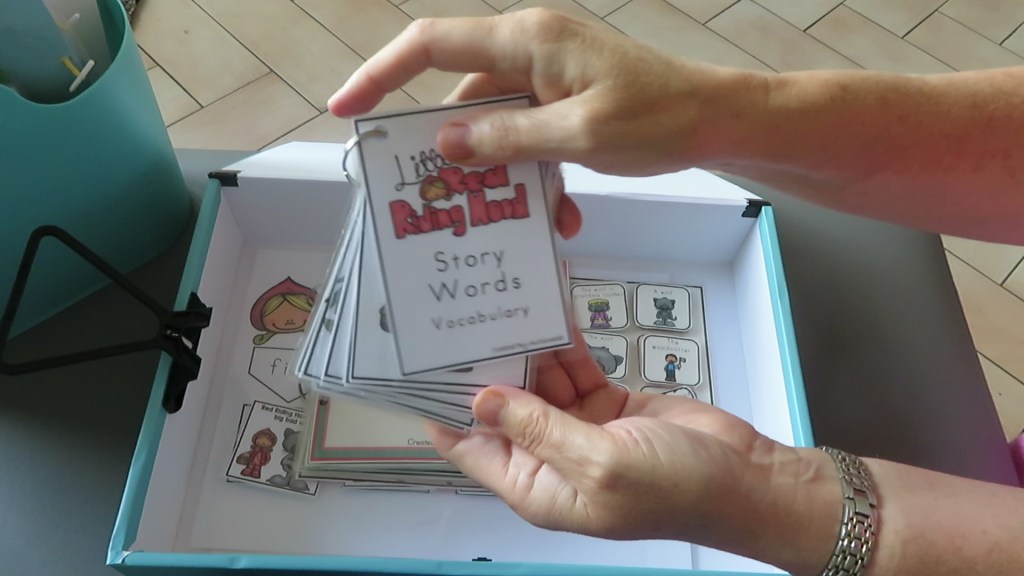
I couldn’t stop incorporating more learning strategies into these story sets and added story words, (story vocab on a ring) to teach character recognition.

and sequencing boards and cards!

Once printed out on card stock they were quick and easy to laminate and assemble with a ring binders and Velcro for visuals.

Visuals for a Busy Classroom

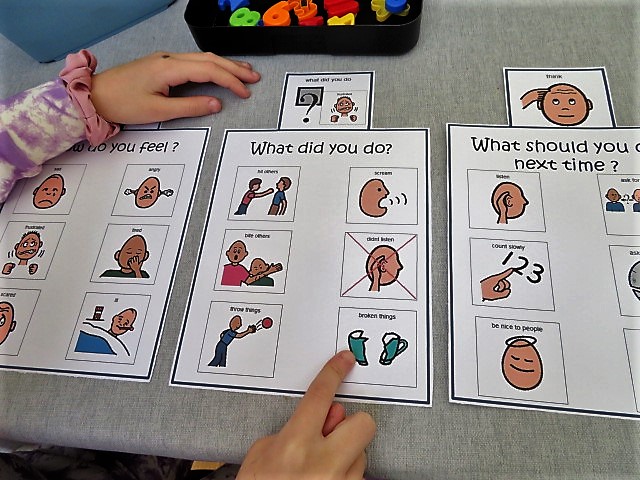
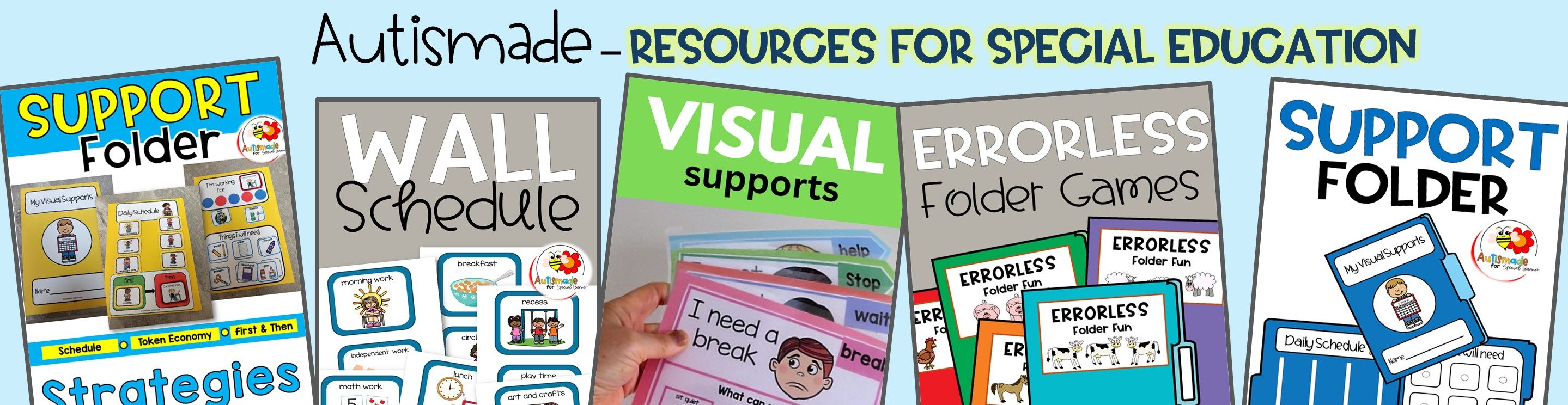
I’m always looking for new, fresh and fun ideas for my classroom, but this week I’ve been focusing on Communication and Behavior Management. These two major areas can sometimes become a problem and force some of my kids to struggle. I wanted to establish clear and consistent rules and knew I needed to be creative in finding ways to enable them to acquire functional Communication skills as well as strategies to regulate behavior. My kids are visual learners, some non verbal, so having clear visual supports readily adapted for each of them would be a great big advantage and a place to start achieving the well organised and fully functional Special Educational classroom I wanted!

The Categories I needed to start tackling were:-

  1. Supports for Behavior– where my students could learn how to self regulate and take control of their own behavior.
  2. Supports for Communication– For my non-verbal’s to have a voice and understand the world around them.

With that in mind I created 5 SUPPORTS for communication

  1. Daily Planner
  2. My Communication
  3. What I can do when I finish early
  4. Visual Support folder
  5. Self assessing my work

Then I started on the Supports for Behavior

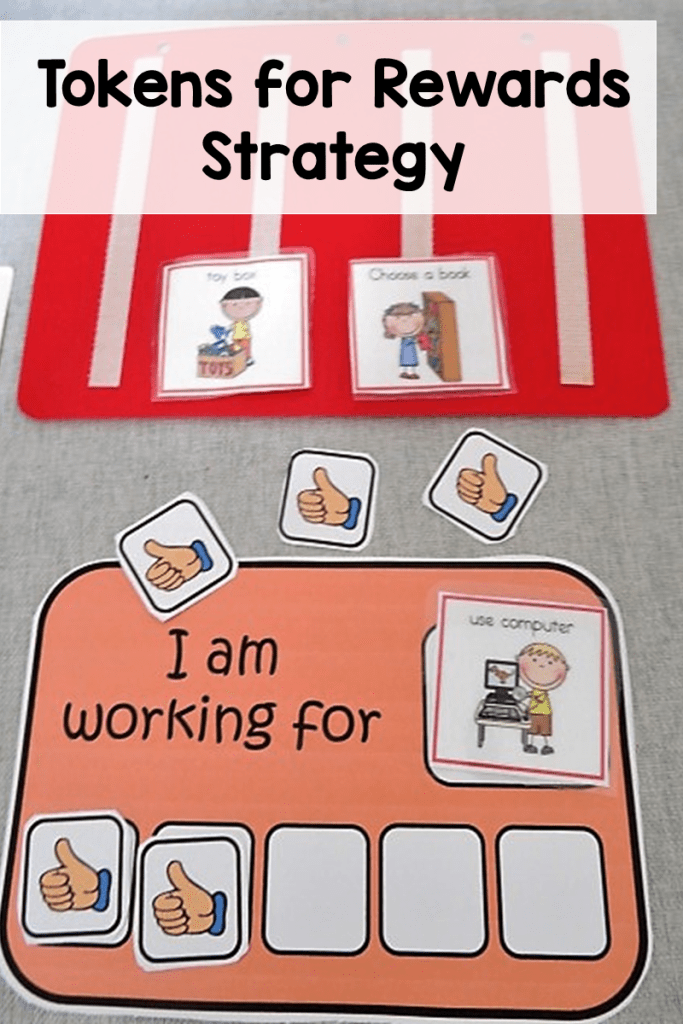
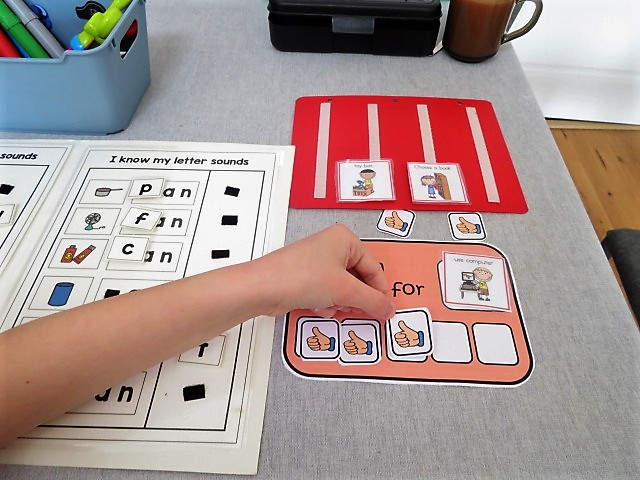
6.Token Economy

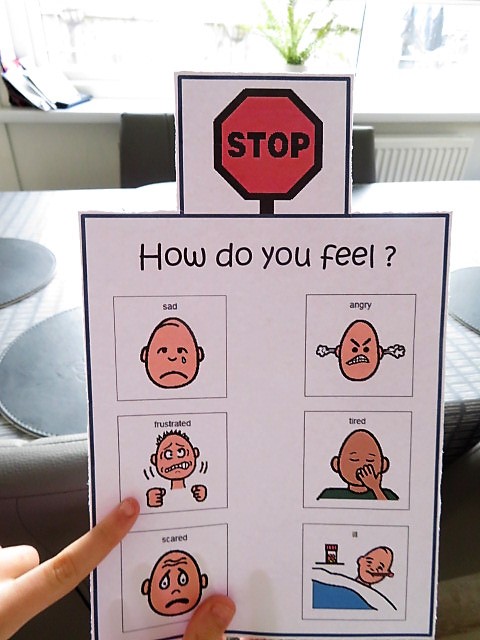
7.Behavior Support Folder

8.How I feel – Self Regulation

9.Classroom support cards – Critical Communication

Which resulted in 9 new Supporting Resources for my Classroom!

Why I make Adapted Books for my Literacy Area

I use adapted Fairy Tale books in my classroom so my visual learners can access and understand the story in a simplified way. Each page of the story Ive added detachable visuals so young learners interact with their Fairy-tale favourites. The main objective of this lesson is to identify what’s on the page and to comment on what they see.

Sequencing Story Board

This board will help kids learn the sequence of the story with the detachable visuals

Story Words for Vocabulary practice

Vocabulary Keyrings are a handy way of teaching story words!

I have bundled 5 of my Fairy-tale Interactive Books, each one designed to involve students in learning about popular story characters and story sequences. For my Visual Students I’ve added a comprehensive interactive book, a ring of pictures for vocabulary and 2 sequencing boards.

The Standards targeted in these activities are:-

CCSSSL.K.5 Add drawings or other visual displays to descriptions as desired to provide additional detail.

CCSSSL.K.4 Describe familiar people, places, things, and events and, with prompting and support, provide additional detail.

CCSSSL.K.2 Confirm understanding of a text read aloud or information presented orally or through other media by asking and answering questions about key details and requesting clarification if something is not understood.

CCSSRL.1.9 Compare and contrast the adventures and experiences of characters in stories.

CCSSRL.1.5 Explain major differences between books that tell stories and books that give information, drawing on a wide reading of a range of text types.

CCSSRL.1.3 Describe characters, settings, and major events in a story, using key details.

CCSSRL.1.2 Retell stories, including key details, and demonstrate understanding of their central message or lesson.

CCSSRL.1.1 Ask and answer questions about key details in a text.

INCLUDED in this Bundle –

1. Goldilocks and the Three Bears (With interactive pages and visuals)

2. Comprehension Book with “Who” questions and visuals

3. Story Key-ring for vocabulary

4.Story sequence card with “first, next and last” with story visuals.

5.Story sequence card with “first, next, then and last” with story visuals.

Little Red Riding Hood. (With interactive pages and visuals)

The three little pigs (With interactive pages and visuals)

Match Picture to picture

Hansel and Gretel. (With interactive pages and visuals)

Match Picture to word and small picture

Match word to picture

8 sequencing cards

Sequencing story board with small sequencing cards.

1. Jack and the Beanstalk (With interactive pages and visuals)

2. Comprehension Book with “Who” questions and visuals

3. Story Key-ring for vocabulary

4.Story sequence card with “first, next and last” with story visuals.

5.Story sequence card with “first, next, then and last” with story visuals.

***********************************************************************************************

Or you can get them separately

Little Red Riding Hood

Hansel and Gretel

The Three Little Pigs

Goldilocks and The Three Bears

Jack and the Beanstalk