Fun Activities for a Stress-Free First Week of School

I know that the start of a new school year can be a stressful time for students and teachers alike. But with a little bit of planning and creativity, we can make the first week of school a fun and engaging time for everyone.

I’ve come up with some fun activities over the years that help my students get to know each other, build relationships with their peers, and feel comfortable in their new Classroom. Not only are these activities great to start off a new school year, but they also provide opportunities to show individual levels of social skills and understanding.

One of my favorite first-week activities is the name game. It’s a simple icebreaker that involves each student sharing their name and one thing they like. It’s a great way to help students learn each other’s names and interests, and it often leads to some fun and unexpected conversations.

Another activity that I love is the classroom scavenger hunt. I create a list of items for students to find around the classroom, such as a pencil, a sharpener, and they can tick off when they find them. This activity helps students become familiar with their surroundings and encourages them to work together.

Click here for a FREE Download

I often have my students create an all about me poster, I give them a template to start their “All about me Poster” with place for “My Name”, what I like, favorite things and hobbies. Once everyone has finished we hang the posters around the room so everyone can see them.

I hope these activities inspire you with your planning for the first week back to school after a long Summer Break. But remember, get creative and make the classroom inviting too, with a little bit of work you can create a positive environment that will help your student feel welcome and supported!

Back-to-School Ideas for Creating a Positive Learning Environment!
Token Board Ideas

Token Boards can come in all shapes and sizes but they all should do the same thing… Motivate, Regulate and Reinforce Positive Behavior.

With the Summer term fast approaching I wanted to incorporate some fun and uniqueness into my Boards!

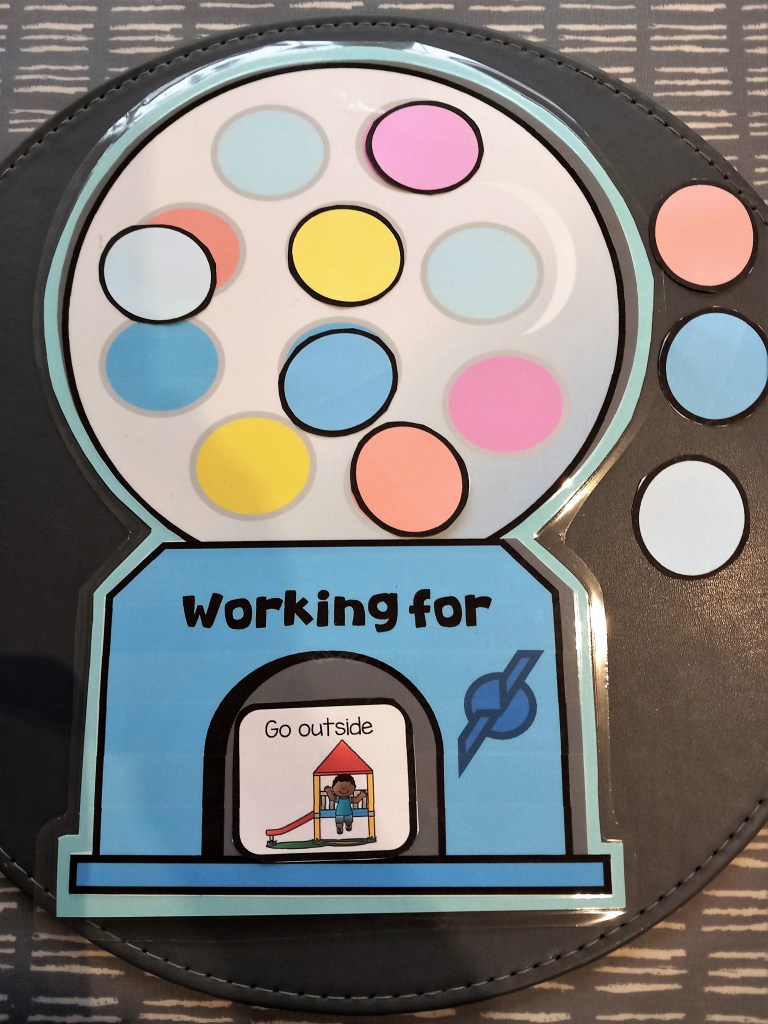
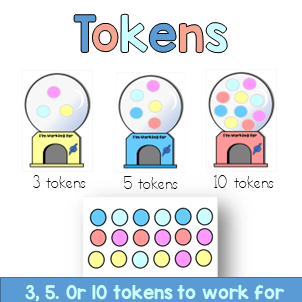
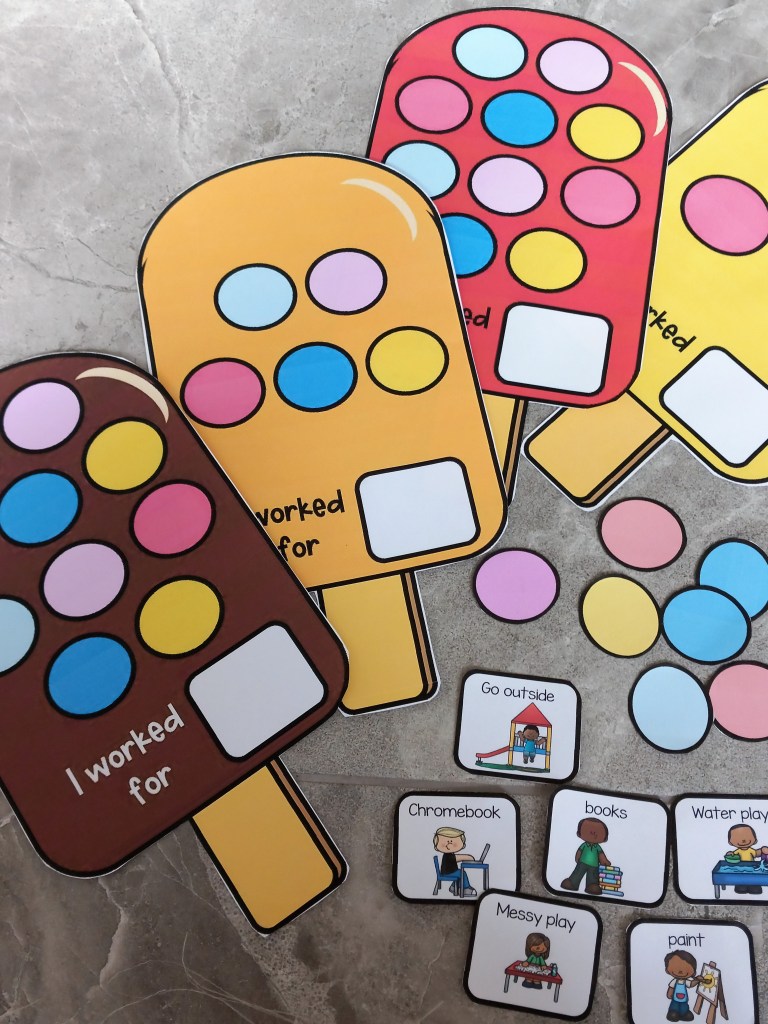
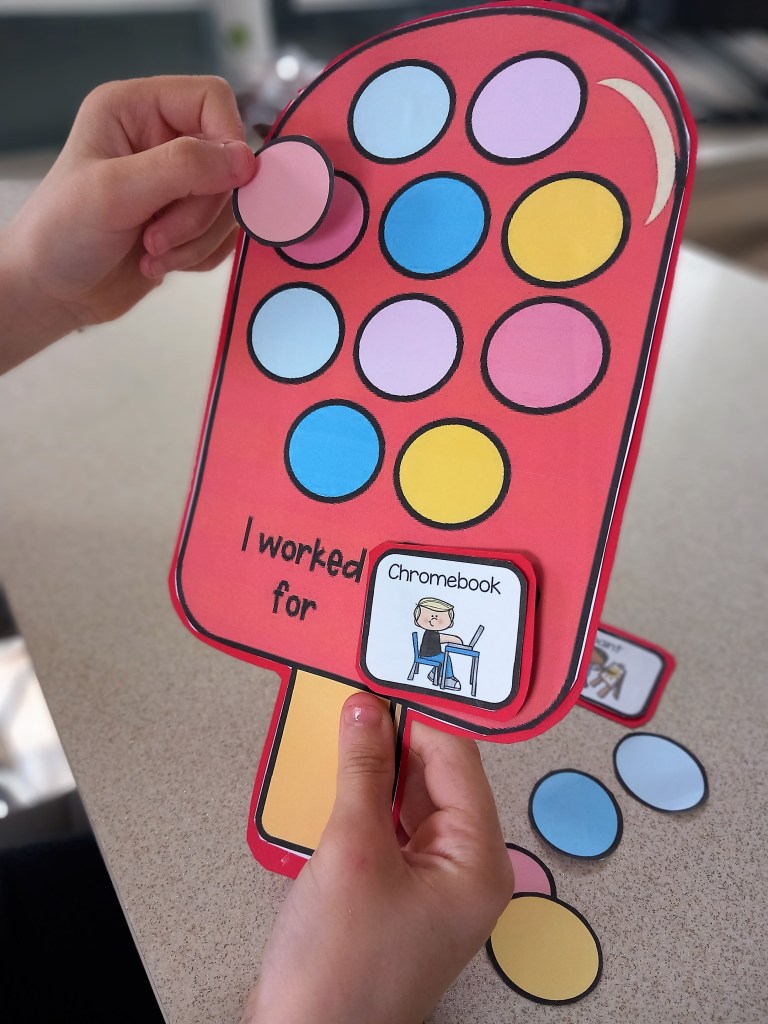
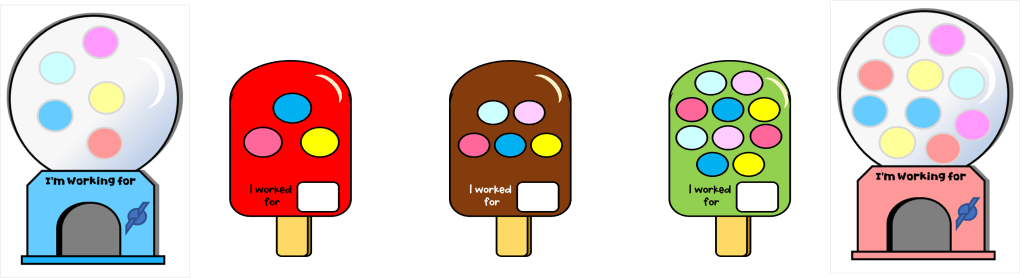
ICE LOLLIE AND BUBBLE GUM TOKEN BOARDS

Funny looking I know! but fresh and engaging for the last term with my little brigade.

Children in my class learn and work at different levels and use token reward systems with motivators they’ve chosen, so I made sure there was a place for the motivator picture and a bunch of others to alternate between if needed. I always adapt the Boards to meet each child’s interests and needs, this in its self makes them unique enough to motivate them to learn in my busy classroom.

Token are used like an IOU and once collected can be exchanged for the actual reinforcer they’ve chosen. Students can start off collecting 3 token before gaining their reinforcer and build up to 10 tokens once the concept is mastered and they’re ready to learn a little longer.

Reinforcers are offered before the task starts and tokens are distributed throughout.

Tips for setting up Visual Schedules in Special ED

Having a selection of Communication Strategies ready to use is always a good idea in Special Ed! Having a visual schedule is one strategy I find very effective in class. Below I’ve listed my schedule tips and other strategies that have really helped my young leaners settle into a structured learning environment.

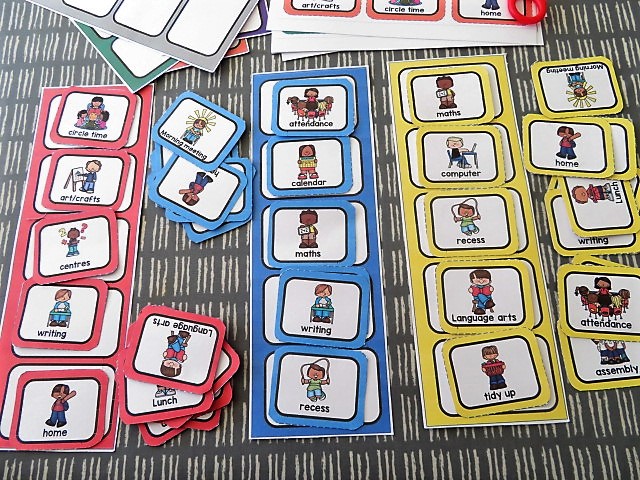
Visual Schedules – Set out visuals to reflect the order of the class day. They should be designed to support your student through a smooth transition eg. from activity to activity, room to room or within tasks.  

Here are some quick tips for setting up and getting started!

1. START SIMPLE – Make visuals for just meaningful times of the day eg, morning work, break, lunch etc,  this will help your young students learn to recognise and correspond each picture with each of the activities.

2. BUY A LAMINATOR – Your laminator will become important! If you want all your hard work to last, laminate all mounts and visuals because they are going to go through a tough time!

3. WALL MOUNT  – Mount on a wall, the schedule must be low enough for your student to access and take away finished symbols in the daily routine. 

4. USE A FINISHED BOX – Attach a finished box at the end or side of the schedule to drop the finished visuals in before starting a new activity. 

5. TRY A FILE FOLDER – A portable schedule can be used in a file folder in the same way as a wall mounted one. I find these easier with older children to check into the activities and more efficient in busy classrooms. Pop their name on it and keep all their individual support visuals in one place. 

6. MODLE AND PRACTICE – Always model, practice and remind your busy student at the beginning of each activity to, “check in”.  Make a plan to pull back on all prompting until they begin to use this system independently!

Timers – For giving a break and reminding students how long they need to work and how long left on free time!

Routines – Keep Break, Lunch and free choice the same time each day!

Consistency – All staff should use the same strategies and follow this classroom management structure!

Positive Reinforcers – Use token reward boards, First and Then, Behavior regulation tools and Reward systems tailored to individual interests and likes!

Communication – Critical skills for Functional Communication, a means in which your non verbal student is able to request a “break” “help”  or asked to “wait”

Colour Coordinate – For some of my young learners I’ve introduced portable schedules, that I’ve colour coordinated! 
I’m pleased it offers all the strategies I wanted to incorporated throughout the day.
I keep them in a handy place for my students to access first thing in the morning and follow the schedule by checking into the work areas they need to complete.
There’s a set place in the booklet for the schedule symbols, a token reward system, plus a place for reinforcer visuals and Critical Communication cards so students can ask for a Break or Help, all while reminding and keeping a consistent approach that staff can help students to follow!

Visit my TPT Store here

Social Skills-Being Kind to Friends

Download a FREE sorting activity

We often spend time teaching our children about friendships in school, often saying, share with your friends, kind hands, play nice. But some children lack the social skills, for what ever reason, to maintain healthy interactions with other kids and need regular reminding.

Its sometimes important to teach basic social skills to young learners on how to be a good friend. They might need us to help them understand some of the more complex parts of what being a good friend is and what that looks like.

Learning about how their own behaviours will affect others, about recognising other people’s feelings and how to respond in an understanding and caring way in order to maintain friendships is important to.

When difficulties arise some children can use visual guides or social narratives to guide them through the what’s and what-nots to do in friendship groups.

TIP – Use Social supports to reinforce positive behavior regularly either in a one to one situations or as part of a group. Using simple visuals with easy instructions during social skill sorting games and activities can help young learners stay on track.

Being kind Social Story –

Social Stories on TPT

Download free activity here

Effective Task Boxes for Special Education

When helping a child in Special Education to learn a new skill you need to give clear and simple instructions. A visually structured task can provide the small steps needed for them to understand, stay on track and complete an activity.

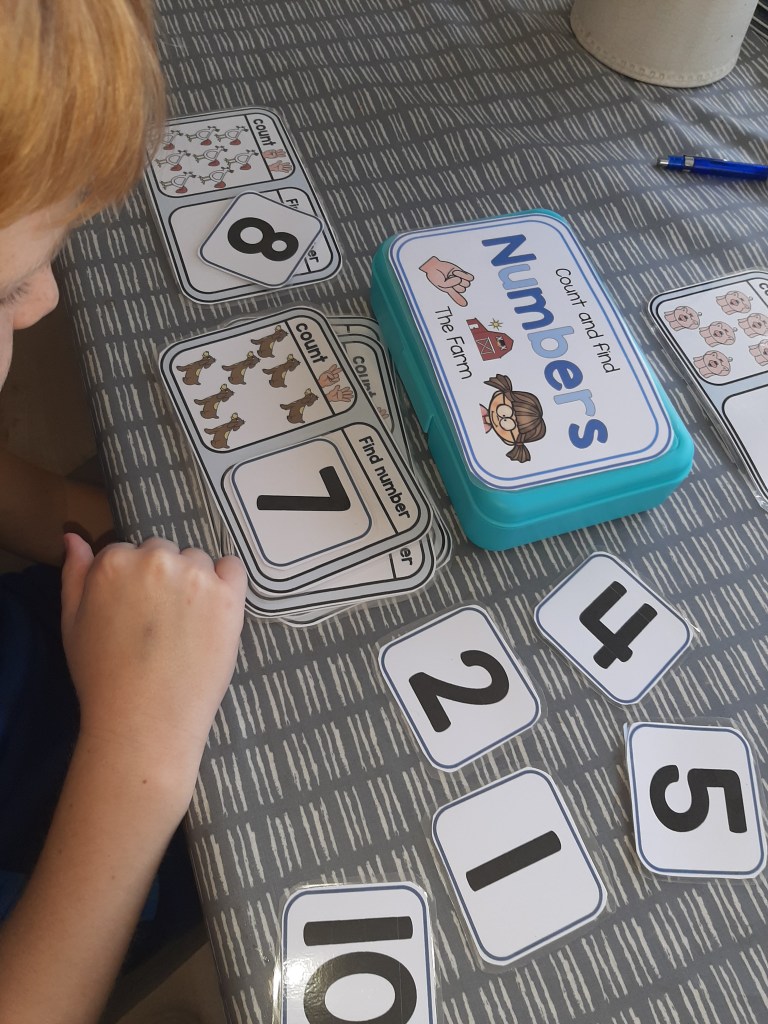
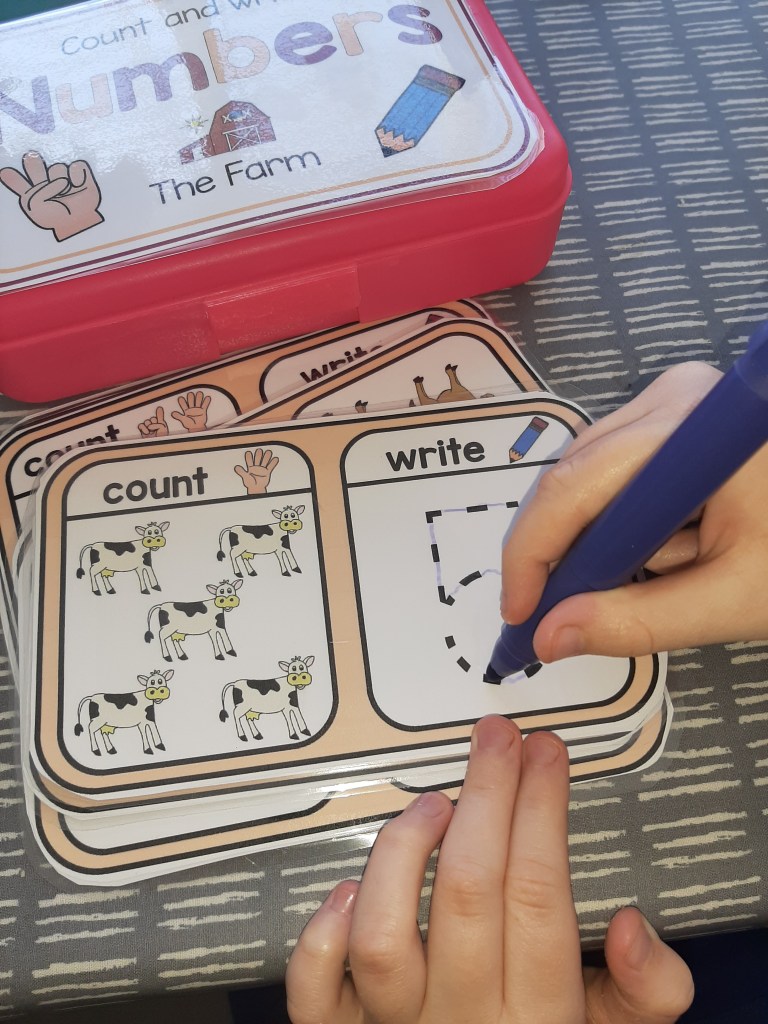
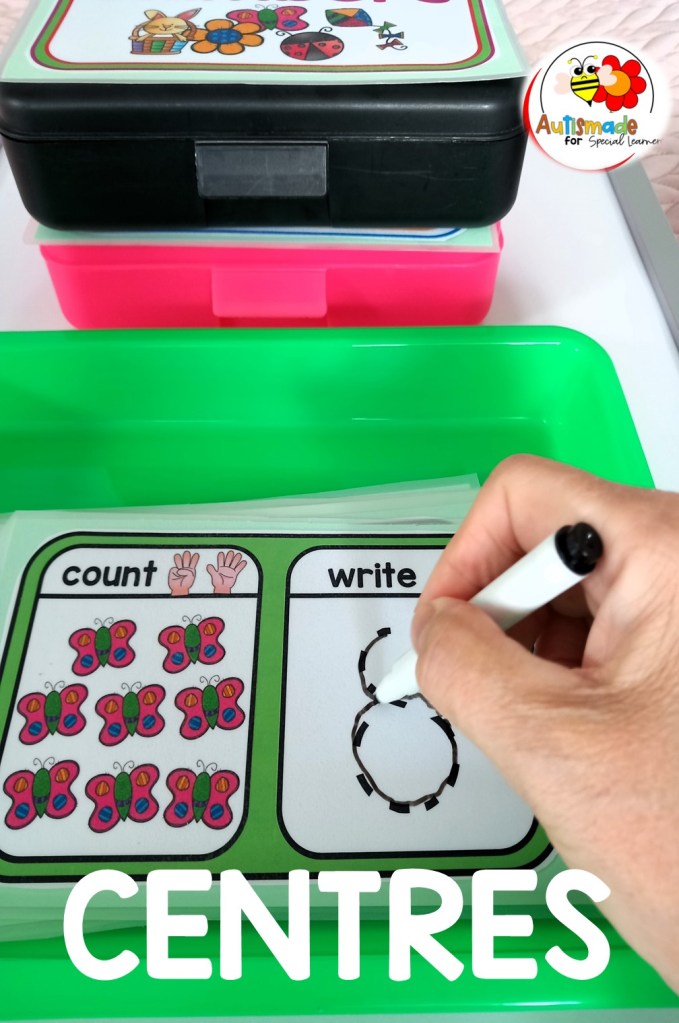
These type of Task box activities are broken down with one question to answer on each card as not to overload the learner. They enable the child to focus not only on the basic academic skills in front of them but strengthen fine motor skills, help the student develop self esteem and promote the independence I love to see in my classroom.

My workstations provide a calm area that has clear and specific visuals to help my students focus and learn. Adding these type of self-contained tasks at stations have provided continuous structure for my students to learn and master basic skills with no need for them to wander off and find other materials!

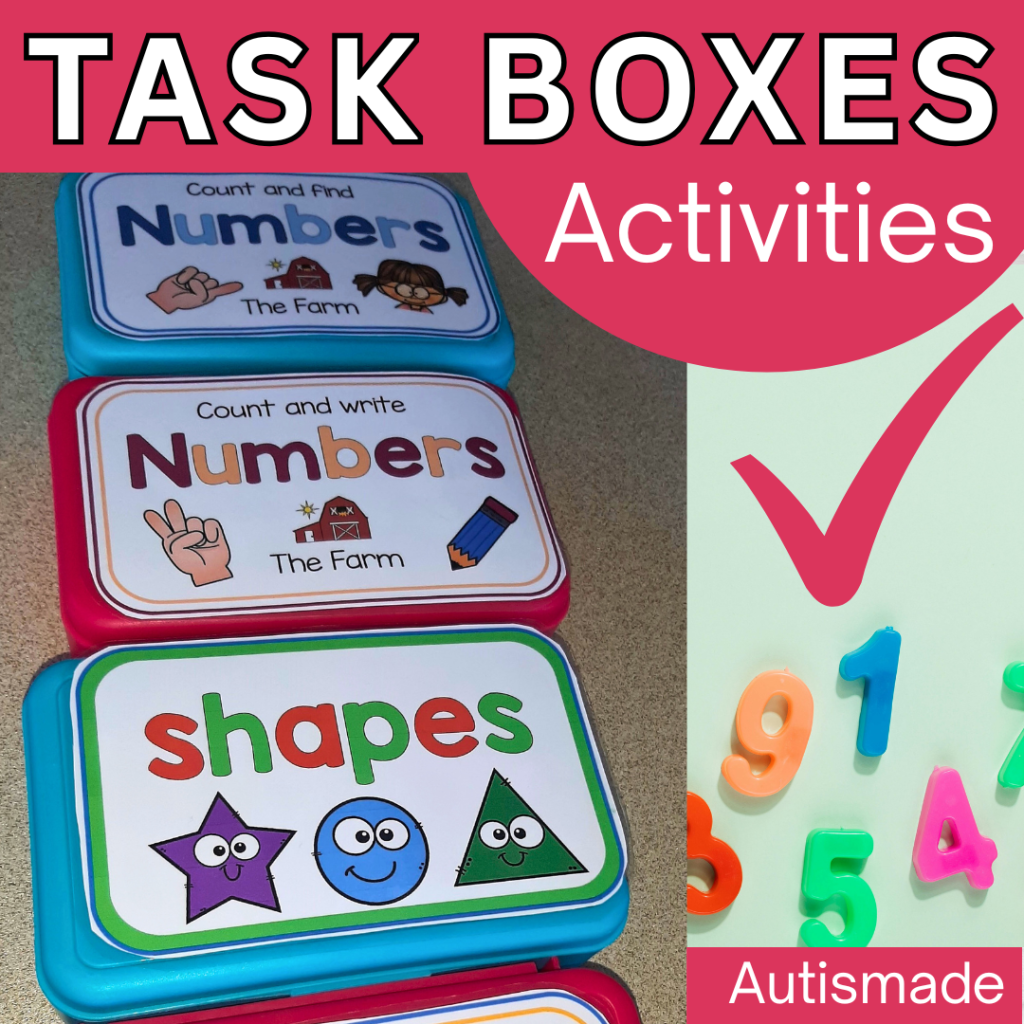
They are so handy to grab for my small group sessions as well as in the independent centres. I’ve organized them into their Curriculum groups and were able to fit into sandwich size containers! Now they’re labelled, easily stored and always ready and on hand.

It took some time to prepare them all in the beginning but now they’re just always ready to grab and go!

PICK UP FREEBIE Task Cards Here

“Click Below” For more Task box ideas Visit my TPT Store!

Try a Freebie

Basic Math Task boxes

Color Task Box Activity

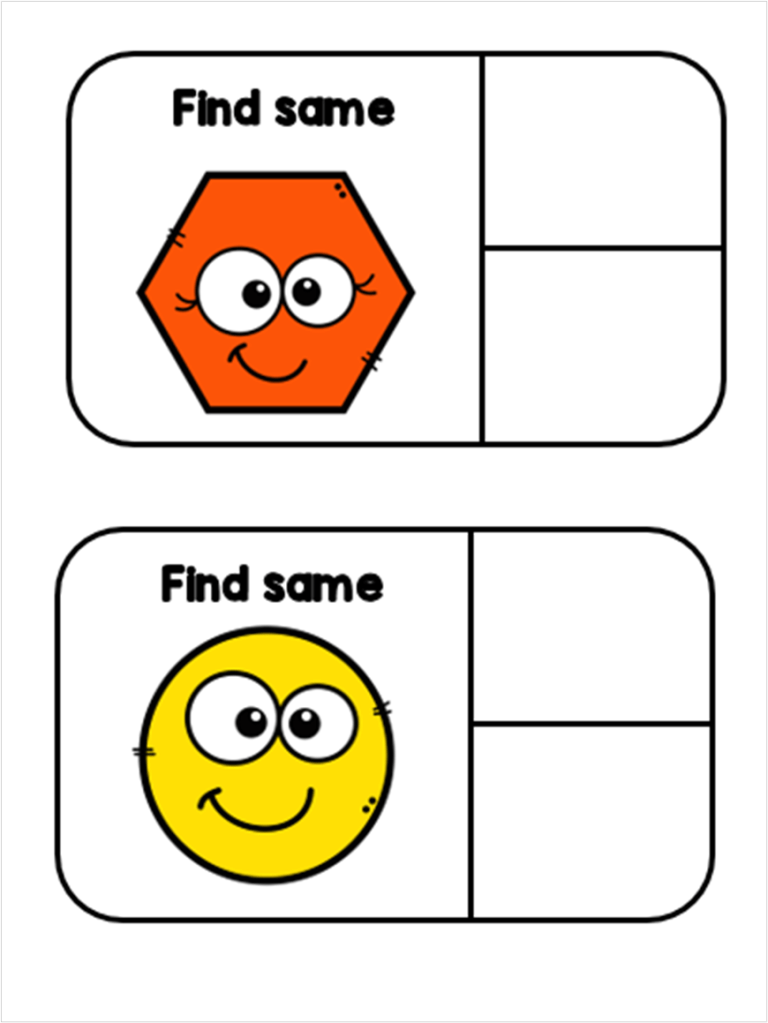
Task Cards – Find the Same

Color, Shape, Number, pegging

Opposites Task Cards

Letter Tracing Task Cards

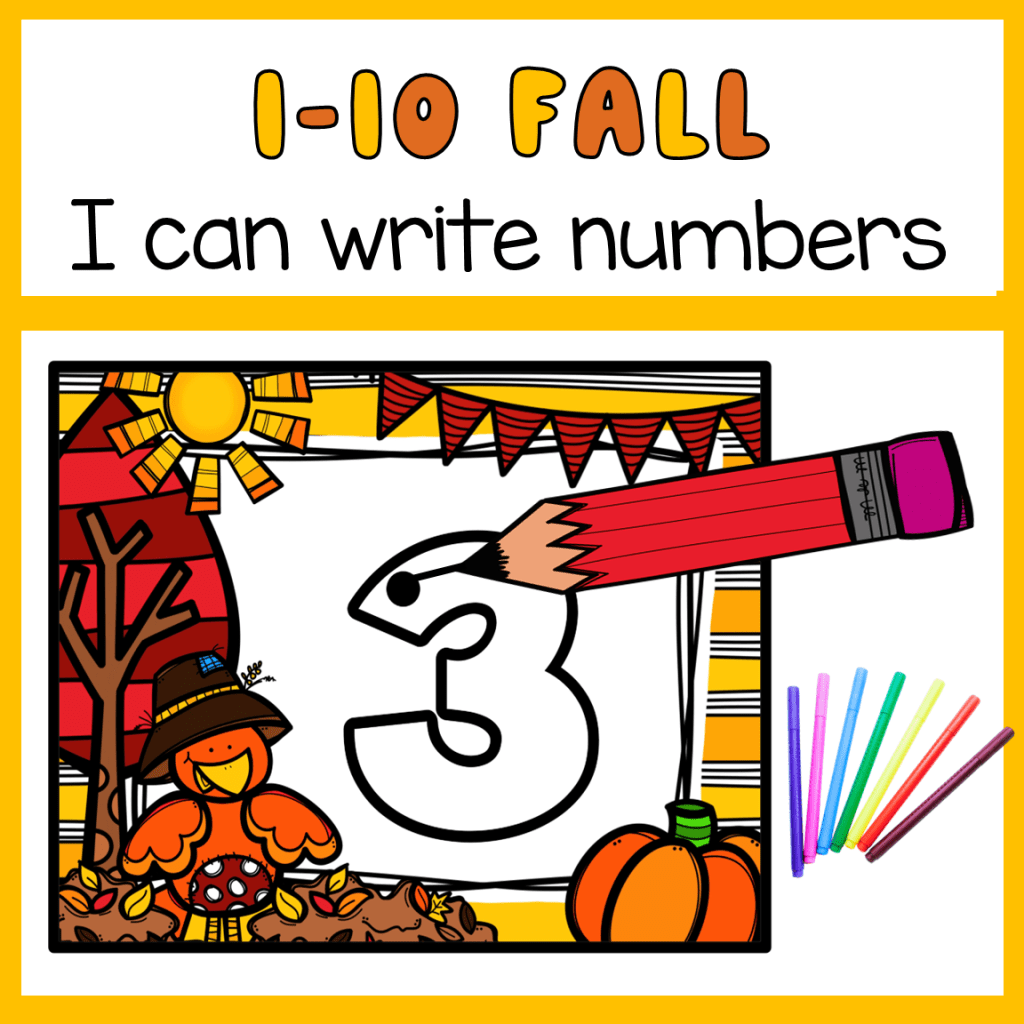
Fall Task Cards – I can write numbers to 10