Teaching Safety Skills with Social Stories: Supporting Children at School and Home

Teaching children about safety is an important part of everyday learning. For some students, particularly those in special education or autistic learners, safety rules and expectations may need to be taught in a clear, concrete, and predictable way.
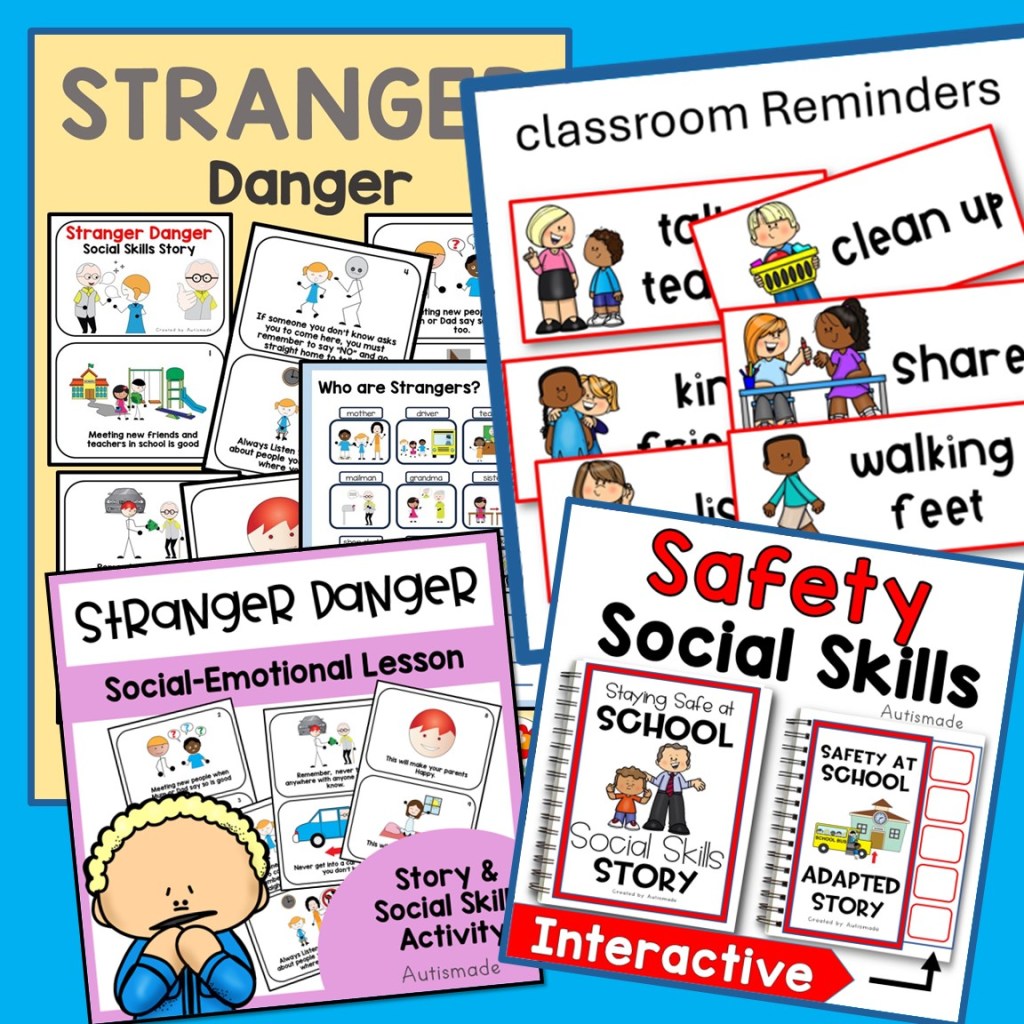
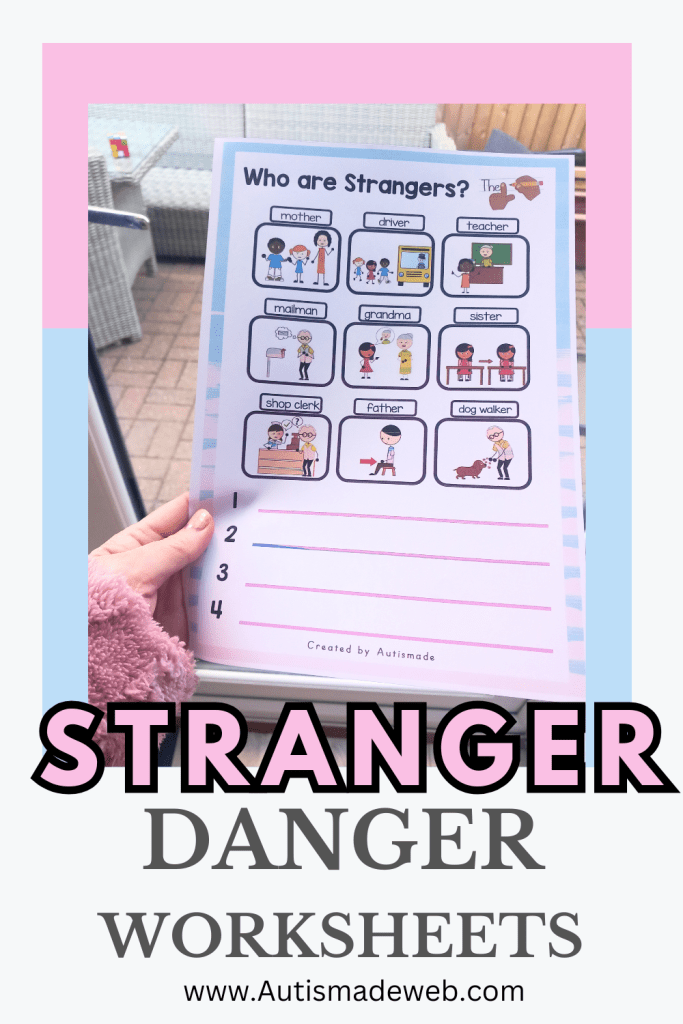
A collection of educational materials about 'Stranger Danger' and social skills, featuring colorful illustrations and text, including classroom reminders and social-emotional lessons.

This is where social stories can be a valuable teaching tool.

What Are Safety Social Stories?

Social stories are short, structured stories that explain a situation, what a child may experience, and what they can do to respond safely. They can help make unfamiliar or potentially challenging situations easier to understand.

Instead of simply saying, “Be safe,” a social story can break the idea of safety into small, meaningful steps.

For example, a story might explain:

  • How to stay safe in the classroom
  • Stranger Danger safe vs unsafe
  • How to ask a trusted adult for help
  • Understanding kitchen safety
  • What to do if separated from a caregiver
  • Safe choices at home
  • How to respond during an emergency
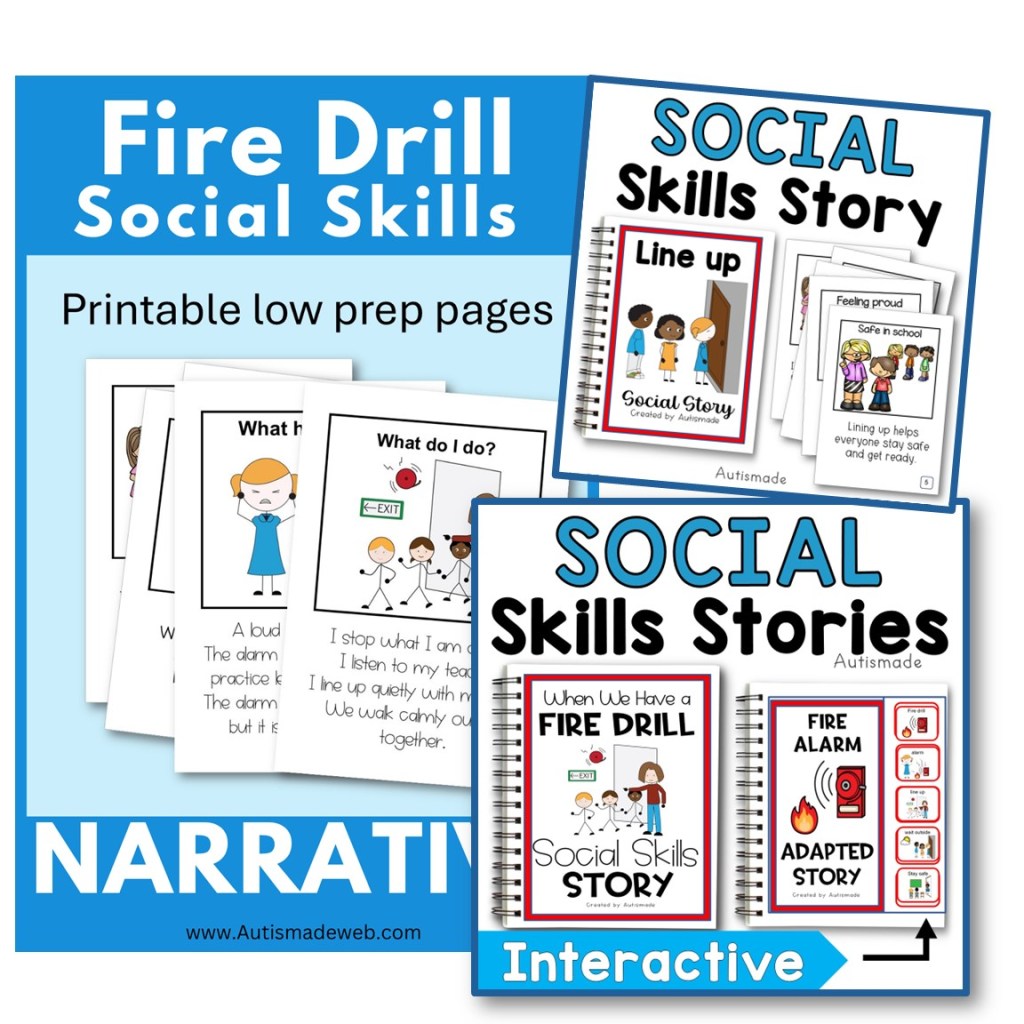
A collection of educational materials focused on fire drill social skills, including printable pages, social stories, and interactive resources. The top section highlights 'Fire Drill Social Skills' and the lower section features images of characters and instructions related to lining up and safety during fire drills.

Why Use Social Stories to Teach Safety?

Every child learns differently. Some students benefit from having information presented visually, repeatedly, and in simple language.

Social stories can be read before a situation occurs, practiced regularly, or revisited when a child needs a reminder. They can also be used during individual instruction, small groups, life-skills lessons, or as part of a classroom routine.

For teachers and families, they provide a simple way to introduce important safety concepts without overwhelming the learner with too much information at once.
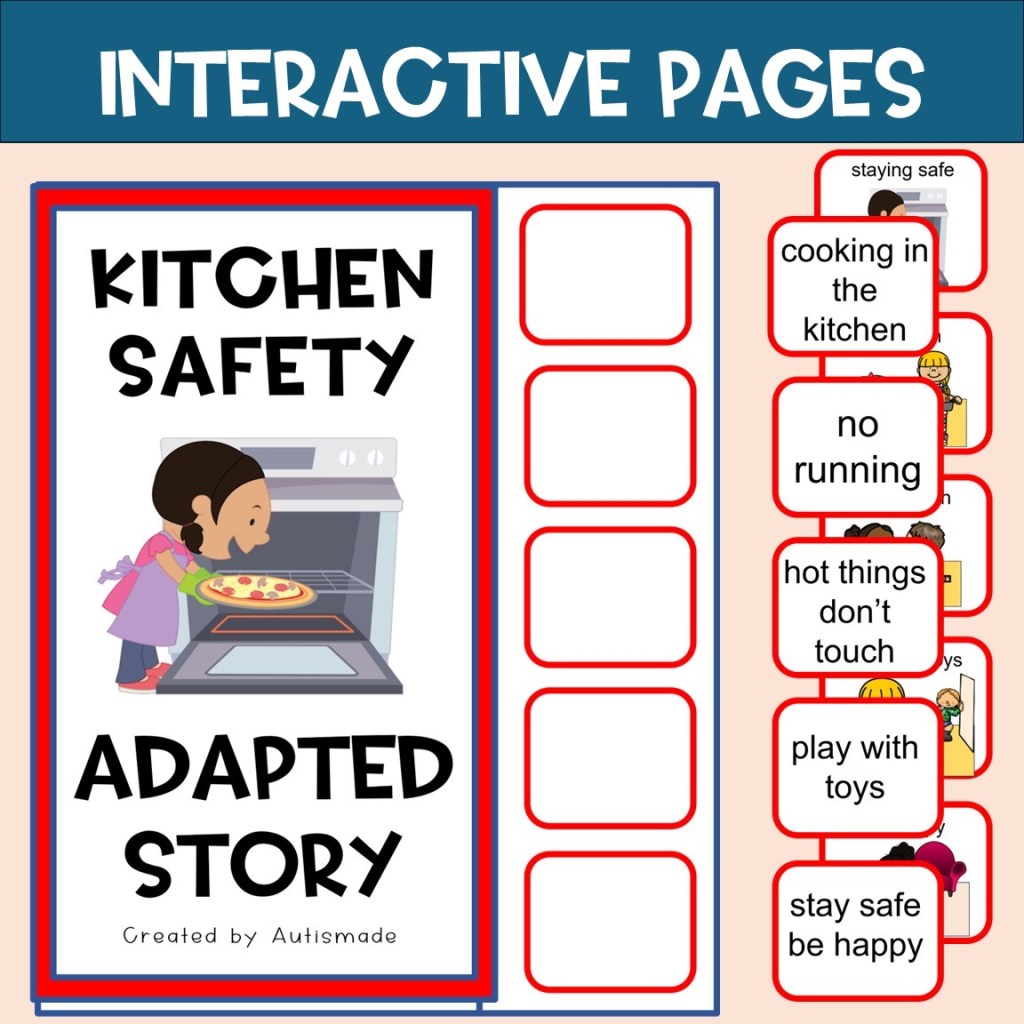
Illustration of a girl putting a pizza into an oven with the text 'KITCHEN SAFETY ADAPTED STORY' on the cover alongside interactive safety tips.

Making Safety Learning Meaningful

The goal isn’t simply for students to memorize a list of safety rules. It’s to help them understand what to do, who they can ask for help, and how to make safer choices in everyday situations.

Keep language clear and positive, use examples that are relevant to the child’s environment, and give students plenty of opportunities to practice the skills.

A Little Preparation Can Make a Big Difference

Whether you’re teaching School Safety, Kitchen safety, Fire Drill, or Stranger Danger, social stories can be incorporated into everyday teaching and routines.

With consistent practice and appropriate support, safety skills can become a meaningful part of a student’s journey toward greater independence and confidence.
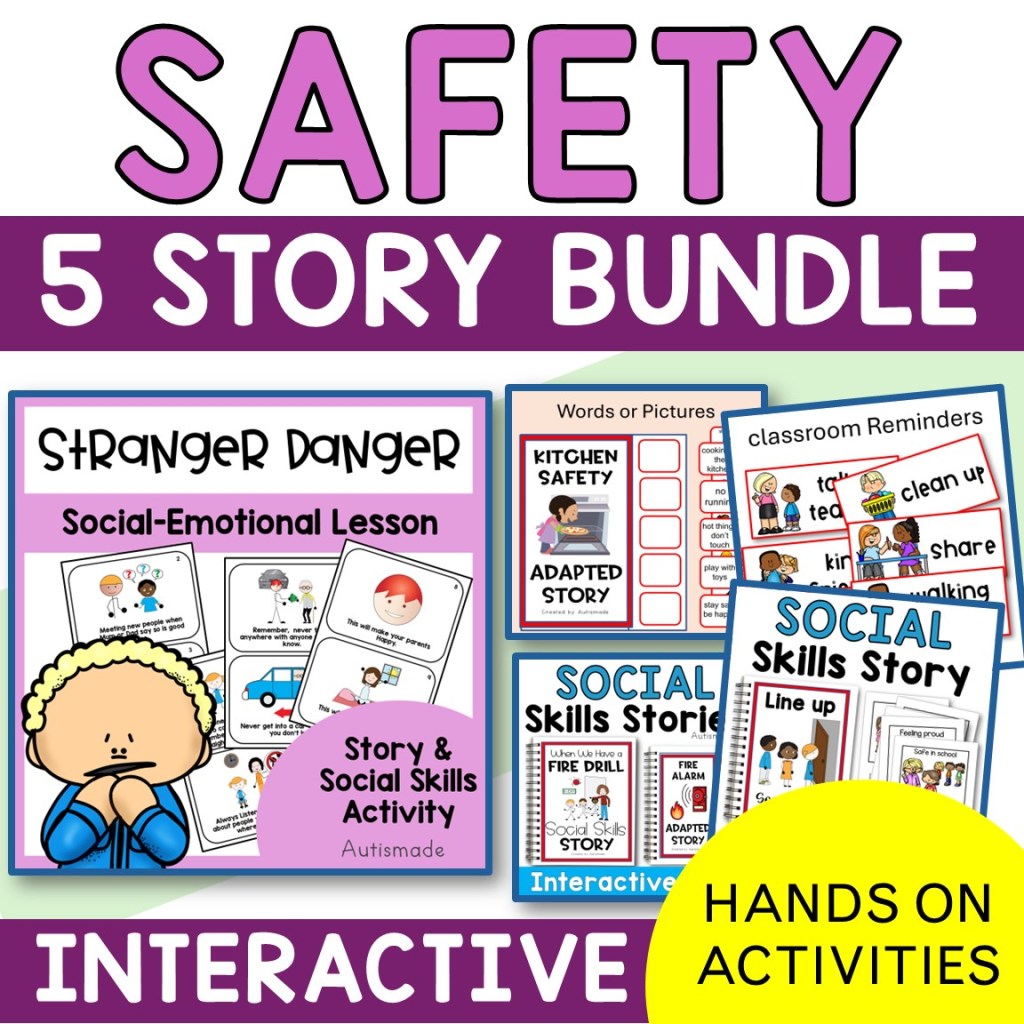
Graphic promoting a safety education bundle with a focus on social-emotional lessons. Features 'Stranger Danger' and other activities emphasizing social skills and safety reminders.

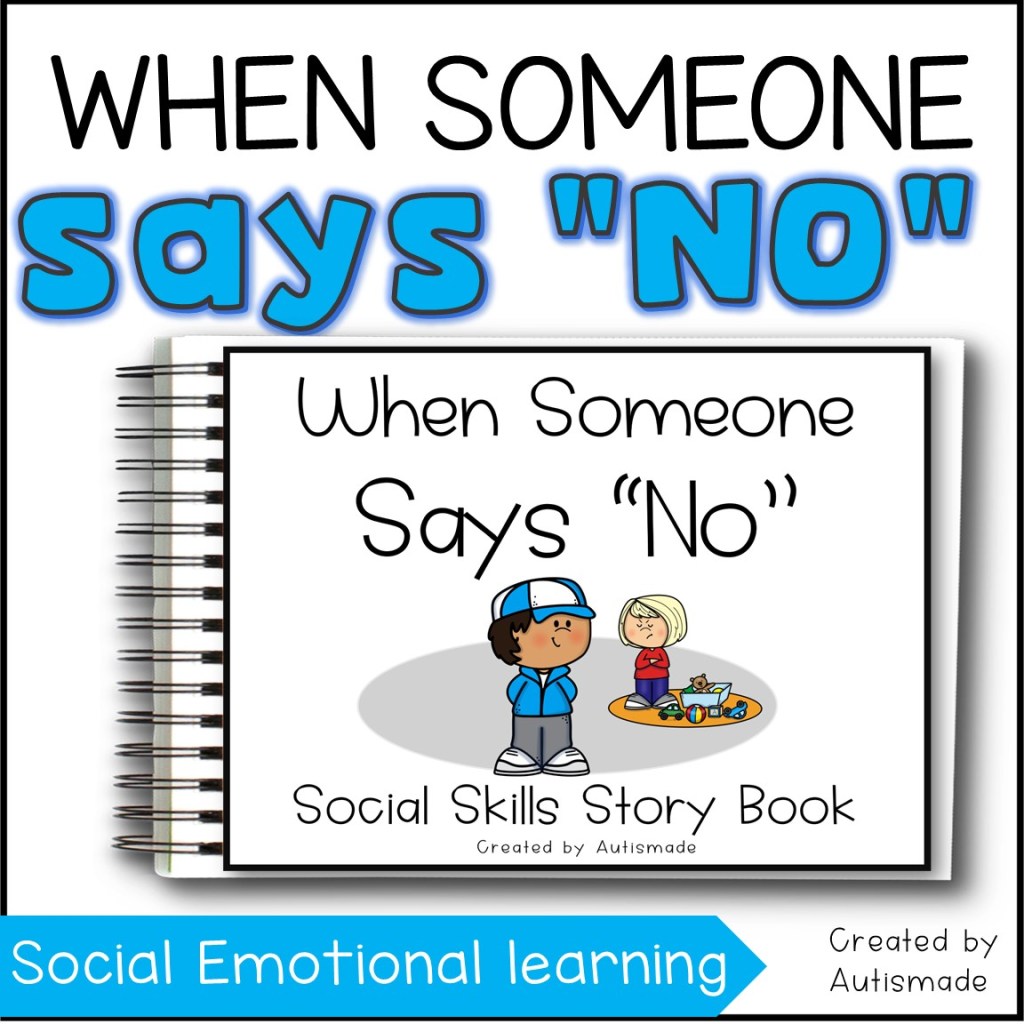
Teaching Children to Accept No: Essential Skills for Success

For many children, hearing the word “no” can be one of the biggest challenges they face each day. Whether it’s being told they can’t have another turn, can’t play with a preferred toy, or need to wait, these moments can lead to frustration, disappointment, or big emotions.

The good news is that accepting “no” is a skill that can be taught, practiced, and reinforced with consistent support.

Children are still developing the skills needed for emotional regulation, flexible thinking, and problem-solving. For many students, especially those with autism, ADHD, developmental delays, or other learning differences, unexpected changes or denied requests can feel overwhelming.

Instead of assuming children already know how to respond, we can explicitly teach:

  • How to stay calm.
  • Safe ways to express feelings.
  • Positive choices they can make next.
  • What expected behavior looks like in different situations.

Social stories provide a clear, predictable way to introduce social expectations. They help children understand not only what is expected but also why certain behaviors are helpful.

Reading a social story before challenging situations gives students a chance to practice appropriate responses in a calm, supportive environment rather than learning in the middle of a difficult moment.

Learning doesn’t stop after reading a story. Children benefit from seeing and practicing the skill in different ways.

Activities such as:

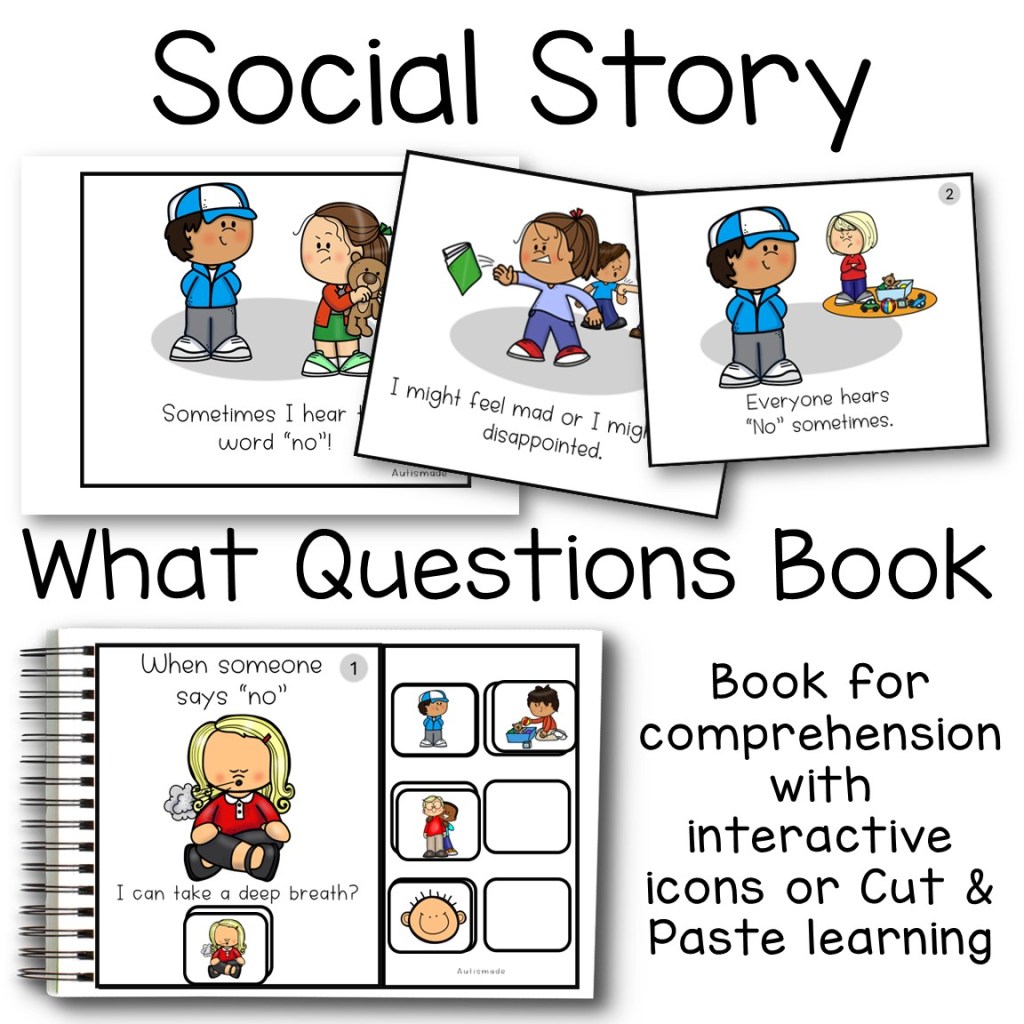
  • Interactive comprehension books
  • Behavior sorting games
  • Visual reminder cards
  • Choice boards
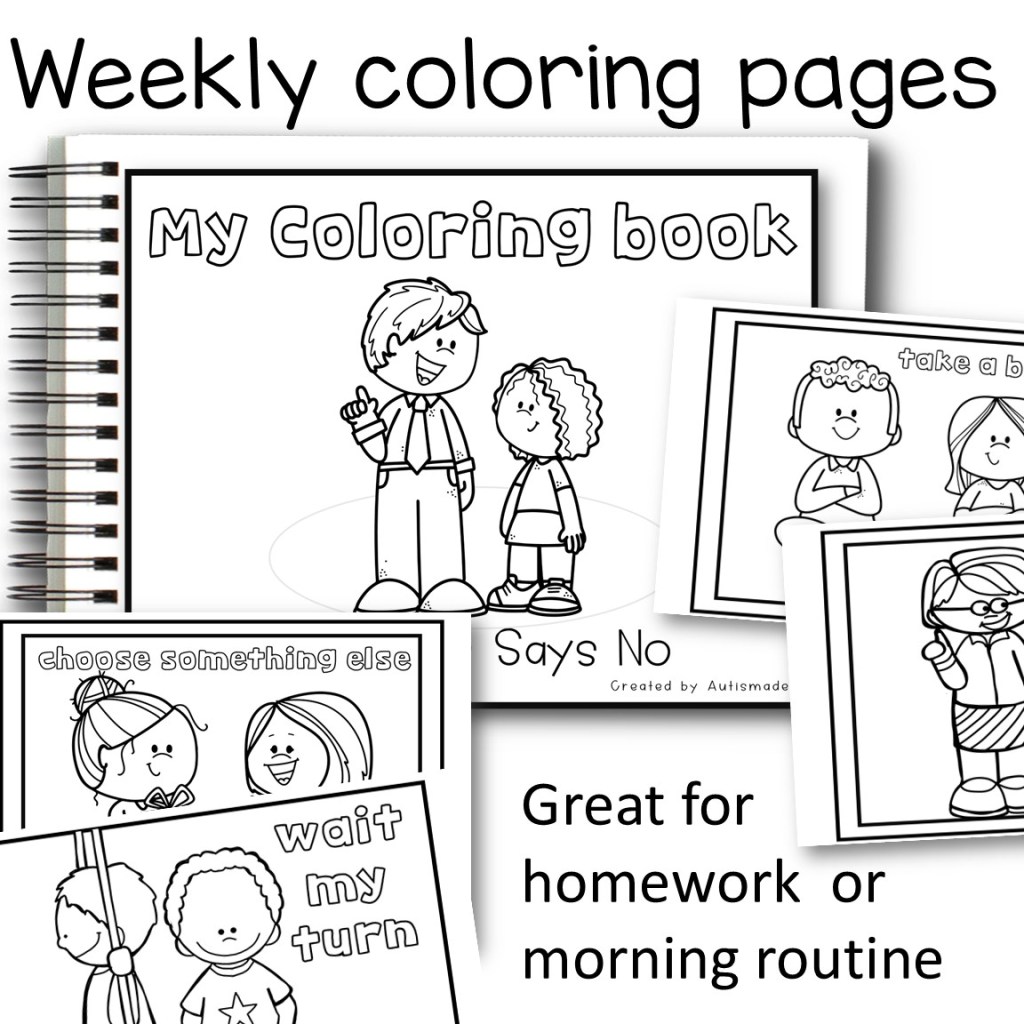
  • Coloring pages

help reinforce the same concept through repetition and hands-on learning. Using the same language and visuals across the classroom creates consistency, making it easier for students to remember what to do when they hear “no.”

Teaching children to accept “no” isn’t about expecting perfect behavior. It’s about helping them build lifelong skills for handling disappointment, waiting patiently, solving problems, and communicating appropriately.

With consistent practice, encouragement, and visual supports, students gain confidence in managing their emotions and making positive choices, both in the classroom and beyond.

If you’re looking for ready-to-use resources, my “When Someone Says NO” Social Story and Activities includes an engaging social story, interactive comprehension book, behavior sorting game, lanyard visuals, choice boards, coloring pages, and printable visual supports designed to help students learn and practice this essential social skill in a meaningful way.

Click here For More Social Skills Stories and Activities

Asking for Help

Personal Space

Sharing

Safe Hands

Stranger Danger Story for Kids: Safety Skills for Autism

Teach young learners how to stay safe around strangers with this engaging Stranger Danger Social Skills Story! Perfect for students with autism, special needs, or early learners (PreK–2nd grade), this easy-to-understand story uses clear visuals, simple language, and social narratives to help children recognize safe vs. unsafe situations.

What I’ve included:

  • Printable Social Skills Story
  • Visual supports for comprehension
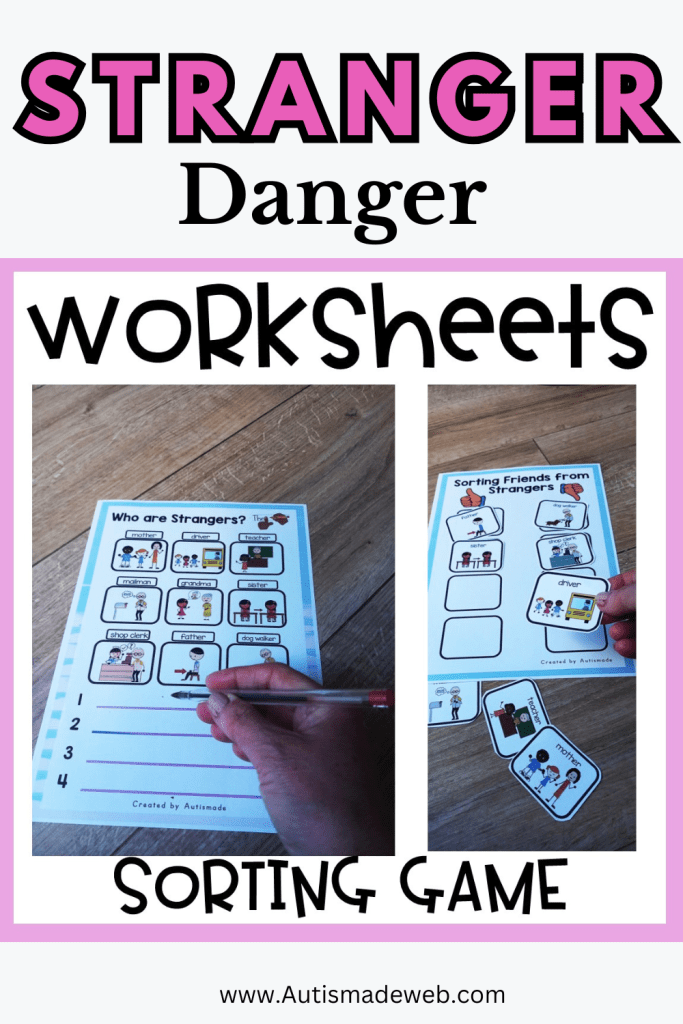
  • Identifying trusted adults vs. strangers worksheets
  • Strangers sorting Game with visuals

Who’s it perfect for?

  • Autism classrooms & special education settings
  • Speech & language therapy sessions
  • Social-emotional learning (SEL) lessons
  • Home or community safety practice

This social skills story is designed with clear visuals, repetitive phrasing, and real-world examples to support comprehension and engagement. Ideal for introducing safety topics in a gentle, non-scary way.

For More Resources visit my TPT Store

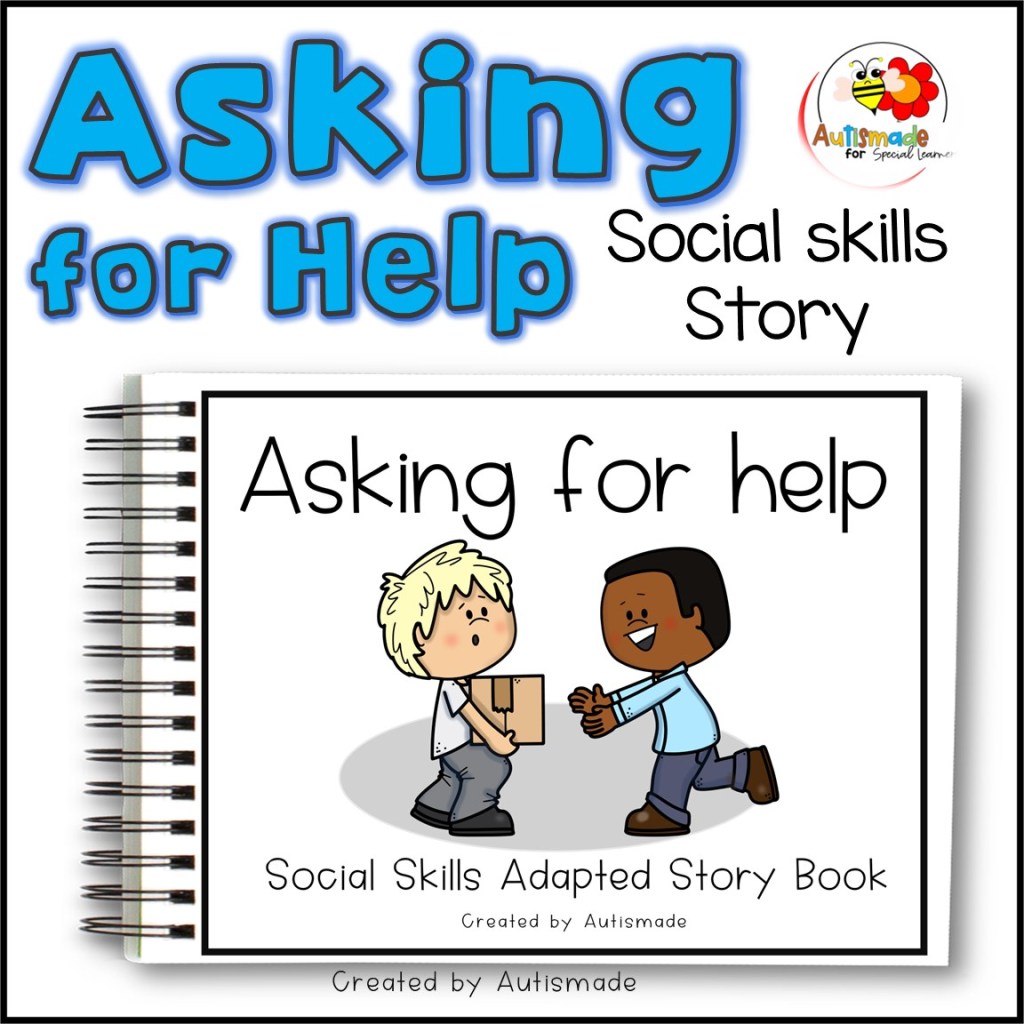
Interactive story for teaching kids to ask for help in Special Education

Support students with additional needs in developing essential communication skills with this “Asking for Help” social skills narrative. Created with clear language, visual supports, and structured activities, this resource helps learners understand how and when to ask for help in a calm, appropriate, and effective way. Ideal for SEN settings, it promotes emotional regulation, independence, and functional communication skills in a supportive learning environment.

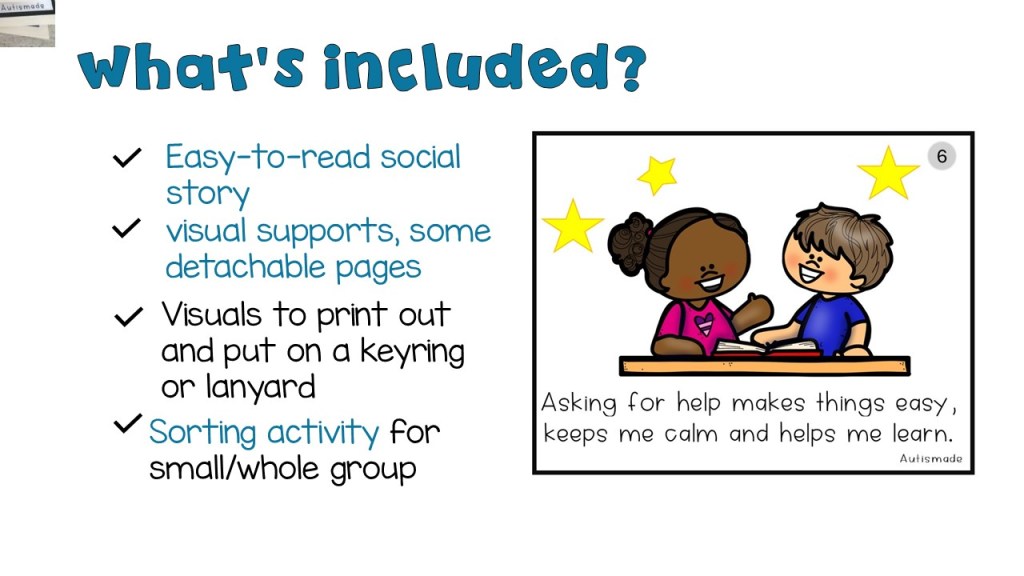
* Easy-to-read social story (kid-friendly text)

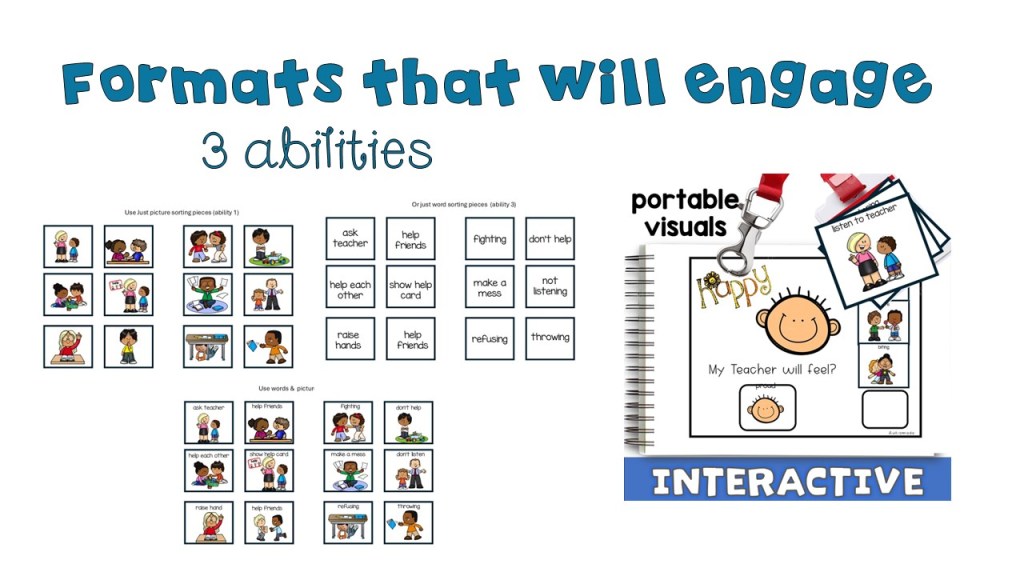
* Visual supports on every page, some detachable

* Printable with some interactive pages

* Great for whole-group lessons, small groups, or one-on-one use

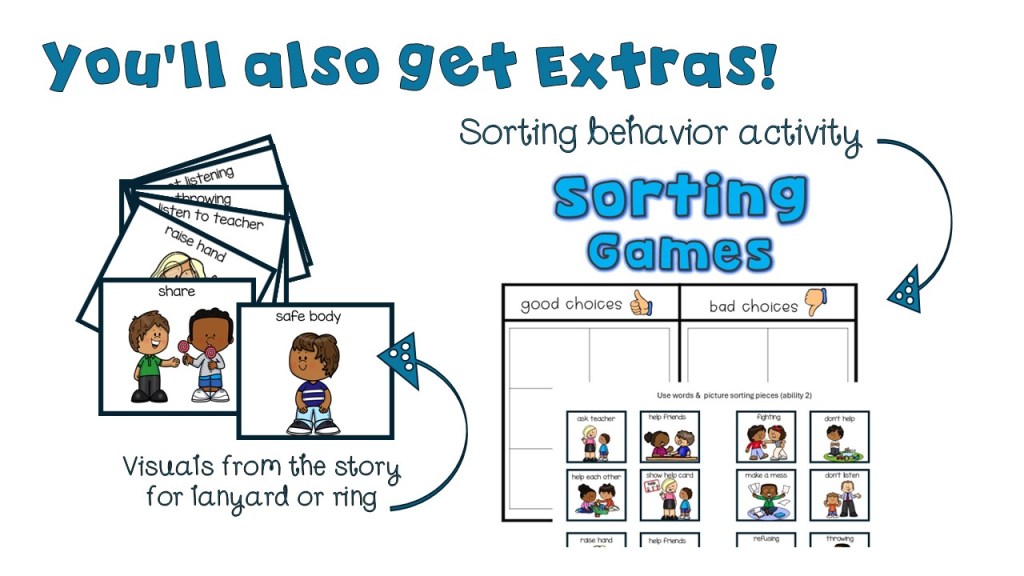
* Behavior sorting game with visual cards!

These added resources helps teachers, therapists, and parents gently guide children through real-life situations where they can make good and bad choices. Great for supporting classroom expectations or helping individual students who need extra practice.

Preschool and Pre-K
Early Childhood Special Education (ECSE)
Social-emotional learning (SEL)
Behavior support and classroom Expectations

Why you’ll Love It:
Clear visuals support comprehension
Repetitive and predictable text builds confidence

  • Easy to print, laminate, or use digitally
  • Portable visuals
  • 3 Abilities

LINKS FOR MORE INTERACTIVE STORIES LIKE THIS

Sharing Social Narrative, Interactive Story & Sharing Social Skills activity

Safe Body Social Story | Interactive No Hitting Social Skills activity

Social Skills Narratives, A Story Bundle for Social Emotional Learning

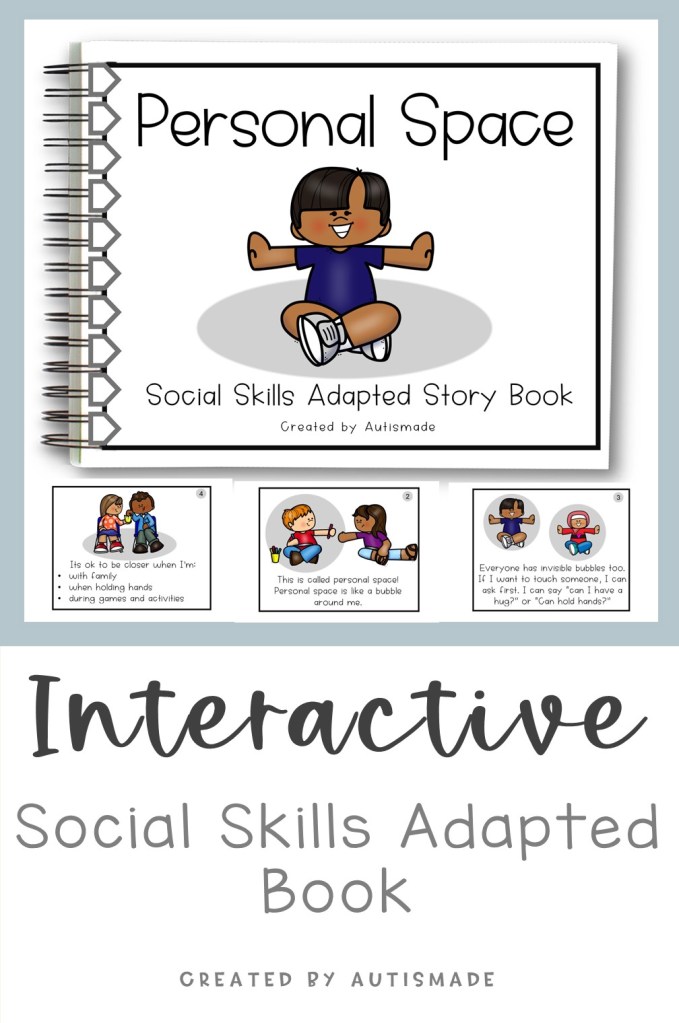
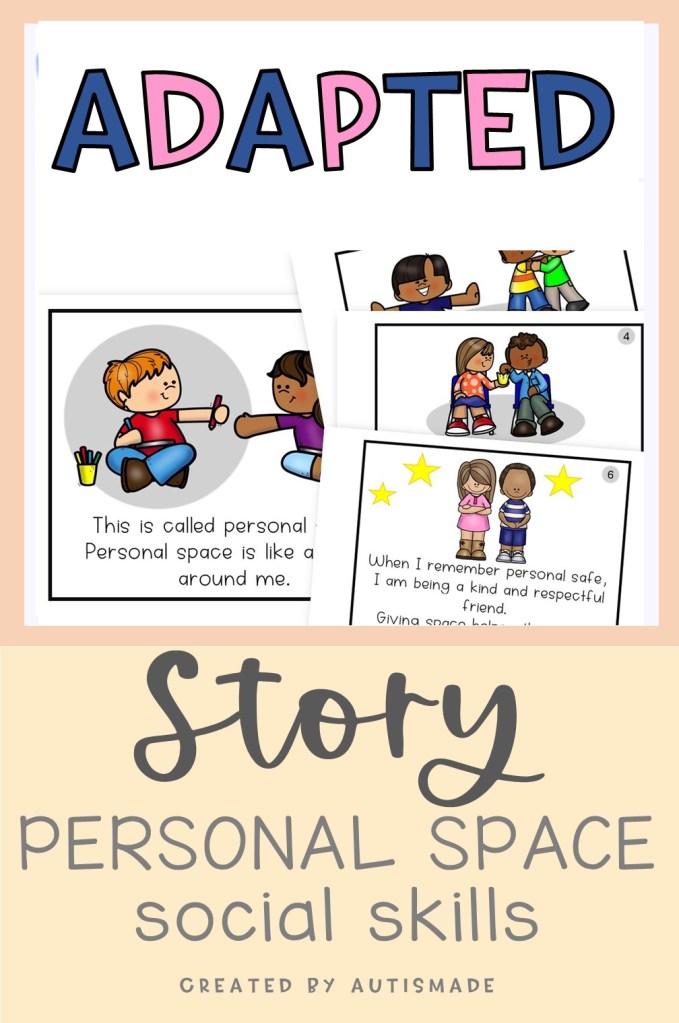
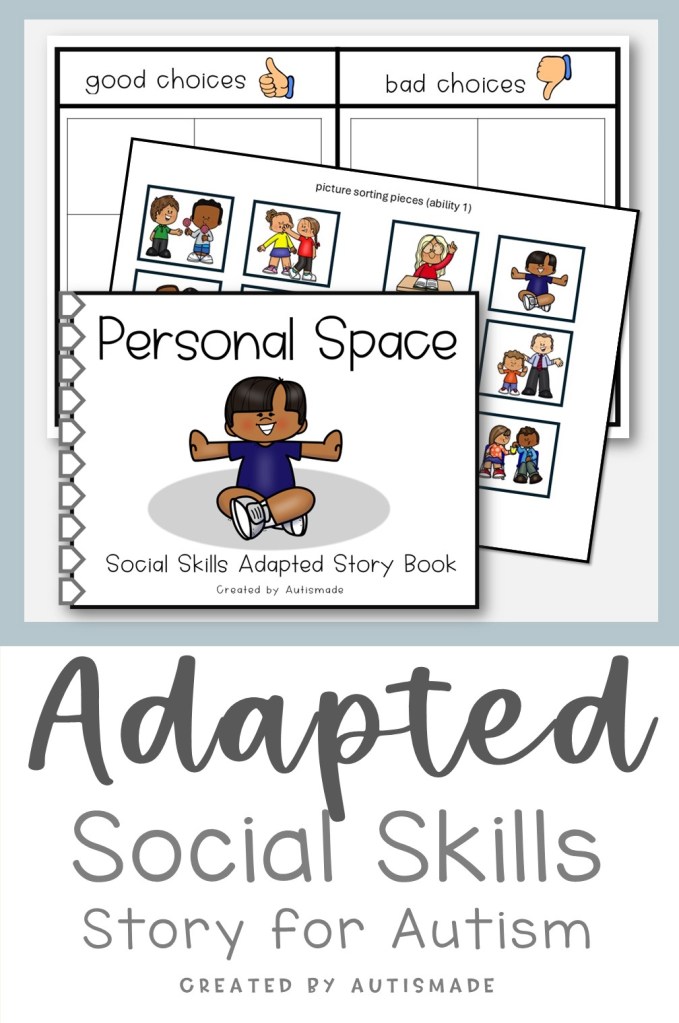
Personal Space: Adapted Social Skills Story | Narrative with Visual Activity.

In my SEN setting, I’ve been helping young learners understand personal space through a simple and engaging Adapted social skills story. This adapted narrative uses clear language, repetition and visual supports to make the concept of keeping a respectful distance from others more accessible and meaningful.

Designed with accessibility in mind, this narrative uses clear, structured language and visual supports to promote awareness of appropriate boundaries in a positive and developmentally appropriate way.

It is Perfect for:

Preschool and Pre-K
Early Childhood Special Education (ECSE)
Social-emotional learning (SEL)
Behavior support and classroom Expectations

What Ive Included in this product:

✅ Easy-to-read social story (kid-friendly text)

✅Sorting behavior game with visual cards

✅ Printable with some Adaptable pages

✅ Great for whole-group lessons, small groups, or one-on-one use

This resource helps teachers, therapists, and parents gently guiding children through real-life situations where they can make safe and respectable choices. Great for supporting classroom expectations or helping individual students who need extra practice.

Why You’ll Love It:
Clear visuals support comprehension
Repetitive and predictable text builds confidence
Easy to print, laminate, or use digitally

Start building safe habits with this friendly, visual social story your kids will love!

For More Resources like this visit my TPT Store