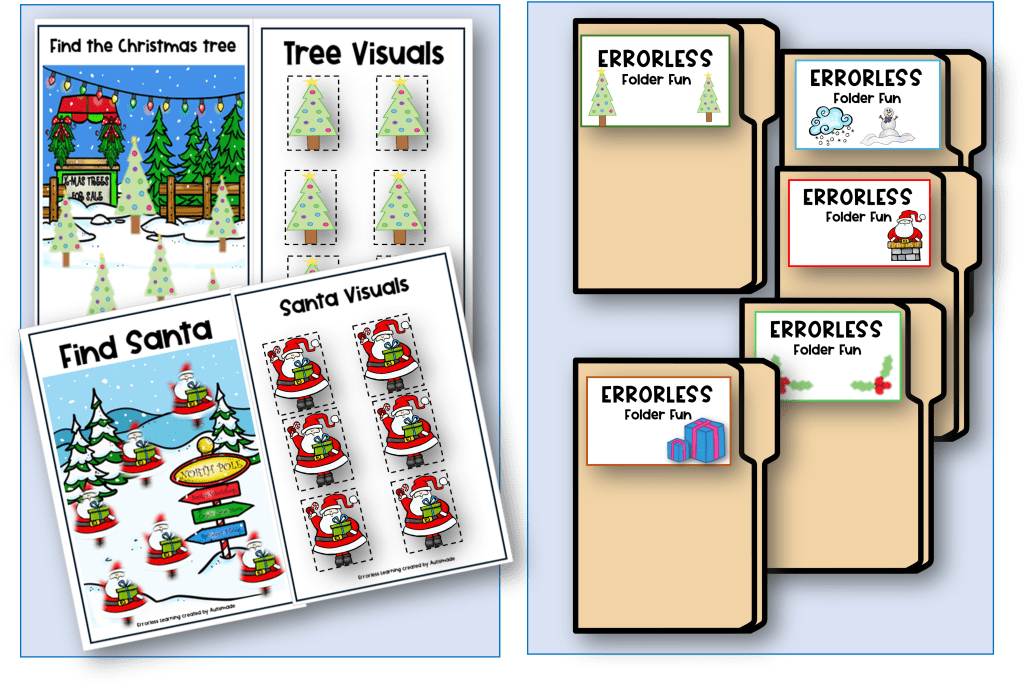
Using Errorless Resources to build new skills

Have you ever heard of errorless learning? if not, your not alone! When I first came across this approach I was skeptical. How can learning take place without errors? But when I delved deeper I discovered that errorless learning activities can be a valuable resource in Special Ed Classrooms.
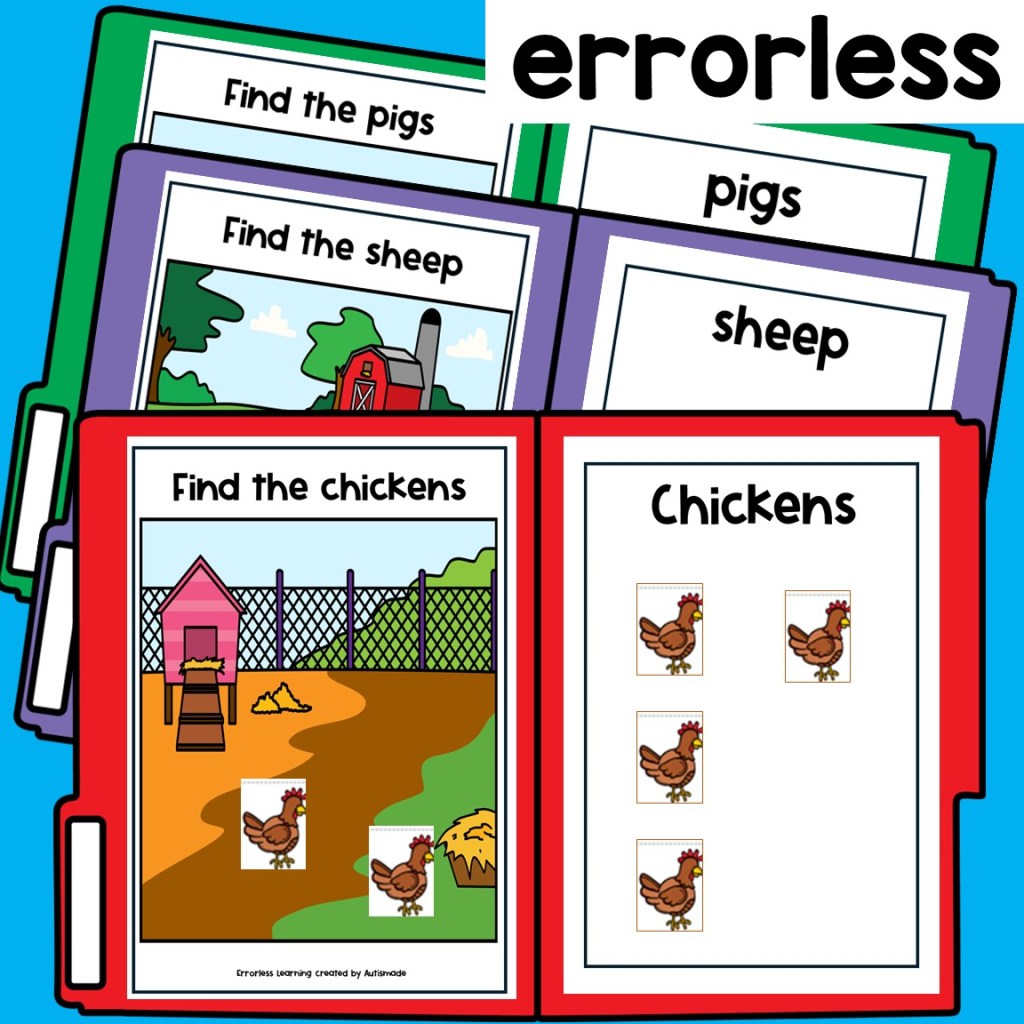
Imagine tasks that don’t have a wrong answer and only successful completion, sounds like a dream, but its a reality for many students.

In this article we will explore the concepts of errorless learning and its benefits for students with Special needs. We will also look at the different skills that can be developed though these activities and the types of tasks that can be used.

Learning Objectives

These type of tasks not only improve student task routines and promote independent completion as well as teaching them to work from left to right. but also helps to build their confidence and fine motor skills. Students can practice using their pincer grip to manipulate the visuals to give the answers.

Skills

Recognise items

Fine motor grip

Build independent work skills

learn to work left to right

Gain confidence and work independently

Folder Games

These Errorless folder games can be seasonal or linked to topics and basic learning skills for independent stations

Errorless adapted books can be applied to almost any subject and enable students to join in with stories and reading skills.

Task Cards

Errorless Task cards can be taught at independent stations and in fine motor skill sessions.

Visual Support Cards for Functional Communication

These printable cards help non-verbal children to communicate and regulate in Preschool, kindergarten and Special Education.

As a teacher our goal is to plan and make lessons accessible and these visual support cards are made to teach Functional communication skills to enable students with Special needs, be ready for the lessons you’ve planned.

These supports for social and emotional learning each have visual directions at the bottom of each card, which can help before unwanted behavior escalates by giving cue images for kids to know what alternative behaviors they can follow to regulate.

To prepare these cards, print out on cardstock, cut out and laminate for durability.

How to use

Add to Calm Down Corners. Have them handy on workstations and centers. Use “Wait” cards with a fidget box for students to use while they wait.

Visit my TPT Store for more great Classroom Behavior Management Tools

Visual Behavior Support Folder – Token Rewards Tools, schedules, First & Then,

Visual Supports: Token Reward System/First & Then – Strategies for Special Ed

Classroom Behavior Management Strategies: First, Next and Then Tools

Token Reward folder: Visual support tools with “first & then” Behavior Strategy

First, Next and Then table Schedule Templates with Visual Supports

First Then boards and Help cards: Autism visual supports

Visual Supports:”First, next, then” with Token Rewards Systems

Effortless Life Skills: How to Teach Preschoolers with Special Needs Through Adapted Activities.

“Are you tired of the daily struggle to get your little one to practice good hygiene habits? or trying to Teach Functional life Skills to your young learners? Trust us, you’re not alone. Don’t lose hope just yet – I’ve created resources specifically for you. In this article, we’ll explore the use of adapted books as a tool to teach effortless personal hygiene to young children with special needs.

From the basics of adapted books to easy sequencing strategies for teaching hygiene. So let’s dive in and discover how simple it can be to instill healthy habits in our little ones!”

These books not only make learning fun and engaging but also cater to the specific needs of each child. By using adapted books, we can instill healthy habits in our children with special needs effortlessly. ” Let’s empower our children with the necessary skills to practice good hygiene on their own. So why wait? Grab an adapted book and start the journey towards healthy habits with your child today. Make hygiene a part of our daily routine and improve the overall well-being of our children. Let’s make hygiene effortless and enjoyable for our little ones with special needs.

Sequencing schedules can be used in bathrooms as visual reminders of the washing steps to follow

Simple activities to keep on with the good practice of Sequencing patterns for daily hygiene routines. Sequential learning can help your students gain confidence, build self esteem and promote a positive learning environment for them to gain basic skills.

In conclusion, good hygiene habits are essential for everyone, and especially for children with special needs. It is a daily struggle for parents to teach their preschoolers with special needs the importance of hygiene. But with the help of adapted books, we can make this task easier and more effective. Whether it’s through interactive stories or visual tools, adapted books offer a unique and personalized way to teach hygiene to our little ones.

Autismade Resources

Functional life Skills Adapted Book | Wash Hands

Functional Life Skills Adapted Activities | Brush Teeth

Tips on How to Promote Positive Behavior in Preschool and Special Ed Classrooms

The main aim in my classroom is to create a positive friendly environment to begin teaching, sometimes I find myself going around in circles… but I love it! Running a successful Special Ed class, in my opinion, requires a combination of effective communication and visual supports and I know by incorporating both I can significantly enhance positive behavior in my class. In this blog, I’ll guide you through how I combine critical communication skills with visual supports to promote behavior management in my wonderful class!

I always start by establishing clear behavioral expectations through visual supports and by engaging students with visuals of my classroom rules.

Then I teaching critical communication skills to ensure that every student’s perspective, abilities and needs are considered.

I always Involve my students in creating visual aids and support systems of their preferences to promote a sense of ownership, decorated with pictures of their interests and motivators. Through discussions and choosing sessions, I guide them in designing posters, charts, or cards that visually represent each behavioral expectation. I find this collaborative approach offers a deeper understanding of the rules and a sense of responsibility for them to follow.

By strategically placing visual aids in areas where they can be easily seen and accessed. A choice of support cards, critical communication aids such as “Break” and “Help” are always easy for students to find and I discuss with staff how the visual aids will help everyone remember and adhere to the agreed-upon behavioral expectations.

Utilize critical communication skills to teach and model positive behavior. I engage my students when behaviors are demonstrated to the supporting visuals, and encourage them to share their thoughts and solutions, promoting critical thinking with self regulation supports.

I work with my students to design a reward system that aligns with their preferences. Use critical communication skills I gather their input on incentives and rewards for positive behavior to establish a system where students feel empowered to make decisions about their own motivation. An individualised Visual Schedule, Token Economy Support are particularly valuable for my Classroom Behavior Management. It lets students know what activity they need to do, what motivator they can work for and supports them throughout the school day.

Its been hard work with many an hour planning and preparing but its been worth every second!

For More information on resources visit my Store