Easy No-Bake Visual Recipe Mats for Young Learners in Special Education

Teaching functional life skills to young learners in a special education classroom does not have to be complicated. For early elementary students, autism classrooms, and early intervention groups, the best cooking lessons start with familiar, everyday foods they actually eat at home.
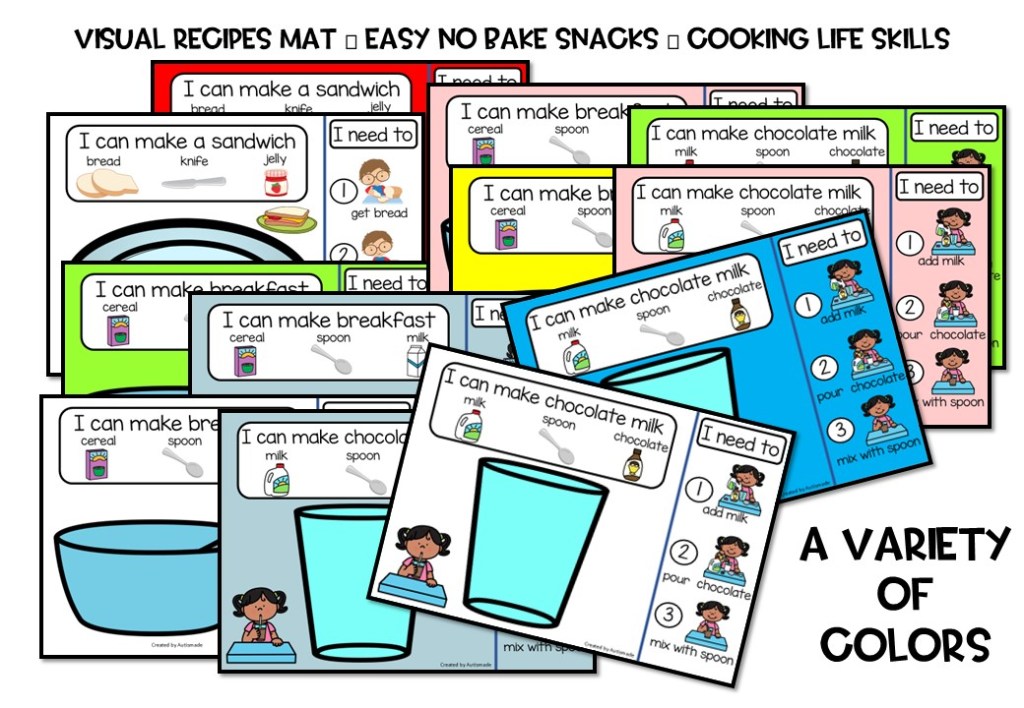
By using no-bake visual recipe mats, you can turn simple daily routines into structured, confidence-building learning stations—no oven or kitchen required.

Why Visual Recipe Mats Work So Well for Young Learners

Young learners thrive on visual structure and hands-on practice. A dedicated recipe mat acts as a clear, organized workspace that shows students exactly what they need and what to do next.
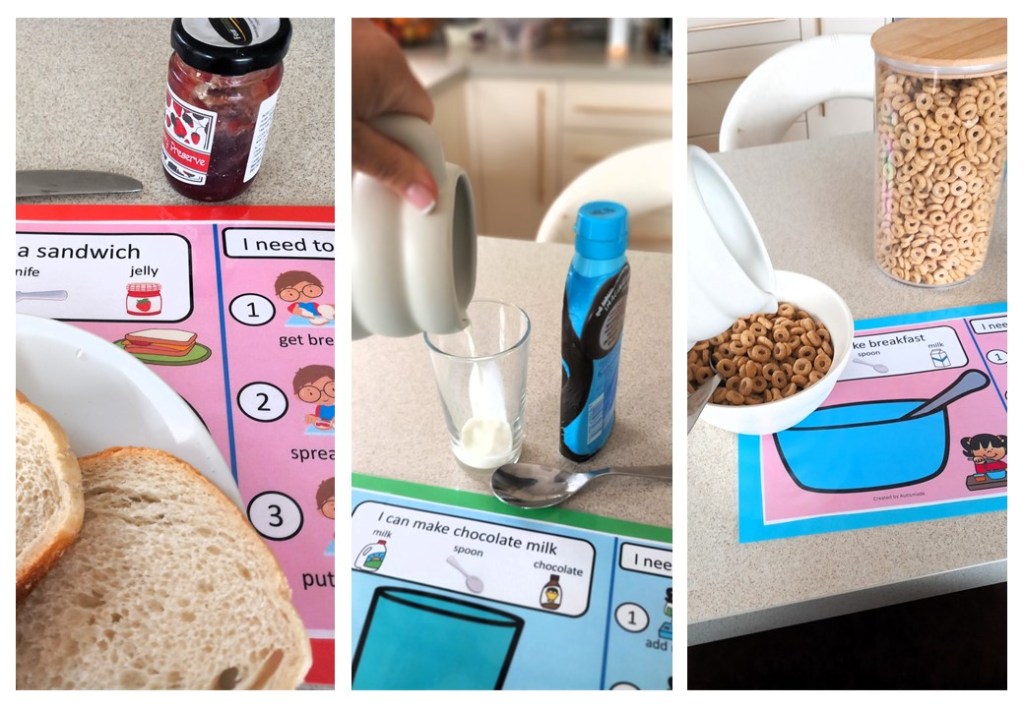
Instead of relying on verbal directions that can overwhelm early learners, visual recipe mats help students build:

  • Everyday Independence: Learning to make their own basic snacks and drinks empowers young children to take care of their own daily needs.
  • Fine Motor Control: Spreading jelly, pouring milk, and scooping cereal are practical ways to strengthen little hands and improve coordination Sequencing and Following Directions: Clear picture steps teach students how to follow a routine from first to last.
  • Core Vocabulary and Communication: Familiar foods naturally encourage young learners to request items, make choices, and use core words like pour, spread, mix, open, and more.
3 Foundational No-Bake Snacks Included in This Pack

When introducing cooking to young learners, simple is always best. My No-Bake Visual Recipe Mats Pack focuses on three classic, kid-friendly snacks that use minimal, budget-friendly ingredients:

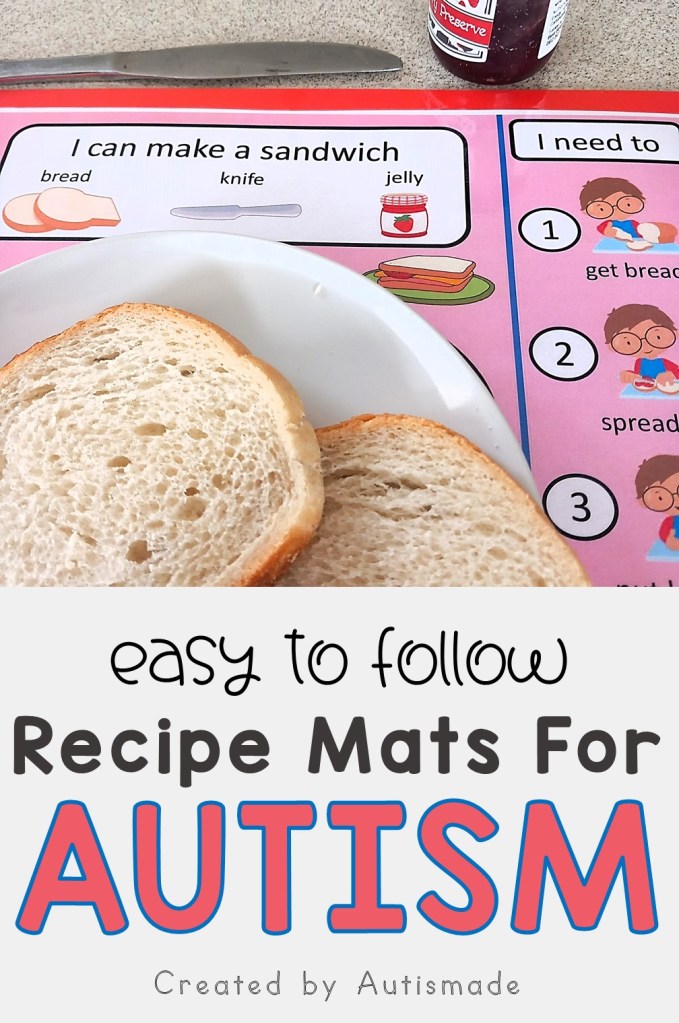
  • Making a Jelly Sandwich: Students practice placing bread on their workspace, scooping and spreading jelly, and putting the sandwich together. (Bonus: Completely nut-free and classroom-safe!)
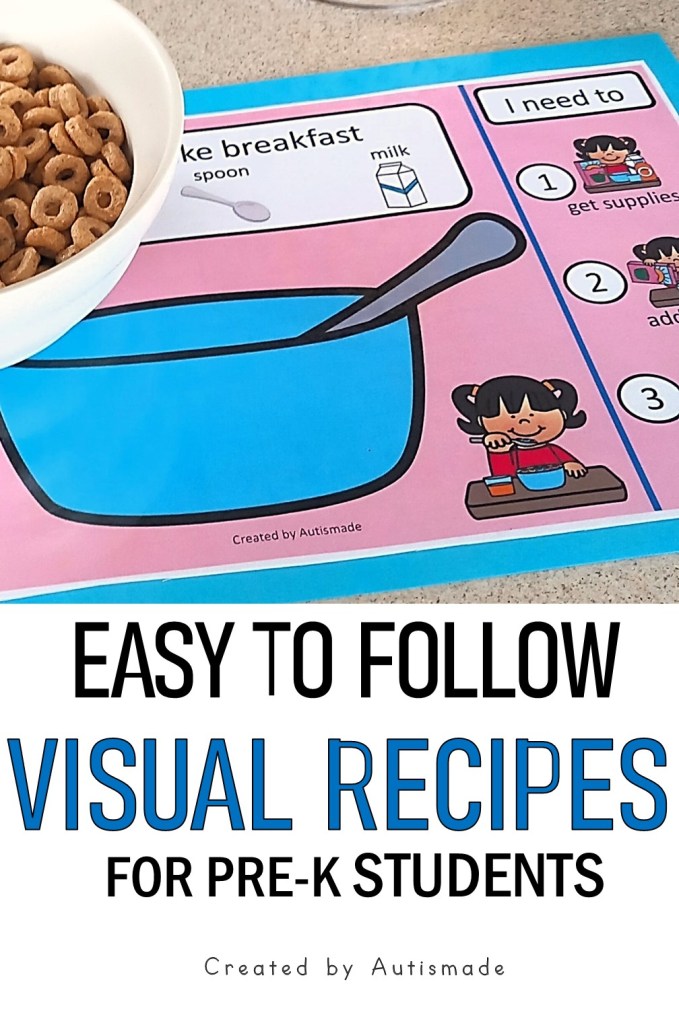
  • Making a Bowl of Cereal: A wonderful morning routine activity that teaches students how to pour cereal into a bowl, carefully add milk, and grab a spoon.
  • Making a Chocolate Milk Drink: Students follow step-by-step visuals to pour milk, add chocolate syrup or powder, and stir until mixed
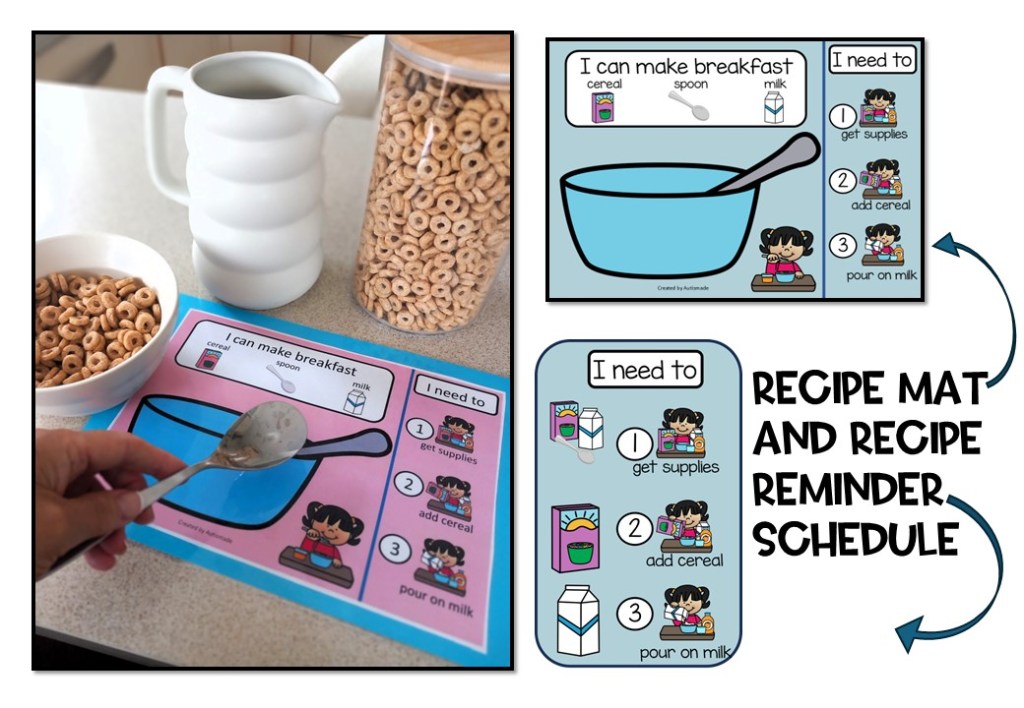
Ready-to-Print Visual Recipe Mats for Your Classroom

If you are looking for an easy, low-prep way to introduce functional life skills to your young learners, this resource is ready to print, laminate, and use right away. Just wipe down the mats after each cooking group, and they are ready for next time!

Click here to grab the Visual Recipe Mats Pack on TPT!

Don’t forget to pin this post to your Special Education Life Skills or Preschool & Early Elementary Pinterest boards so you have these easy snack mats saved for your next classroom cooking lesson!
First-Then Token Boards for Autism Support

Give your students clear expectations and motivating visual support with this First-Then Token Board System designed for autism and special education classrooms. This resource includes 10 printable First-Then boards, 7 token style choices, and 30 motivator visual cards—perfect for behavior reinforcement, task completion, transitions, and classroom routines.


These ready-to-use visual supports helps students understand what comes next, stay on task, and build independence. Ideal for autism classrooms, resource teachers, ABA therapists and SLPs.

Whats included

  • 10 First-Then Boards (clean, simple, easy-to-understand designs)
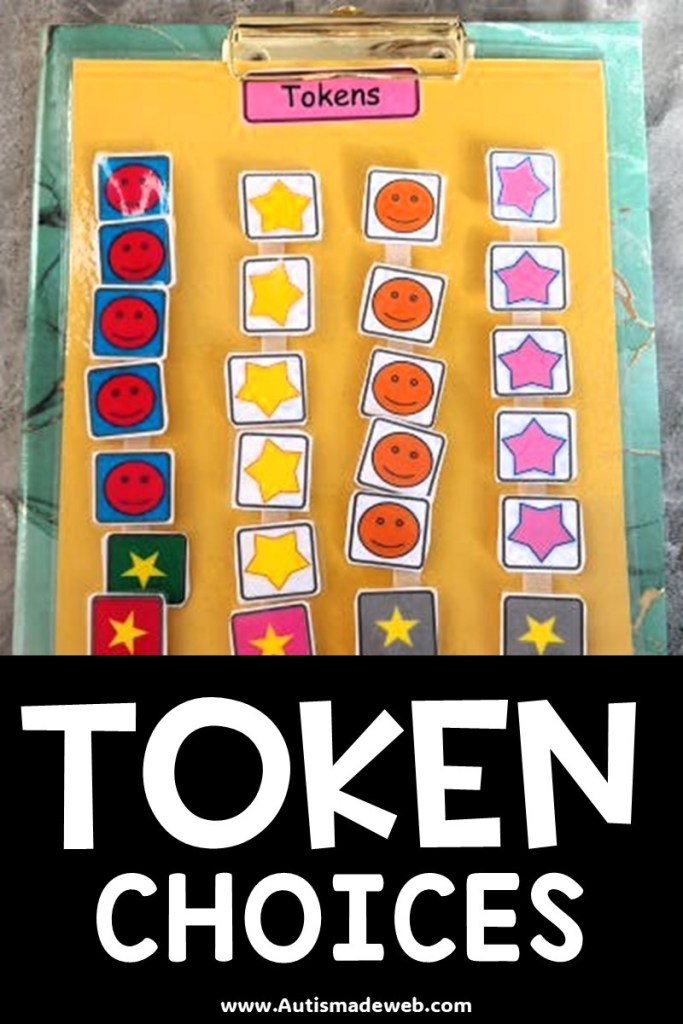
  • 7 Token Choices (large stars, small stars, smileys, colors, etc.)
  • 30 Motivator Choice Cards (classroom rewards, preferred items, activities)
  • First and Then Visuals for easy scheduling
  • Editable icons
  • Printable, low-prep format
  • Perfect for SPED, autism support, ABA, and behavior management

Perfect For

  • Autism support classrooms
  • ABA therapy sessions
  • Special Education teachers
  • Behavior intervention plans
  • Visual schedules and routines
  • Task completion and transitions
  • Reinforcement systems
  • Early childhood + Not Grade Specific

This printable First-Then Token Board is a must-have for autism support and special education! Visual schedules, motivator choices, and token options all included.

Download to

✔ Supports communication for nonverbal or minimally verbal learners
✔ Reduces challenging behaviors by clarifying expectations
✔ Increases student motivation and independence
✔ Flexible use with ANY classroom routine
✔ Easy to print, laminate, and reuse

Tips on How to Promote Positive Behavior in Preschool and Special Ed Classrooms

The main aim in my classroom is to create a positive friendly environment to begin teaching, sometimes I find myself going around in circles… but I love it! Running a successful Special Ed class, in my opinion, requires a combination of effective communication and visual supports and I know by incorporating both I can significantly enhance positive behavior in my class. In this blog, I’ll guide you through how I combine critical communication skills with visual supports to promote behavior management in my wonderful class!

I always start by establishing clear behavioral expectations through visual supports and by engaging students with visuals of my classroom rules.

Then I teaching critical communication skills to ensure that every student’s perspective, abilities and needs are considered.

I always Involve my students in creating visual aids and support systems of their preferences to promote a sense of ownership, decorated with pictures of their interests and motivators. Through discussions and choosing sessions, I guide them in designing posters, charts, or cards that visually represent each behavioral expectation. I find this collaborative approach offers a deeper understanding of the rules and a sense of responsibility for them to follow.

By strategically placing visual aids in areas where they can be easily seen and accessed. A choice of support cards, critical communication aids such as “Break” and “Help” are always easy for students to find and I discuss with staff how the visual aids will help everyone remember and adhere to the agreed-upon behavioral expectations.

Utilize critical communication skills to teach and model positive behavior. I engage my students when behaviors are demonstrated to the supporting visuals, and encourage them to share their thoughts and solutions, promoting critical thinking with self regulation supports.

I work with my students to design a reward system that aligns with their preferences. Use critical communication skills I gather their input on incentives and rewards for positive behavior to establish a system where students feel empowered to make decisions about their own motivation. An individualised Visual Schedule, Token Economy Support are particularly valuable for my Classroom Behavior Management. It lets students know what activity they need to do, what motivator they can work for and supports them throughout the school day.

Its been hard work with many an hour planning and preparing but its been worth every second!

For More information on resources visit my Store