Schedule Templates for Preschool Special Education Classrooms

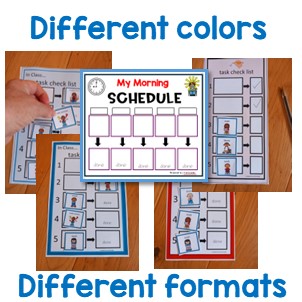
You can now enjoy a more structured day for your special needs preschooler with these printable schedule templates! An easy-to-use guide will help you create individualized, fun learning experiences tailored to your child’s specific needs and capabilities.

This quick rundown will provide you with a few tips and strategies to help you create the perfect routine for your little learner.

1. START SIMPLE – Make visuals for just meaningful times of the day eg, morning work, break, lunch etc,  this will help your young learner to recognise and correspond each picture with each of the activities.

2. BUY A LAMINATOR – Your laminator will become your friend! If you want all your hard work to last, laminate all mounts and visuals because they are going to go through a tough time!

3. WALL MOUNT  – Mount on a wall, the schedule must be low enough for your student to access and take away finished symbols.

4. USE A FINISHED BOX – Attach a finished box at the end or side of the schedule to drop the finished visuals in before starting a new activity. 

5. TRY A FILE FOLDER – A portable schedule can be used in a file folder in the same way as a wall mounted one. I find these easier with older children to check into the activities and more efficient in busy classrooms. Pop their name on it and keep all their individual support visuals in one place. 

6. MODLE AND PRACTICE – Always model, practice and remind your busy student at the beginning of each activity to, “check in”, or “check your schedule“.   Make a plan to pull back on all prompting until they begin to use this system independently!
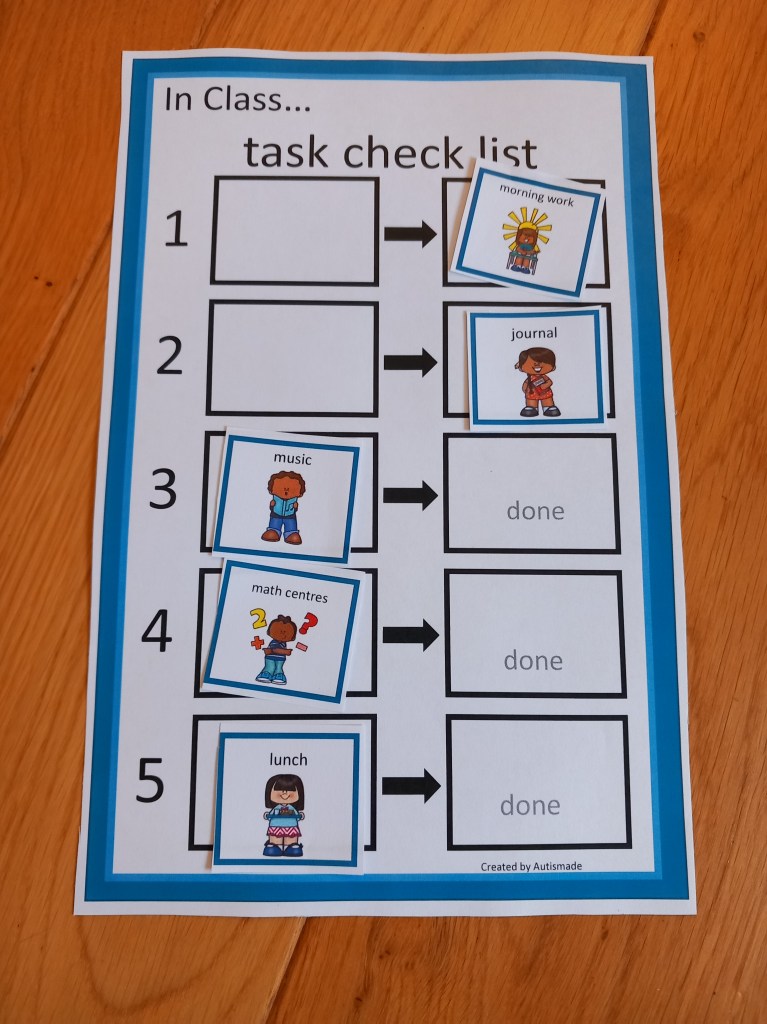
Ask yourself questions to find the right types of schedule to fit the learners needs.

  1. Are your students able to pull off visuals when finished or can they tick a box?
  2. Do they need visuals?
  3. Can they read or write out the schedule?
  4. Can they tell the time and follow the order of the day?

For more resources visit my TPT Store!

Editable Visual Schedules

Editable Schedules for Classroom Management

Reward Chart Systems for Behavior Management|schedule|Token Economy|First & Then

Daily Planner Binder – Back to School for Kindergarten & Special Education

Effective Visual Cards for Non-Verbal Kids

These printable cards help non-verbal children to communicate and regulate in Preschool, kindergarten and Special Education.

As a teacher our goal is to plan and make lessons accessible and these visual support cards are made to teach Functional communication skills to enable students with Special needs, be ready for the lessons you’ve planned.

These supports for social and emotional learning each have visual directions at the bottom of each card, which can help before unwanted behavior escalates by giving cue images for kids to know what alternative behaviors they can follow to regulate.

To prepare these cards, print out on cardstock, cut out and laminate for durability.

How to use

Add to Calm Down Corners. Have them handy on workstations and centers. Use “Wait” cards with a fidget box for students to use while they wait.

Visit my TPT Store for more great Classroom Behavior Management Tools

Visual Behavior Support Folder – Token Rewards Tools, schedules, First & Then,

Visual Supports: Token Reward System/First & Then – Strategies for Special Ed

Classroom Behavior Management Strategies: First, Next and Then Tools

Token Reward folder: Visual support tools with “first & then” Behavior Strategy

First, Next and Then table Schedule Templates with Visual Supports

First Then boards and Help cards: Autism visual supports

Visual Supports:”First, next, then” with Token Rewards Systems

Tips on How to Promote Positive Behavior in Preschool and Special Ed Classrooms

The main aim in my classroom is to create a positive friendly environment to begin teaching, sometimes I find myself going around in circles… but I love it! Running a successful Special Ed class, in my opinion, requires a combination of effective communication and visual supports and I know by incorporating both I can significantly enhance positive behavior in my class. In this blog, I’ll guide you through how I combine critical communication skills with visual supports to promote behavior management in my wonderful class!

I always start by establishing clear behavioral expectations through visual supports and by engaging students with visuals of my classroom rules.

Then I teaching critical communication skills to ensure that every student’s perspective, abilities and needs are considered.

I always Involve my students in creating visual aids and support systems of their preferences to promote a sense of ownership, decorated with pictures of their interests and motivators. Through discussions and choosing sessions, I guide them in designing posters, charts, or cards that visually represent each behavioral expectation. I find this collaborative approach offers a deeper understanding of the rules and a sense of responsibility for them to follow.

By strategically placing visual aids in areas where they can be easily seen and accessed. A choice of support cards, critical communication aids such as “Break” and “Help” are always easy for students to find and I discuss with staff how the visual aids will help everyone remember and adhere to the agreed-upon behavioral expectations.

Utilize critical communication skills to teach and model positive behavior. I engage my students when behaviors are demonstrated to the supporting visuals, and encourage them to share their thoughts and solutions, promoting critical thinking with self regulation supports.

I work with my students to design a reward system that aligns with their preferences. Use critical communication skills I gather their input on incentives and rewards for positive behavior to establish a system where students feel empowered to make decisions about their own motivation. An individualised Visual Schedule, Token Economy Support are particularly valuable for my Classroom Behavior Management. It lets students know what activity they need to do, what motivator they can work for and supports them throughout the school day.

Its been hard work with many an hour planning and preparing but its been worth every second!

For More information on resources visit my Store

Chaos to Calm: Mastering Behavior Management in Special Education Classrooms,

Are you a Special Education teacher who feels like your classroom is constantly in chaos? Do you struggle to manage behavior and create a calm learning environment for your students? If so, you’re not alone! Behavior management is a never ending challenge for special education teachers, but there are strategies and practical tips that can help you transform chaos into calm.

Throughout this post, I’ll help you with practical strategies and steps for you to start implementing them in your class today. From creating a structured and supportive environment to implementing effective interventions, I will guide you through the process of helping you master behavior management.

Creating a Structured and Supportive Environment

. Set time to build a structured environment by establishing clear expectations and routines. . . Provide your students with a sense of structure and predictability by clearly communicating the rules and procedures to your students you provide them with a sense of structure and predictability. This helps to minimize confusion and allows students to focus on their learning. . Consider creating visual supports, such as posters or charts, to display these expectations and refer to them regularly.

Click here to pick up these FREEBIE Posters

. To further promote structure and support, consider implementing classroom organization strategies. Ensure that your classroom is arranged in a way that allows for easy movement and minimizes distractions. . Provide designated spaces for different activities, such as quiet reading areas or group workstations with centre signs. This helps students understand where and how they should engage in different tasks, promoting a more focused and productive learning environment.

. Additionally, incorporating visual supports can be highly beneficial in creating a structured and supportive classroom. Visual aids, such as schedules, rules, and task boards, can assist students in understanding expectations and managing their time effectively. Furthermore, visual prompts can be particularly helpful for students with communication difficulties or those who struggle with transitions.

. Another valuable intervention is the implementation of social skills training. Many students in special education classrooms struggle with social interactions, making it difficult for them to navigate social situations and establish positive relationships with their peers. . By incorporating social skills training into the curriculum, students can learn important skills such as active listening, turn-taking, and conflict resolution. . Role-playing exercises and real-life scenarios can also help students practice applying these skills in a safe and supportive environment.

By implementing these effective interventions, Teachers can enhance behavior management in special education classrooms. These interventions address the specific needs of students, providing them with the support, strategies, and tools necessary to help them succeed academically and socially. When students are equipped with the skills and resources they need, they are more empowered to make positive choices and engage in behaviors that promote a calm and productive learning environment.

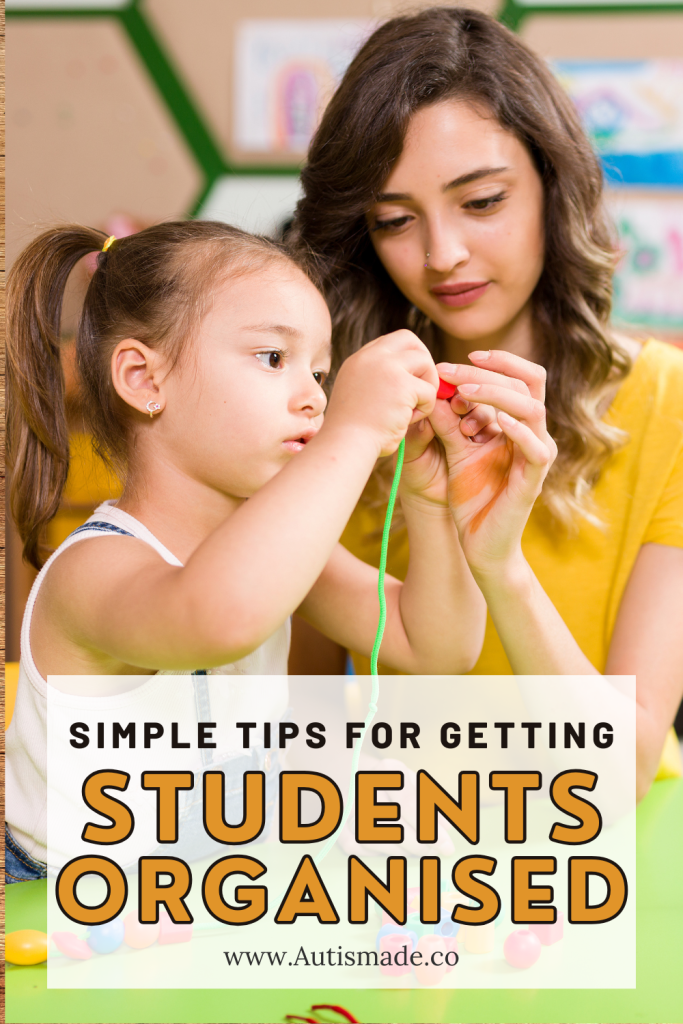
Organize Your Special Education Classroom: Simple Tips for Getting Students Organised.

Welcome to my blog where Id like to share some of my classroom organization strategies. I’m passionate about my teaching role and that involves creating a positive learning environment, assessing how its working and having quality resources on hand. Along the way I have discovered some valuable tips and strategies that have transformed the way I run my classroom, so here I’d like to share some of my experiences and offer you some insights that could help you achieve success in your own classroom.

In my opinion, the benefits of having a well-organized classroom can help promote independence, reduce distractions, and maximize instructional time. Below, I’ll show you some of my simple but effective strategies that might help you organizing your own Classroom that bit more.

CLEAR AND DEFINED SPACES

Create, clear and defined spaces within your classroom to support different activities and learning styles. Designate areas for whole-group instruction, small-group work, individual workstations, and quiet corners for relaxation or sensory breaks. Use visual cues, such as signs or color-coded labels, to help students understand the purpose of each space.

VISUAL SUPPORTS

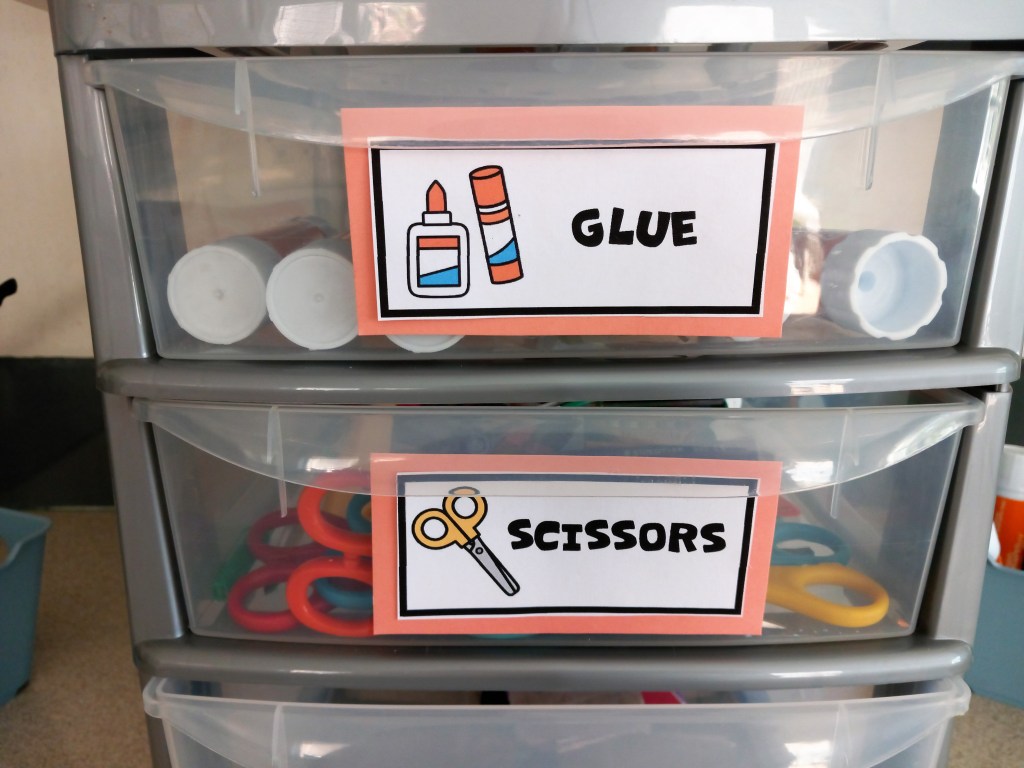
Use visual schedules, charts, and visual aids to provide clear expectations and support communication. Visual supports can also include labels for storage bins, cubbies, and classroom materials, making it easier for students to locate and return items independently.

STRUCTURED ROUTINES

Establish structured routines and consistent schedules in your special education classroom. Most of your students will benefit from predictability and familiarity. Clearly communicate daily schedules using visual schedules or written charts, and maintain consistency in transitions and activities. This helps students feel more secure and reduces anxiety.

ORGANIZED SYSTEMS

Implement effective organization systems to keep materials, supplies, and resources easily accessible. Use labeled storage containers, shelves, or drawers for classroom supplies, teaching materials, and student work. This makes it easier for both teachers and students to return items after use. Consider color-coding or picture labels to assist students who may have difficulty reading.

INDIVIDUALIZED SUPPORTS

Recognize that each student in your classroom may have unique needs and preferences. Tailor your organization strategies to accommodate individual differences. For example, if a student benefits from a sensory diet, ensure that sensory materials and tools are readily available in their designated area. Adapt visual organization systems to support specific needs and modify for each student.

MINIMISED DISTRACTIONS

Create a visually and audibly calm environment to minimize distractions for your students. Arrange furniture to reduce clutter and provide them with clear pathways for movement. Use visual barriers, such as bookshelves or dividers, to separate workspaces and decrease visual distractions. Consider using noise-cancelling headphones or white noise machines to reduce auditory distractions.

Organizing your classroom requires careful thought and consideration. By implementing these simple strategies, you can start to create an organized and supportive environment that promotes learning, independence, and success for your students. Remember to regularly assess and adjust your organization systems to meet the evolving needs of each student.

If your looking for Resources for Classroom Management visit my Autismade TPT Store